 English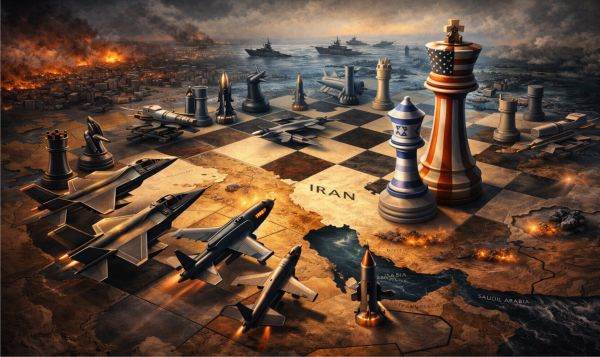
The conflict between the United States, Israel and Iran is rapidly escalating into a high-intensity military confrontation, with massive bombings of Iranian territory, regional retaliation and increasingly aggressive statements from Washington, which is preparing to claim total domination of Iranian airspace in the coming days.
The Israeli army launched a new series of bombings on Tehran yesterday - the tenth since the start of the war -, attacks that destroyed or seriously damaged several buildings, described in IDF reports as "general security structures". Moreover, an Israeli pilot who was at the controls of an F-35 aircraft shot down an Iranian military aircraft yesterday, according to the Jerusalem Post, CNN and Fox News, the air battle between the two aircraft taking place over Tehran.
The joint US-Israeli military operation has already hit more than 1,700 targets in Iran, according to US Central Command (CENTCOM), and the death toll continues to rise. The Human Rights Activists News Agency estimates that more than 1,000 people have been killed in Iran since the start of the war, including civilians and children. In parallel, Iran continues to retaliate with missiles and drones against Israel and against US bases and those of Washington's allies in the region. States such as Saudi Arabia, the United Arab Emirates and Kuwait have intercepted hundreds of missiles in recent days, while several US diplomatic premises have been hit. Politically, Iran is going through one of the worst crises in its recent history after the death of Supreme Leader Ayatollah Ali Khamenei, who was killed in the first Israeli attacks. Iranian clerics are about to decide who will be the next ayatollah. According to reports by Al Jazeera, the BBC, the Jerusalem Post, The Times of Israel, CNN and Fox News, names in the running for the position include Mojtaba Khamenei, the son of the slain leader. Israel, however, has issued a stark warning: any future supreme leader of Iran could become a military target. Israeli Defense Minister Israel Katz said Khamenei's successor would be "a target” if he continued Tehran's hostile policies toward Israel, the United States and its regional allies.
In parallel with the bombing of Iran, the conflict is spreading across the region. Israel has attacked Hezbollah positions in Lebanon, including in the city of Baalbek, where a four-story residential building was hit, killing at least five people. At the same time, Beirut airport was covered in smoke after Israeli airstrikes. At sea, an Iranian ship was sunk by a US submarine off the coast of Sri Lanka; 32 people have been rescued, while around 140 are missing.
The escalation has also reached NATO territory. The Alliance's air defense systems intercepted an Iranian missile heading towards Turkish airspace yesterday after it had crossed Iraq and Syria. NATO condemned the incident, stating that the alliance "condemns Iran's targeting of Turkey" and that it stands firmly with all its allies.
In this tense context, the statements made yesterday by US Secretary of Defense Pete Hegseth make it clear that Washington believes the war is entering a decisive phase. "America is winning decisively, devastatingly and mercilessly," said Hegseth, stating that the results achieved in just a few days of conflict are "historic". According to the head of the Pentagon, the air forces of the United States and Israel are on the verge of gaining total control over Iranian airspace. "The two most powerful air forces in the world will have complete control of Iran's skies. Uncontested airspace,” he said.
Hegseth announced that new bombers and fighter jets would arrive in the Middle East conflict zone and that Iran could no longer maintain the pace of missile attacks.
"The enemy can no longer fire the volume of missiles they used to have. Not by a long shot,” he said. The American official warned that once total air control is achieved, the United States will massively use high-power guided bombs. "We will use laser-guided bombs of about 500 pounds, 1,000 pounds and almost a ton each, of which we have an almost unlimited supply,” Pete Hegseth said.
The US Secretary of Defense also announced that American and Israeli forces had sunk one of the flagship ships of the Iranian fleet, the "Soleimani,” named after General Qasem Soleimani. Pete Hegseth also referred to the sinking of an Iranian military ship by a US submarine in the Indian Ocean: "She thought she was safe in international waters. Instead, she was sunk by a torpedo. Silent death. It's the first sinking of an enemy ship by torpedo since World War II."
At the same press conference held at the Pentagon, US General Dan Caine of the US Air Force presented the military objectives of the operation. According to him, Washington aims primarily to destroy the Iranian ballistic missile system to prevent threats to US forces and allies in the region. In parallel, the US military aims to destroy the Iranian military fleet to ensure that Iran cannot quickly rebuild its combat capabilities. The next stage of the operation will be to extend the strikes deeper into Iranian territory to create "additional freedom of maneuver for US forces”. The general explained that military strategy has already changed. CENTCOM has moved from massive strikes carried out from a distance with "stand-off” munitions - launched from outside the range of Iranian defenses - to precision strikes carried out directly over Iranian territory. In fact, according to the Pentagon, American and Israeli aircraft are already operating much closer to Iranian airspace, a sign that Tehran's air defenses are seriously weakened.
After five days of war, the Middle East is in an unprecedented spiral of military escalation. Massive air strikes, missile attacks, NATO involvement and extremely harsh statements from Washington suggest that the objective of the campaign is no longer just the destruction of Iranian military capabilities, but the complete paralysis of the regime in Tehran. In this context, the conflict risks becoming one of the most dangerous geopolitical turning points of the last decades.












 Euro
Euro Dolar SUA
 Franc elveţian
 Liră sterlină
 Gram de aur

























Reader's Opinion