 English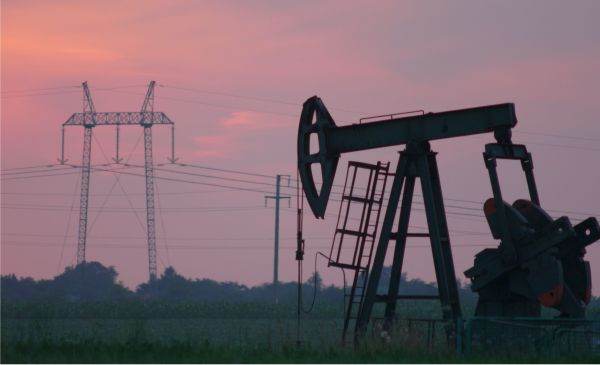
Oil prices fell on foreign markets yesterday for the first time since the US launched the war against Iran, after US Treasury Secretary Scott Bessent said the Trump administration would provide support to oil tankers transiting the Persian Gulf and would announce new measures in the coming days, according to CNBC.
The futures price of US West Texas Intermediate (WTI) crude for April delivery was $74.01 a barrel on the Nymex New York at 08:27 local time, down 0.8% from Tuesday's session, while European Brent crude for May delivery was $81.16 a barrel, down 0.3%.
Recall that, the previous day, the price of oil rose sharply, exceeding $85 a barrel for Brent crude, after an Iranian official warned that his country would "set fire” to anyone trying to pass through the Strait of Hormuz sea route. Ebrahim Jabbari, an adviser to the commander-in-chief of Iran's Islamic Revolutionary Guard Corps (IRGC), told state television, according to the BBC: "Ships should not come to this region. They will certainly face a serious response from us.”
The oil market calmed down after President Donald Trump said on Tuesday that the US would provide oil tankers through the International Development Finance Corporation. Trump also promised naval escorts for oil traffic in the Persian Gulf, if necessary.
"We have a number of announcements that we will be making,” Bessent told CNBC, noting: "We started with the announcement that DFC will provide insurance for both crude carriers and cargo ships operating around the Gulf over the weekend.”
Oil tanker traffic through the Strait of Hormuz has come to a standstill as shipowners fear they could become a target for Iranian retaliatory attacks. Shipping through the Strait of Hormuz is crucial to the global economy, with about 20% of the world's oil and gas passing through the waterway.
• Gas also down
Benchmark gas prices in Europe rose on Tuesday morning after hitting their highest level in three years on Tuesday, but fell in the second half of the day.
At around 16:50 (Romania time), at the TTF gas hub in Amsterdam, where reference prices are set in Europe, natural gas futures quotes were down 7.3%, to 50.35 euros per Megawatt-hour (MWh). Recall that natural gas prices in Europe doubled after joint US and Israeli attacks on Iran disrupted shipping through the Strait of Hormuz.
The world's largest liquefied natural gas facility, located in Qatar, remained shut down, and uncertainty about its restart has raised concerns about supply.
• European stock indices up
In the UK, the FTSE 100 stock index rose by 0.9% yesterday, around 13:50 local time, in France, the CAC 40 - by 1.2% at 14:36 local time, and in Germany, the DAX - by 1.7%. The FTSE MIB of the Italian market appreciated by 1.8% at around 14:50, the Ibex 35 of the Spanish one, by 2.2%, the STOXX Europe 600, by more than 1.5%.
In the US, the S&P 500 rose by 0.05% at the opening of the session, at 09:40, the Nasdaq Composite - by 0.3%, the Dow Jones Industrial Average fell by 0.2%.
In Asia, Japan's Nikkei 225 lost 3.6%, Hong Kong's Hang Seng fell 2%, and Australia's S&P/ASX 200 fell 1.9%. In Seoul, the technology-heavy Kospi index fell more than 12%.
Stock market investors are watching the impact of the escalating conflict in the Middle East on inflation and global trade.
• Eurozone bonds mixed
Eurozone government bonds were mixed yesterday, as investors pulled back from recent sell-offs in the bond market on concerns that continued tensions in the Middle East could fuel inflation, according to devdiscourse.com.
The yield on 10-year German government bonds, the euro zone benchmark, was steady at 2.77%, after hitting 2.711% on Tuesday, its highest since mid-February. Money markets adjusted their expectations, now predicting a 60% probability of a rate hike in December, compared to a 40% chance of easing last Friday.
At the same time, yields on US Treasury bonds rose in London trading, with the benchmark 10-year note rising 2 basis points to 4.08%.
• Gold Market Advance
Precious metals prices rose yesterday, as the market remained volatile amid escalating military conflicts in the Middle East. On Monday, the price of gold exceeded $5,400 per ounce after US and Israeli forces carried out joint military operations. However, the precious metal's price followed a downward trend on Tuesday, as the appreciation of the US dollar reduced demand for metals priced in US currency. Yesterday, the price of gold rose again. The quotation of gold futures for delivery in April was $5,204.50 per ounce on Comex New York, yesterday at 08:27 local time, up 1.5% compared to the previous day. The spot quotation was $5,189.76/ounce, up 2%.
• IMF's Dan Katz: "Economic impact of Middle East war will depend on duration, damage and energy costs"
The impact of the Middle East war on the global economy will depend on its duration and the damage it causes to infrastructure and industries in the region, especially how short-lived or persistent the energy price increases are, an International Monetary Fund (IMF) official said on Tuesday, Reuters reported, according to Agerpres.
Dan Katz, the IMF's first deputy managing director, told a Milken Institute conference in Washington that the conflict "certainly has the potential to have a significant impact on some indicators of the global economy, especially inflation and economic growth, but it is too early to have a firm conviction about the possible impact." Katz added that the economic impact will result from geopolitical developments and the persistence of the conflict.
The IMF official also said that the United States needs to reduce its current account deficit, and the country has a weakened position compared to desirable policies, although the dollar remains "the heart of the international monetary system."
The US external position is weaker than what fundamental or desirable policies would imply, the IMF official said.
"And, as for the US, certainly, from the IMF's perspective, the current current account deficit should be reduced and a series of measures should be evaluated to achieve this objective," Katz concluded.
• Experts: The Strait of Hormuz Crisis May Accelerate China's Energy Transition
The increase in tensions in the Middle East and the threats to the Strait of Hormuz risk affecting global oil supplies, a scenario that, according to experts, could accelerate the transition to renewable energies in China and strengthen its approach to energy security, reports EFE, according to Agerpres.
The escalation comes after Tehran threatened to close the strategic waterway, through which about 20% of the world's oil and liquefied natural gas (LNG) passes in response to attacks by the United States and Israel on Iran.
For China, the world's second-largest energy consumer and the world's largest oil importer, the crisis highlights what researcher Shen Xinyi of the Center for Energy and Clean Air Research defined as a "structural vulnerability" stemming from its "heavy reliance on imported fossil fuels," according to statements quoted by the Hong Kong-based South China Morning Post.
While the short-term impact on China's supply is expected to be limited, the geopolitical uncertainty comes as Beijing is finalizing its new five-year plan and has reiterated its intention to promote a "safe, reliable and orderly" replacement of fossil energy with clean alternatives.
In this regard, Shen argues that the current tensions highlight a "shift in the concept of energy security”, which moves from a focus on the volume of supply to prioritizing "systemic resilience through electrification and the expansion of clean energy”.
Following the same line of reasoning, Chim Lee, an analyst at the Economist Intelligence Unit, quoted by the Hong Kong daily, noted that tensions in the Middle East "will only accentuate Beijing's focus on energy security, especially as gas prices explode”, while geopolitics strengthens "the economic case in favor of renewable energy and electric vehicles globally”.
The uncertainty has also affected other raw materials, such as methanol. China, although the world's largest producer, needs "considerable imports” of methanol, according to local media.
Thus, port reserves fell to 1.47 million tons, and prices increased by 7.4% in a single day.
Chinese Foreign Ministry spokeswoman Mao Ning called on Tuesday for "ensuring the stability and flow of energy supplies” in the face of threats to the Strait of Hormuz and said Beijing "will take necessary measures to safeguard its own energy security.”
China, which gets a substantial portion of its oil from the Middle East, has diversified its supply sources in recent years and increased its domestic production, although transit through the Strait of Hormuz remains a relevant factor for the stability of its supplies.
The price of diesel in Germany passed the two-euro/liter threshold yesterday, in the context of the war in Iran, according to the announcement made by the German Automobile Club (ADAC), quoted by DPA. ADAC reported that the average price of a liter of diesel reached 2.054 euros domestically, at 7.15 local time.
This threshold has not been reached since September 2022. At the same time, E10 gasoline cost, yesterday morning, on average, 1.995 euros/liter in Germany. The largest European economy is supplied with crude oil from about 30 countries, and the main suppliers are Norway, the US, Libya, Kazakhstan and the UK.
The damage caused to the Israeli economy by the air war with Iran could reach over nine billion shekels ($2.93 billion) per week, the country's Finance Ministry announced yesterday, Reuters reports, according to Agerpres.
Under the current "red” restrictions imposed by the Israel Civil Defense Command, which limit travel to work, order school closures and mobilize reservists, economic losses are estimated at 9.4 billion shekels per week, largely starting next week, the institution said.
The Finance Ministry has asked the Civil Defense Command to change the restrictions to "orange,” in which limited activity is less restrictive for workplaces than under "red.” In this scenario, economic losses would be 4.3 billion shekels per week.
Israel's economy grew by 3.1% last year, and an advance of more than 5% is forecast for this year.












 Euro
Euro Dolar SUA
 Franc elveţian
 Liră sterlină
 Gram de aur

























Reader's Opinion