English
• From the first investment to a 500 company portfolio
Reporter: How did you start investing on etoro, and what was your initial capital? How has your journey evolved from your first trades to your current strategy, and what major mistakes did you learn from along the way?
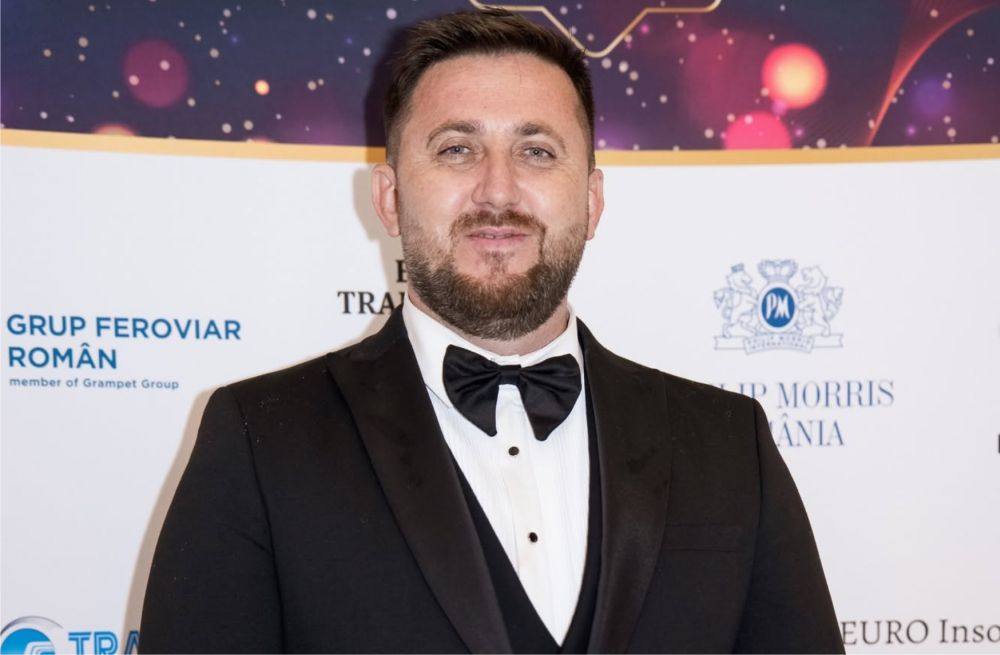
Marius Bradu: I joined etoro in January 2021, starting with a few hundred US dollars. By that point, I had already been investing in publicly listed companies through other platforms, so I wasn't entirely new to the markets. However, I was still at the beginning of understanding what long-term investing really required.
I was cautious about where I put my money. In Romania, financial scandals had left a lasting mark on people's trust in financial institutions and investment opportunities. That background made me particularly careful about understanding a platform before committing more capital.
After researching etoro and experiencing some disappointing early investment decisions, I decided to allocate more capital and copy three Popular Investors. For the next four to six months, I observed their decisions, how they selected companies and how they managed their portfolios.
As the effects of the pandemic began to impact my business, freeing up more time for me, I felt ready to manage my investments independently. Looking back, I probably overestimated how prepared I was. I had learned by observing others, but I hadn't yet developed a clear investment process of my own.
Then 2022 came. The market downturn brought my portfolio to a drawdown of slightly more than 20%. Although I saw other portfolios falling by more than 40%, the experience made me realise that surviving a difficult market isn't simply about choosing good companies. It also requires a structure that can withstand uncertainty.
That was my turning point. In 2022, I gave myself three years to build a documented and repeatable investment process. From 2023 onwards, I focused on global diversification, fundamental analysis, quantitative discipline and the mathematical principles behind the Law of Large Numbers. By December 2024, the Biz@re 500 Composite had reached its target of approximately 500 companies worldwide.
The biggest lesson I learned was that investing successfully isn't about getting every decision right. It's about building a process in which one mistake, one company or one market event doesn't determine the outcome of the entire portfolio. I moved away from trying to predict every market move and towards building a system designed to work over the medium and long term.
• Portfolio structure: diversification beyond traditional assets
Reporter: What financial instruments do you currently invest in, and how is your portfolio distributed across stocks, ETFs, bonds, crypto and other assets? What specific criteria dictate your capital allocation?
Marius Bradu: The core of my investment strategy is built around global equities. The Biz@re 500 Composite holds approximately 500 companies across different countries, industries and market sectors, with a strong focus on businesses that generate cash flow and have a record of distributing dividends to shareholders and buyback shares.
I don't select companies simply because they offer a high dividend yield. A high yield can sometimes signal financial difficulties rather than an attractive opportunity. I look at the underlying business, its financial strength, valuation, profitability, shareholder returns and the sustainability of its dividend policy.
My approach combines fundamental analysis with quantitative discipline. Each company is assessed within the context of its own sector, because comparing a bank with a technology company using exactly the same financial benchmarks wouldn't provide a fair picture. I also consider momentum and the health of the original investment thesis before making decisions.
One distinctive element of the portfolio is what I call the Strategic Crypto Reserve. I wanted to explore the growth potential of digital assets without allowing crypto volatility to dictate the direction of the traditional investment portfolio.
The principle is simple: this reserve is funded exclusively from dividends received, not from the core capital invested in the companies. My current approach allocates 30% of dividend income towards the crypto reserve, while the remaining 70% stays within the traditional dividend investment engine.
This creates a clear separation between the two components. The traditional portfolio remains focused on global businesses and income generation, while the crypto reserve provides measured exposure to selected digital assets. I see it as a bridge between traditional investing and the digital economy, rather than a replacement for one with the other.
Capital allocation is guided by business quality, valuation, sector characteristics, risk and the strength of the investment thesis. Diversification across approximately 500 companies also reduces the influence that any single holding can have on the overall result.
Ultimately, I don't want the portfolio to depend on one company, one industry, one country or one investment trend. My objective is to build a structure that can participate in different sources of growth while maintaining a disciplined approach to risk.
• Global market outlook: investing in a world of uncertainty
Reporter: How do you view the evolution of global financial markets in the current international economic context? What do you consider the biggest risks and opportunities for investors?
Marius Bradu: I believe global financial markets are entering a period in which investors need to look beyond short-term market movements and pay closer attention to the structural changes taking place in the global economy.
We are facing several challenges at the same time: elevated government debt, persistent inflationary pressures, changing interest rate expectations and geopolitical tensions that can disrupt international trade, energy supplies and investment decisions. These factors are interconnected. Higher borrowing costs, for example, affect governments, companies and households, while geopolitical uncertainty can quickly influence commodity prices and financial markets.
Artificial intelligence represents another major development. I see significant long-term opportunities in this area, not only for technology companies but also for businesses that can use AI to improve productivity, reduce costs and develop new products and services. However, I also believe investors need to distinguish between companies creating real economic value and those benefiting mainly from market expectations. Strong growth stories don't automatically translate into attractive investments at any price.
For me, one of the biggest risks is excessive concentration. When capital flows heavily into a limited number of companies, sectors or investment themes, markets can become vulnerable if expectations change. This is one of the reasons I believe global diversification remains relevant. It allows investors to participate in different economic cycles and sources of growth instead of depending on a handful of market leaders.
At the same time, volatility shouldn't automatically be interpreted as a reason to leave the market. It can create opportunities to invest in financially sound businesses when their valuations become more reasonable. The challenge is to distinguish between a temporary decline in share price and a genuine deterioration in the underlying business.
My approach is therefore not based on predicting the next crisis or identifying the next market winner. I focus on company fundamentals, valuation, financial strength and the long-term investment thesis. I also pay attention to how macroeconomic changes affect different sectors and regions.
• Strategy and sector selection: finding value across global markets
Reporter: Which specific markets and sectors do you believe offer the most interesting opportunities today? How do you balance fundamental indicators with macroeconomic trends and long-term growth prospects?
Marius Bradu: I don't believe opportunities are limited to one country or one particular sector. That's one of the reasons my strategy has a global approach. The United States remains a major source of innovation and business growth; Europe offers established companies with strong industrial foundations and shareholder returns, while Asian markets provide exposure to different economic cycles, manufacturing capabilities and emerging technologies.
In terms of sectors, I pay close attention to technology, particularly semiconductors, software and cloud infrastructure. Artificial intelligence is creating demand across the entire technology value chain, but I believe the opportunity extends well beyond the companies developing AI applications. Data centres, semiconductor manufacturing, electricity generation, grid infrastructure and industrial equipment are all part of this broader investment cycle.
Healthcare is another area I consider interesting from a long-term perspective. Demographic changes, medical innovation and increasing demand for healthcare services can support businesses over many years. I also follow financial companies, industrial businesses, energy and utilities, particularly where their financial fundamentals and shareholder returns justify the investment.
However, identifying an attractive sector is only the starting point. I don't automatically buy a company because its industry has strong growth prospects. A promising business can still be a poor investment if its share price already reflects unrealistic expectations.
My selection process starts with fundamental analysis. I look at profitability, financial strength, debt, cash flow, valuation and the company's ability to reward shareholders. I then consider the wider economic environment, including interest rates, inflation, currency movements, regulation and geopolitical developments.
I also use quantitative indicators to assess momentum and identify whether the market trend supports or contradicts the fundamental picture.
I want to own quality businesses, but I also want to be aware of what I'm paying for them.
Ultimately, I prefer to own businesses with different sources of revenue, operating in different economic environments. Some will grow faster, others will provide more predictable cash flows and dividends. Together, they contribute to the balance of the portfolio.
• The etoro experience: technology, community and investment tools
Reporter: What role does etoro play in your daily investment routine? Which analytical tools do you use most, and how valuable are features such as CopyTrader and the international investment community?
Marius Bradu: etoro has become an integral part of my investment activity, both as a platform for managing my portfolio and as a community where investors can exchange ideas and learn from one another.
My daily routine starts with monitoring the overall portfolio and reviewing developments affecting individual companies. I follow financial news, company announcements, earnings reports and changes in market conditions. However, I try to distinguish between information that genuinely affects an investment thesis and the daily noise that can encourage unnecessary trading.
I use etoro's portfolio monitoring features, charts, instrument pages and financial information as part of my research process. Over time, however, managing a portfolio of approximately 500 companies made me realise that I needed a more efficient way to organise research, evaluate holdings and make informed decisions.
That's why I developed Agil³.Ai , initially to solve my own portfolio management and analysis challenges. I wanted to reduce the time spent on repetitive research and bring the most relevant information together in one place, without sacrificing analytical depth. I was able to build the app using vibe coding tools and APIs provided by etoro.
The application works with real investment data provided through etoro and official economic reports, allowing users to securely import their etoro portfolios and analyse their actual holdings. It was designed for both beginners and experienced investors. Not everyone has the financial background or the time to read and interpret company reports that can run to 20-40 pages. Agil³ aims to make that information easier to understand and act upon, translating complex financial data into structured scores, indicators and company-level assessments.
Its analytical framework combines three main perspectives: fundamental quality through the Biz@re Score, risk-adjusted momentum through Momentum Guard, and the overall health of each investment thesis through Thesis Health. Additional analytical indicators provide further context on financial strength, accounting signals, valuation and other aspects of a company's performance.
The idea behind its interface is simple: "One look. All you need.” I wanted an application that feels simple to use but remains comprehensive in the analysis it provides. Investors shouldn't need to become financial analysts just to understand what's happening inside their portfolios.
The CopyTrader feature also played a significant role in my early development as an investor. Today, having developed my own strategy, I see CopyTrader from another perspective: as an opportunity for investors to follow a documented investment approach while learning about portfolio construction and risk management.
Beyond the technology, I value the international community. Investors have different backgrounds, experiences and perspectives, and discussions can often raise questions that I might not have considered independently. Being part of the etoro Builders community and attending etoro Summits has also given me the opportunity to exchange ideas with other investors and understand how the platform continues to develop.
For me, technology should make investing more understandable, research more efficient and portfolio management more accessible. But it shouldn't remove the human element from investment decisions.
• Risk management: staying disciplined when markets turn against you
Reporter: How do you manage risk and market volatility? Do you follow specific rules for position sizing, diversification and selling decisions? How do you control the emotional pressure during market downturns?
Marius Bradu: Risk management is one of the foundations of my investment philosophy. I learned early in my journey that being right about a company isn't enough. You also need a portfolio structure that can withstand periods when markets move against you.
The experience of 2022 was particularly valuable in this respect. It made me realise that I needed a written investment process rather than relying on intuition or reacting to every market movement. Since then, I've focused on diversification, fundamental analysis and quantitative discipline.
Holding approximately 500 companies across global markets is a central part of that approach. Diversification doesn't eliminate risk or guarantee positive returns, but it reduces dependence on individual companies and helps prevent one unsuccessful investment from having a disproportionate impact on the entire portfolio.
When evaluating an individual position, I look beyond its share price. A decline doesn't automatically mean that a company has become a bad investment. I want to understand what caused the decline and whether the underlying business has changed. If the fundamentals remain sound and the original investment thesis is intact, market volatility alone isn't necessarily a reason to sell.
The opposite is also true. A rising share price doesn't automatically justify holding a company if its financial condition deteriorates or the original investment thesis no longer makes sense. My decisions need to be supported by evidence, not by attachment to a particular investment.
I also use quantitative indicators to monitor portfolio performance and risk. Measures such as Beta, Sharpe Ratio, Sortino Ratio and maximum drawdown help me understand how the portfolio behaves under different market conditions. They don't predict the future, but they provide useful feedback about the effectiveness of the strategy.
The emotional side of investing is just as important. We often make decisions based on emotions and then try to justify them rationally. Fear can push investors to sell at the worst possible moment, while greed can encourage them to take risks they don't fully understand.
My solution is to rely on a documented strategy and predefined analytical criteria. This creates distance between market noise and actual investment decisions. I don't need to react to every headline, every correction or every change in sentiment.
Ultimately, I believe risk management isn't about avoiding every loss. That's impossible in investing. It's about understanding the risks you take, spreading them sensibly and having the discipline to follow your process even when the market tests your patience.
• The romanian investor: financial education, discipline and the road ahead
Reporter: How do you see the level of financial literacy and investment discipline among Romanian investors compared with previous years? What are your personal goals for the future, and what is the one piece of advice you would give to someone starting their investment journey?
Marius Bradu: I believe financial awareness in Romania has improved over the past years. More people are becoming interested in financial markets, investing platforms and alternative asset classes, particularly among younger generations. Access to information and technology has made investing more accessible than it used to be.
However, access to information doesn't automatically translate into financial knowledge. One of the biggest challenges remains the difference between investing and speculation. Social media can expose people to investment opportunities, but it can also create unrealistic expectations about how quickly wealth can be built. Many beginners focus on potential returns before understanding the risks, the businesses behind the stocks or the importance of having a clear investment plan.
I believe financial education should focus not only on explaining financial products, but also on developing patience, critical thinking and the ability to make decisions independently. Investors need to understand why they own an asset, what could go wrong and under which circumstances they would reconsider their decision.
Looking ahead, one of my main goals is to continue developing the Biz@re 500 Composite and Agil³.Ai. I want to show how a disciplined investment philosophy, combined with technology and transparent analysis, can help make portfolio management more accessible. Agil³ is particularly meaningful to me because it started as a solution to a challenge I faced personally: how to analyse and manage a large portfolio efficiently without losing sight of the fundamentals.
I would also like to contribute more actively to financial education by sharing my experience, explaining investment concepts in simple terms and helping people develop a more structured approach to managing their money.
If I could give one piece of advice to someone starting now, it would be this: don't start by asking how much money you can make. Start by understanding how much risk you can afford to take and what you are investing in.
Learn the basics, start with an amount you can afford to invest, diversify and give yourself time to develop a process. Don't confuse a lucky investment with a good investment strategy, and don't let short-term market movements dictate every decision.
You don't need to find the next big winner or predict what the market will do tomorrow. You need to build habits that you can maintain over many years.
For me, successful investing is not about being the smartest person in the market. It's about remaining disciplined, continuously learning and making decisions that you can explain and stand behind.
Just start! Don't wait!





















 Euro
 Dolar SUA
 Franc elveţian
 Liră sterlină
 Gram de aur