English
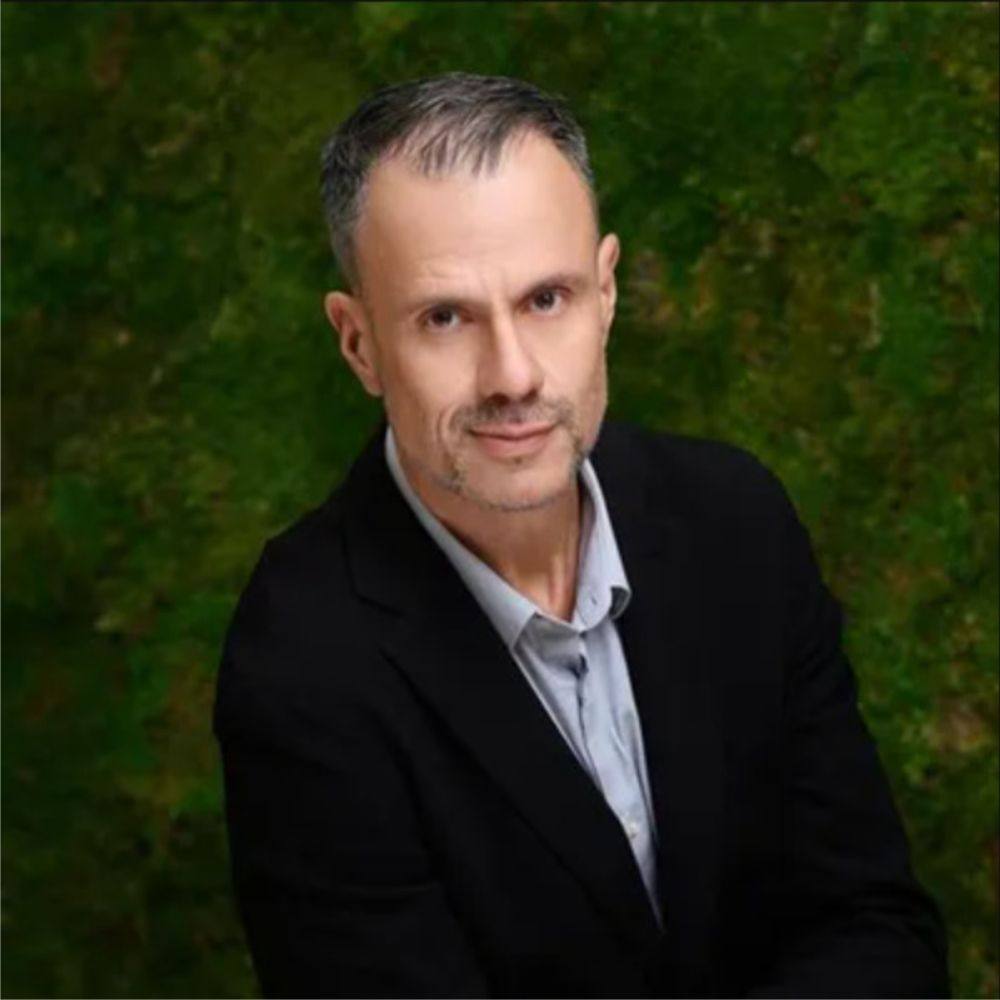
Reporter: You came to the event hosted by the technology hub in Conselve, near Padua, directly from Armenia, where you were monitoring the Firebird AI data center project. How is Schneider Electric addressing the distinctive infrastructure challenges of building an AI supercomputer in the Caucasus?
George Dritsanos: I'm impressed by how the Firebird AI project is being carried out in Armenia, where Schneider Electric supplied most of the equipment supporting the AI infrastructure. We're very pleased to see how this AI factory has created a large ecosystem of startups, technology companies and a younger generation building technology in the country around this center. Firebird is now at the heart of a large ecosystem of startups, technologies and entrepreneurs who use the technology and are genuinely enthusiastic about how artificial intelligence is evolving. We're impressed by how the project has developed.
As for the challenge, I would point to our large and highly capable team in Romania. Our Romanian colleagues are carrying out the project in Armenia and bring extensive expertise to it. We assigned several technicians from your country to the project, and the Romanian team is keen to support the growth of startups and the adoption of technology in Armenia. Of course, it was difficult because the site is in a part of the Caucasus that is fairly close but difficult to reach. We met interesting people with a distinctive culture, and our Romanian colleagues worked very well with them to implement all the technologies.
Reporter: I see. What specific expertise and added value did the Schneider Electric Romania team bring to this major AI project?
George Dritsanos: Schneider Electric Romania has extensive expertise in energy management and power distribution systems. It also provides substantial support with medium- and low-voltage equipment, uninterruptible power supplies (UPS) and liquid cooling components. Romanian technicians implemented the liquid cooling technology for the Firebird project. Our team in Romania successfully managed the entire first phase of the project, carried out the work and commissioned the entire data center in Armenia, drawing on the extensive experience it had built up in your country.
• Global supply chains are under strain from AI demand
Reporter: Given that AI workloads are driving power and heat densities to unprecedented levels, how do projects such as Firebird reflect the broader demand trends you're seeing in Central and Eastern Europe?
George Dritsanos: In recent years, we've seen a major technological leap from traditional applications to AI applications, which require enormous computing power. That's why we at Schneider Electric have focused on becoming technology leaders in this field. We're deploying power distribution technologies and energy management solutions to meet that high demand for power. We're talking about projects at 100 megawatts, 200 megawatts and even 1 gigawatt, as well as faster deployment of UPS systems, power modules and prefabricated platforms for data centers. We also have a complete cooling portfolio and all the mechanical components needed for the entire installation. The new technology requires liquid cooling and high-capacity power distribution, and Schneider Electric, as a technology leader, can support all of that.
Reporter: As hyperscale and AI data center projects accelerate across Europe, how are you expanding your research and development (R&D) and manufacturing capabilities to meet expectations on lead times and the requirements of next-generation cooling?
George Dritsanos: Schneider Electric is investing heavily in research and development. We're also investing here in Conselve, where we've increased capacity by 50%. We're doing this because we see a huge technological leap in AI and rising demand for cooling systems designed for AI applications. We want to be at the forefront of the supply chain. Global supply chains are currently under considerable pressure from high AI demand, and we need to keep pace.
Reporter: How do the Romanian teams and local partners work with the engineers here in Conselve to tailor cooling and power solutions for complex projects like the one in Armenia?
George Dritsanos: We have a great deal of local expertise in Armenia. Our colleagues are well trained in Schneider Electric's new technologies for both liquid and conventional cooling. We work closely with the R&D department and the engineers at the Conselve factory, who have extensive experience designing, manufacturing and deploying these solutions. We have solutions architects in Romania who are trained on this equipment, and everyone works together to develop the right solution for the customer.
• EcoStruxure, Schneider Electric's solution for AI
Reporter: What is the biggest bottleneck keeping Conselve from delivering the cooling equipment customers need more quickly today, and how have lead times changed over the past year?
George Dritsanos: That's a very good question. As I mentioned, supply chains are under intense pressure, and what happens in those chains is closely tied to customer requirements. We always try to listen to what customers ask for and adapt to their needs. That's part of our company's DNA, and we want to keep working that way. Of course, it's sometimes difficult because the application may require a special configuration, such as an engineer-to-order (ETO) product. Cooling equipment falls into that category because each AI deployment or data center installation has its own specifications. In some cases, changes during production and the specific requirements of individual partners or customers put pressure on the supply chain. Our job is to understand those requirements and changes, manage them and adapt the equipment to what each customer or partner needs.
Reporter: Which products or capabilities are unique to Schneider Electric's Conselve facility?
George Dritsanos: As you've seen, several of our products offer something distinctive. The most important thing is that they're integrated into a broad ecosystem of equipment, with a software layer that allows the entire range to be integrated and used within the same facility. A data center has many different types of equipment and systems, including power distribution equipment, racks, rack power distribution units, environmental monitoring, building management systems (BMS), medium- and low-voltage equipment, and cooling systems. EcoStruxure brings all these systems together. What's distinctive about Schneider Electric's offering is that a single software layer can integrate all our products so users can operate, monitor and control them locally or remotely. That's what gives our products their distinctive value.
Reporter: Are the systems built here ready for large-scale projects such as AI gigafactories?
George Dritsanos: Yes, of course. The Conselve factory is unique and highly advanced. It's already supplying equipment for several contracts in North America, where gigawatt-scale projects are already underway. At Schneider Electric, we're ready to support the infrastructure and installations needed in Europe and across our region, which includes Romania, Greece, Poland, Israel and Armenia.
Reporter: Do you plan to replicate these capabilities in other parts of the world?
George Dritsanos: Yes. We've already expanded production of our cooling solutions to two more factories, one in Bengaluru, India, and another in China. That gives us three facilities worldwide supplying the full range of Schneider Electric cooling solutions, plus our recent acquisition in Buffalo, which manufactures liquid cooling equipment. Together, these four facilities supply our cooling solutions worldwide.
Reporter: Thank you!
Schneider Electric Romania contributed to the power and electrical infrastructure for the Firebird AI data center and supercomputer in Hrazdan, in Armenia's Kotayk Province. The project was launched in August 2026 in partnership with the Armenian government, with technology support from NVIDIA. For the first phase of the project, estimated at around 15 MW, Schneider Electric Romania supplied power and electrical infrastructure, including UPS systems, medium- and low-voltage equipment, power distribution solutions and racks. The company also supplied cooling solutions and provided support for equipment such as Motivair's advanced cooling systems. The Schneider Electric Romania team helped build a local ecosystem by working with certified integrators and electrical panel manufacturers from Romania, along with regional partners.
The Firebird AI project is located in Hrazdan, about 45 km from Yerevan, Armenia. The first phase was inaugurated in August 2026, when the project was billed as the largest AI data center in the Commonwealth of Independent States region. It aims to reach up to 300 MW of capacity by the end of 2027 and to deploy tens of thousands of NVIDIA GPUs from the Blackwell and Rubin families. Investment in the first phase was initially estimated at hundreds of millions of dollars, and an expansion worth around $8 billion was subsequently announced for the second phase. The infrastructure includes NVIDIA computing and networking technology, Dell servers and Vertiv cooling solutions.



















 Euro
 Dolar SUA
 Franc elveţian
 Liră sterlină
 Gram de aur