 English
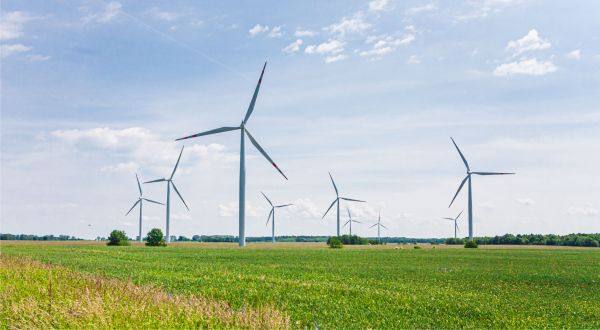
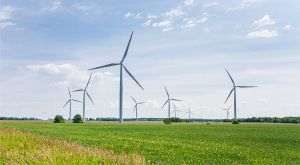
The limited ability of Romania's transmission grid to absorb electricity from new renewable power plants is the main obstacle to energy project development in the country, according to the International Energy Agency's (IEA) Renewables report, published on Friday. If the transmission grid were strengthened, Romania could see one of Europe's largest increases in the share of electricity generated by wind and solar by 2031. The IEA projects an increase of 24 percentage points from 2025, broadly in line with Poland and close to Germany. The agency puts the increase at 25 percentage points in both of those countries.
The IEA includes Romania among the markets where better-designed auctions and support schemes could, under its accelerated case, increase the share of winning projects that secure financing and move into construction. The agency also notes that Romanian pumped-storage hydropower projects are progressing more slowly than expected, as are projects in Spain, the United Kingdom, Croatia and Austria.
Across the European Union, the scale of the gap between new generating capacity and the transmission and distribution networks is evident in the agency's projections for 2030. In the IEA's main case, renewables account for 60% of electricity generation in 2030, compared with the 72% projected by the European Commission under REPowerEU. The EU is expected to install more than 480 gigawatts (GW) of renewable capacity over 2026-2031, accounting for 80% of all new generating capacity. Total installed solar PV capacity is expected to reach 592 GW in alternating-current terms by 2030, while installed wind capacity is projected to fall 30% short of the European Commission's forecast of 510 GW. The IEA attributes the shortfall to delays in permitting, auctions and grid connections, which have hit offshore wind particularly hard, and to the growing volume of wind and solar generation that has to be curtailed.
Europe's power markets are already feeling the pressure. Negative prices are becoming more frequent, and falling prices during peak solar generation hours are squeezing revenues for projects exposed to market prices and putting long-term power purchase agreements to the test. At the same time, renewable generation reduces the amount of gas burned in power plants and can reduce how often those plants set the wholesale price. For European consumers, the two effects matter at different times. Higher gas prices can push up electricity prices on an evening when supply is tight, while prices can fall sharply on a sunny afternoon. Europe has an industrial base to protect, said Heymi Bahar, senior energy analyst at the IEA and the report's lead author. "Europe has a strong wind turbine manufacturing base that it needs to preserve. European solar panel manufacturing remains limited because of high local costs and low prices abroad. India, meanwhile, is expanding its role as a manufacturer. China's excess capacity has driven solar module prices sharply lower, allowing sub-Saharan Africa and Southeast Asia to increase imports dramatically since March to address problems with electricity access and reliability,” Bahar said at the press conference launching the report.
• 4,770 GW of new generating capacity to be installed over the next five years
Globally, disruptions to oil and gas flows through the Strait of Hormuz have changed how governments weigh their energy options. The IEA forecasts that 4,770 GW of renewable capacity will be installed over 2026-2031, 57% more than in the preceding six years. Solar PV is expected to account for more than 75% of those additions. For the first time, emerging and developing economies outside China are expected to add as much capacity collectively as advanced economies. India is set to become the world's second-largest market for new capacity, while combined additions in Southeast Asia, the Middle East and Africa are projected to be nearly three times those of the previous period, the report says.
"Over the past two to three years, climate change has moved down the international agenda. Yet renewables continue to grow rapidly because energy security has become the top priority for governments. Energy security and climate goals have never been so closely aligned. Driven by energy security concerns, countries are adding renewable capacity, taking a greater interest in nuclear power and accelerating the adoption of electric vehicles,” IEA Executive Director Fatih Birol said at a press conference at the agency's headquarters.
The report also measures the impact of investments already made. Had renewables stopped expanding after 2010, global fossil fuel demand in 2025 would have been about 8% higher, an amount equivalent in energy terms to India's entire energy consumption. In the case of natural gas, the consumption avoided is equivalent to 11% of global demand. For households that experience power outages, the benefit is more tangible. Using data on solar module trade and other indicators, the IEA estimates that rooftop solar installations have improved electricity access or the quality of service for at least 70 million households since 2022.
In transport, higher fuel prices prompted countries to accelerate the rollout of biofuel blending mandates, particularly in Southeast Asia and Latin America. The IEA raised its forecast for growth in liquid biofuel production by 40% compared with the previous edition. By 2031, renewable energy use in transport is projected to rise by at least 60%, reaching 6% of the sector's energy demand. Increased use of renewable electricity by electric vehicles is expected to account for 45% of that growth.
• Global renewable capacity to reach 9,710 GW in 2030, 2.6 times its 2022 level
China remains at the centre of this expansion, even as its share of global capacity additions falls from more than 60% in 2025 to 53% over the forecast period. The shift from fixed tariffs to competitive auctions was followed by a nearly 55% drop in new solar PV installations in the first nine months of 2026 compared with the same period in 2025. Excess manufacturing capacity and falling module prices have squeezed margins. More than 90% of major Chinese solar PV manufacturers reported losses in 2026, and more than 70 companies have filed for bankruptcy since 2024, according to the IEA. India is expanding its manufacturing capacity and could reach 17% of global solar module manufacturing capacity.
"The first challenge is the supply chain, where China plays a dominant role, given that the first rule of energy security is diversification. The second challenge concerns day-to-day operations and system integration [...]. Because solar and wind generation are variable, integrating them carefully is essential to avoid problems such as curtailment or negative prices at midday. To address these issues, the report highlights the need to expand power grids, increase battery storage and use artificial intelligence to support demand-side flexibility,” Birol said at the report's launch.
The IEA chief pointed to two figures that illustrate the scale of the problem. Advanced-stage renewable power and storage projects awaiting grid connection total 3,000 GW worldwide, up 60% from a year earlier. Wind and solar generation curtailed for technical reasons amounted to nearly 200 terawatt-hours (TWh) in 2025 and could exceed 850 TWh in 2031 if investment in grids, storage and flexibility lags. The first figure measures the capacity of projects waiting to connect to the grid. The second measures how much electricity power plants could generate but the system would be unable to absorb at certain times.
In the main case, global renewable power capacity reaches around 9,710 GW in 2030, 2.6 times its 2022 level. The tripling target agreed at COP28 could be met in 2031 under the accelerated case if auctions, grid expansion, battery deployment and permitting move faster. In Romania, the test will be how quickly the solar and wind farms awarded contracts can connect to the grid and whether the national power system can use their output during peak hours. That will determine how much of the 24-percentage-point increase projected by the IEA will materialise in Romania's power generation mix in 2031.




















 Euro
 Dolar SUA
 Franc elveţian
 Liră sterlină
 Gram de aur





























Reader's Opinion