English

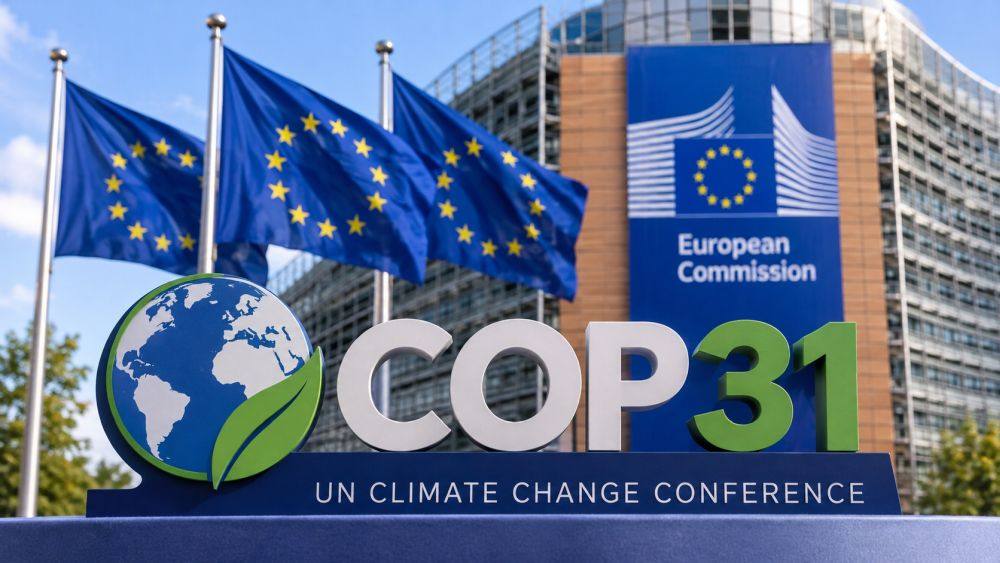
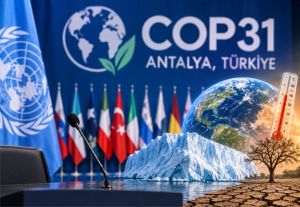
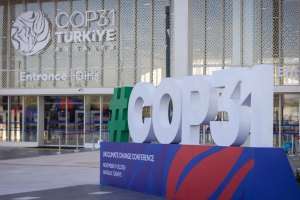
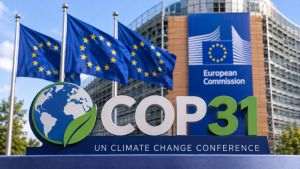
The UN Climate Change Conference, COP31, has entered its high-level segment. Dozens of heads of state and government have delivered-or are scheduled to deliver-statements in Antalya, Turkey; however, the absence of key European Union leaders and the lack of political representation from the United States highlight the challenges of international coordination in the fight against climate change.
French President Emmanuel Macron, German Chancellor Friedrich Merz, and Italian Prime Minister Giorgia Meloni are not attending the leaders' gathering. Instead, European Commission President Ursula von der Leyen is present in Antalya, representing the European institutions. Agence France-Presse (AFP) reports that British Prime Minister Andy Burnham is the only leader from a G7 nation scheduled to address the summit. Furthermore, U.S. President Donald Trump is not in attendance, and China is represented by Vice President Han Zheng, in the absence of leader Xi Jinping. Cosima Cassel, an expert in climate diplomacy at the think tank E3G, told AFP that the absence of key European leaders is regrettable, given that Europe ought to maintain a strong presence at this conference. Meanwhile, Chiara Martinelli, Director of Climate Action Network Europe, expressed concern that Ursula von der Leyen might end up being virtually the only high-level representative of the major European economies on the summit stage. French authorities explain Emmanuel Macron's absence by citing his participation in events marking the World War I Armistice on November 11, as well as a European summit taking place today in Ireland. European Commissioner for Climate Action Wopke Hoekstra stated in Brussels that the absence of certain leaders is not unusual, noting that there are practical reasons why some heads of state or government might not attend. The official also remarked that expectations regarding the outcomes of this edition of COP are not particularly high.
• Lula returns to climate negotiations following electoral victory
Among the leaders attending the gathering are Brazilian President Luiz Inacio Lula da Silva, Turkish President Recep Tayyip Erdoğan, and Iranian President Masoud Pezeshkian. Lula's presence carries particular political significance, coming after his victory in Brazil's presidential election-where he defeated Flavio Bolsonaro in the second round. In recent years, Lula has advocated for curbing deforestation, one of Brazil's primary environmental challenges. Iranian President Masoud Pezeshkian has announced that he intends to address the ecological impact of American and Israeli attacks on Iran during the conference. According to his remarks-cited by Iranian state media and reported by AFP-Tehran plans to highlight environmental destruction that it attributes to the actions of these two nations.
• Turkey promotes electrification while announcing new oil discoveries
One of the objectives championed by the conference host, Turkey, is to accelerate the electrification of the transport, building, and industrial sectors. The voluntary initiative, supported in partnership with Australia, aims to increase the share of electricity in global energy consumption from just over 20% today to 35% by 2035. However, the proposal has drawn criticism because it does not condition this rise in electricity consumption on the use of clean energy sources, nor does it include an explicit commitment to phase out fossil fuels. According to Reuters, UN Secretary-General Antonio Guterres has urged nations to set clear timelines for transitioning away from fossil fuels. Against this backdrop, Turkish President Recep Tayyip Erdoğan announced the discovery of two new oil fields in the Gabar region, in the country's southeast. According to the Anadolu Agency, the Turkish leader estimated that daily production from the region would exceed 100,000 barrels by the second half of 2027. AFP reported that the new fields could contain approximately 135 million barrels of crude oil.
This announcement highlights the contradiction between the climate goals promoted at the conference and the energy interests of the participating states. Oil, natural gas, and coal remain the primary drivers of the emissions that contribute to global warming.
According to the Turkish Ministry of Environment, as cited by the Anadolu Agency, 102 leaders-representing 95 countries and seven international organizations-are expected to attend COP31. The conference is taking place within a challenging international climate, marked by geopolitical tensions, concerns over energy security, and economic pressures that may push environmental policies into the background.














 Euro
 Dolar SUA
 Franc elveţian
 Liră sterlină
 Gram de aur