 English

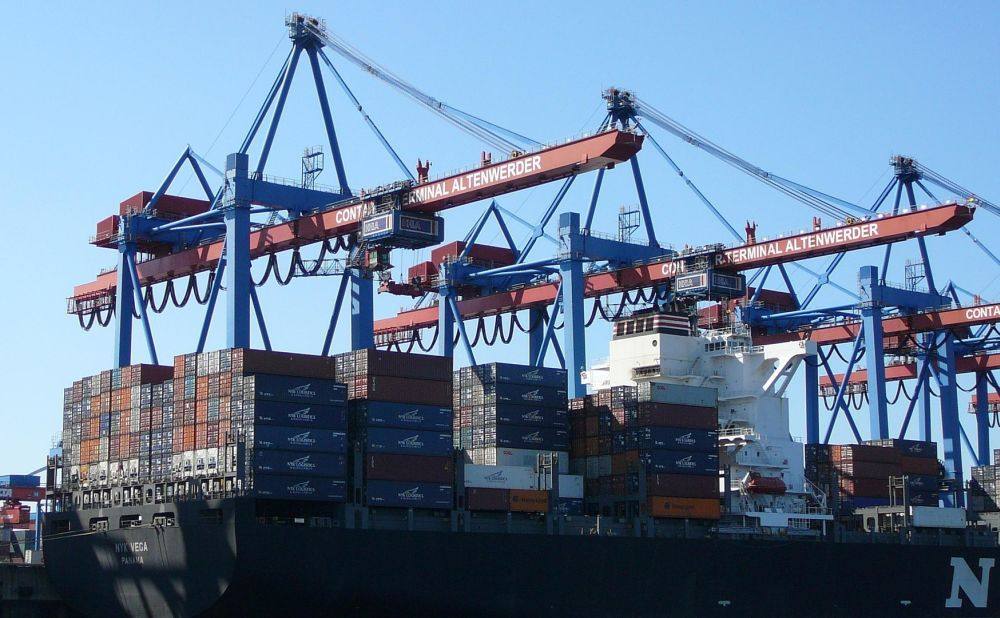
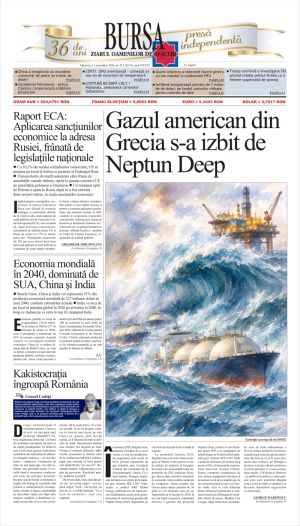
Ambiguous rules and checks that vary from country to country are weakening the enforcement of economic sanctions against Russia, according to an audit report published yesterday by the European Court of Auditors (ECA). The report found that trade in goods between the EU and Russia fell by 77% over the past four years following the introduction of sanctions.
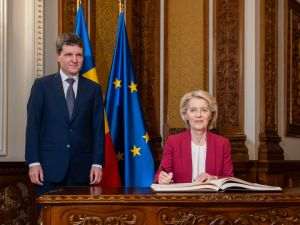
"EU trade sanctions can have the desired effect only if all member states implement them uniformly and in a coordinated manner. The Commission has made considerable efforts to put the necessary framework in place and coordinate the implementation of sanctions, but unclear rules and shortcomings in enforcement reduce their impact and make them easier to circumvent,” said Mihails Kozlovs, the member of the European Court of Auditors responsible for the audit, at yesterday's launch of the report.
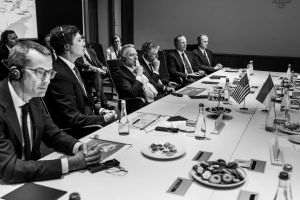
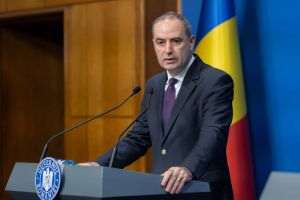
Asked by the newspaper BURSA how many EU Member States had put national mechanisms in place to monitor the implementation of and compliance with economic sanctions, given that customs authorities alone cannot cover the full range of responsibilities in this area and that the Romanian government only defined the responsibilities of ministries and other public bodies for sanctions compliance in the spring of this year, Mihails Kozlovs replied, "We did not carry out any checks in Romania. Our sample covered five EU Member States, and your country was not among them. To return to your question, I think it is very important for the European Commission to assess how economic sanctions are implemented in the Member States. In fact, this is our second recommendation at the end of the audit report. I believe this work will be useful, because it looks as though economic sanctions regimes will be with us for years to come. Any investment in strengthening this EU policy tool will certainly pay off through better implementation. Unfortunately, for this report, we did not examine whether or how other Member States monitor the implementation of sanctions or whether they carry out other assessments in this area.”
According to the European Court of Auditors (ECA) report, sanctions are adopted unanimously at EU level.At the border, however, customs o fficers must decide whether the goods before them are subject to sanctions and whether the paperwork allows them to release the shipment. Sanctions regulations and customs legislation sometimes use different terms. For example, goods may qualify for an exemption, in which case the transaction can go ahead without prior approval, or for a derogation, which requires the operator to obtain authorisation.
The report illustrates the problem with several examples. In one case, the Italian authorities cleared a shipment bound for Russia without requiring an export licence. Polish customs officers stopped it as it was about to leave the EU. The goods were sent back to Italy, the original export declaration was cancelled, and the Italian authorities cleared the shipment again. This time, it left for Russia from an Italian port. The auditors identified a second case in Lithuania, where customs officers stopped goods for which Italy had granted the same exemption. The Commission told the auditors that member states were responsible for enforcing sanctions and that it had no mandate to intervene in such decisions.
In some cases, customs officers in the Baltic states also require a declaration from the manufacturer. Other countries do not require this document. Differences also show up in what authorities record. According to ECA figures, since 2022 Bulgaria has recorded no sanctions breaches involving goods originating in other member states and leaving the EU through Bulgarian customs. Latvia recorded around 2,100 shipments in that category in 2024 alone, accounting for three quarters of the breaches its authorities reported that year. The figures reflect what the two administrations recorded, and differences in how they check and report shipments matter when comparing them.
"Differences in national customs control practices create a risk that companies will deliberately choose licensing offices or customs posts in member states with less stringent checks. This practice is known as "forum shopping'. In the Court's view, it poses a major risk to the effective enforcement of EU trade sanctions, in part because it can make them easier to circumvent,” the auditors write.
The audit covers trade in goods other than energy from February 2022 to the end of 2025, with some updates from 2026. The auditors carried out fact-finding visits to Bulgaria, Germany, Latvia, the Netherlands and Poland.
• Russia turns to other suppliers
In 2021, the EU was Russia's largest trading partner. By 2025, it had fallen to third place, accounting for 10.2% of Russia's trade in goods. Over four years, the value of bilateral trade fell from euro252.8 billion to euro58.3 billion. Separately, the Commission estimated the value of export restrictions and bans at euro49 billion and that of import restrictions and bans at euro110 billion, equivalent to 56% and 75% of pre-war levels, respectively.
Since 2023, EU exports directly to Russia of goods in the two sensitive categories examined by the Court have almost ceased. These categories include dual-use items, advanced technologies and critical industrial goods. Meanwhile, Russia has expanded its trade elsewhere. In 2024, its trade with China was 82% higher than in 2021, while trade with India was more than six times its pre-war level, largely because India bought more Russian oil. Alternative sources of supply also came at a higher cost. According to a study cited by the Court, Russia paid 39% more for dual-use goods purchased from other countries than the same suppliers charged customers elsewhere in the world for the same products.
The effects can also be seen in Russian missiles and drones. Of the 202 components identified in a Commission analysis based on external data, eight came directly from the EU. Around 72% came from the wider Western supply chain. The auditors say the small share sourced directly from the EU shows that restrictions are working on that route. The share sourced from the wider Western supply chain illustrates how difficult it is to track components all the way to their final destination.
The auditors also tracked trade in a sample of sensitive goods in Turkiye, Armenia and Kazakhstan. After the invasion, these countries traded more of the goods examined both with the EU and with Russia and Belarus. In most cases, trade flows had returned to pre-war levels by 2025. "These statistics offer clues about trends in sanctions circumvention. However, they do not provide an accurate picture of trade volumes, as complete and reliable information on trade between Russia and third countries is unavailable. Moreover, not all forms of sanctions circumvention are visible in trade statistics,” the Court says.
In one case, investigators were able to trace the goods to their final destination. Export documents for more than 760 vehicles leaving the EU listed destinations in third countries. Following alerts from Poland, the European Anti-Fraud Office coordinated an investigation that confirmed the vehicles had reached Russia. Several member states opened criminal investigations.
• What Brussels can measure
Since 2022, customs authorities have issued more than 12,000 risk information forms for sanctions-related procedures. Half of the forms concerning Russia and Belarus flagged cases in which the customs office of exit turned back goods that an office in another member state had cleared for export. Checking a derogation granted in another country can also be difficult. The EU register may be missing the commodity code, the authorised quantity, the names of the parties or the expiry date, and some customs authorities have no access to it.
The Commission can track how much direct trade has fallen and how trade routes have shifted. It is harder to say how much these measures have weakened Russia's ability to wage war. The 2023 and 2024 assessments focused mainly on trade flows and developments in the Russian economy. The Court had no data on the effects on specific Russian military manufacturers, European exporters or EU regions. According to the audit, the Commission did not even assess the administrative resources needed to enforce the sanctions.
"From the outset, the Council's guidelines did not require member states to agree on common criteria for measuring the effectiveness of EU trade sanctions. Nor did the Commission propose such criteria. The Court considers common criteria essential for member states and EU institutions to assess the effectiveness of EU trade sanctions consistently, in line with the Council's guidelines,” the ECA auditors write.
The Court is therefore asking the Commission to clarify the rules by 2027 and examine how checks and authorisations differ from one country to another. By 2028, the auditors want authorities to make full use of information-sharing systems and the Commission to collect data consistently and assess the results regularly against common criteria.












 Euro
 Dolar SUA
 Franc elveţian
 Liră sterlină
 Gram de aur

















Reader's Opinion