 English


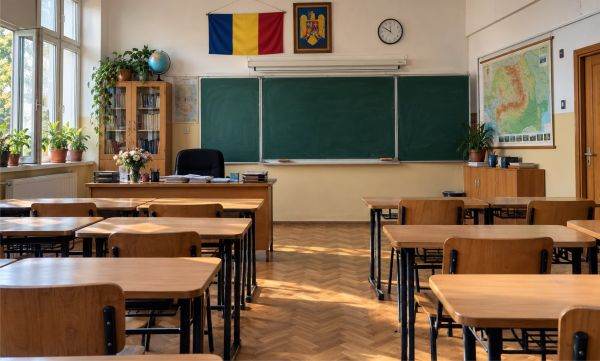
Education is one of the sectors where the failure of successive governments over the last three decades is glaringly apparent. Since 1990, more than 30 individuals-including both permanent ministers and interim appointees-have headed the Ministry of Education. The new Cabinet proposes to address the fallout from austerity measures, overhaul the school curriculum, provide support for vulnerable students, and decentralize decision-making. Yet, the core challenge remains the same: ensuring the continuity of reforms and securing their funding.
The installation of a new Government brings one of the chronic issues within the Romanian education system back to the forefront: the frequent turnover in the Ministry's leadership and the persistent difficulty in seeing reforms through to completion. In the roughly 36 years since the Revolution, the Education portfolio has been held by over 30 ministers-counting both permanent and interim officeholders. Each political shift has brought new priorities, legislative amendments, and promises of modernization, while long-standing problems-such as school dropout rates, the urban-rural divide, a shortage of qualified staff, and poor student performance-have remained on the public agenda. This time around, the governing program proposed by the Cabinet led by Luca Niculescu outlines a series of interventions targeting social support for students, as well as the structure of the curriculum, the organization of schools, and the funding of research. According to the list submitted to Parliament, the Education and Research portfolio is set to be taken over by Sorin Valentin Costreie, while Sorin Gabriel Ionescu has been proposed for the position of Minister-Delegate for Pre-university Education.
• Over 30 ministers and a succession of reforms
The list of Education ministers since 1989 illustrates just how frequently the leadership of this institution has changed. Mihai Şora was followed by Gheorghe M. Ştefan and Mihail Golu; during the 1990s, the portfolio was held by, among others, Liviu Maior, Virgil Petrescu, and Andrei Marga. The 2000s saw the tenures of Ecaterina Andronescu, Alexandru Athanasiu, Mircea Miclea, Mihail Hărdău, and Cristian Adomniţei, followed by a series of short-lived and interim mandates. In May 2012, Ioan Mang held the Education portfolio for... one week. Ecaterina Andronescu, by contrast, served multiple terms. Not all these changes carried the same weight; some mandates were associated with sweeping reforms, while others involved targeted adjustments, reorganizations, or the management of political crises. However, the rapid turnover of ministers made it difficult to maintain a consistent direction-especially when a change in leadership was accompanied by shifts in the rules governing student assessment, high school admissions, the organization of the academic year, or the professional status of teachers. The public broadcaster produced a retrospective-published in January 2011-on the reforms associated with Andrei Marga and Daniel Funeriu, which revealed that some of the changes initiated in previous years were subsequently altered or abandoned. Educational reform thus became a process in which institutional continuity mattered just as much as the ideas championed by each individual minister. The situation remains the same in 2026.
• From the Marga Reform to "Educated Romania"
In 1999, the reform associated with Minister Andrei Marga aimed, among other things, to decentralize the system and strengthen the autonomy of educational institutions. Later, the 2011 National Education Law-linked to Daniel Funeriu's tenure-redesigned the legislative framework and introduced new rules for both the pre-university and university systems. The most recent comprehensive legislative package was adopted in 2023 under the banner of "Educated Romania" (România Educată). On its website, the Ministry of Education highlights the two core legislative acts: the Law on Pre-university Education (No. 198/2023) and the Law on Higher Education (No. 199/2023). These established the framework for new curricula, reorganizations, and systemic interventions; however, their actual implementation depends on subsequent methodologies, funding, and administrative decisions. The issue lies not merely in the number of reforms, but in how they are implemented. Changing a law does not automatically yield results in the classroom. Success requires well-trained teachers, coherent textbooks and curricula, adequate infrastructure, fair assessment, and resources that actually reach the schools. In the absence of these, a reform may remain largely confined to official documents, and the next minister might be tempted to replace it before its effects can even be measured.
• Austerity measures: the first challenge to address
The new administration will also have to manage the impact of the fiscal-budgetary measures introduced in 2025. According to the Ministry of Education, Law no. 141/2025 led to the reorganization of 507 educational institutions, an increase in the weekly teaching workload by two hours, and changes to the limits on the number of students per class. Daniel David, the Minister of Education at the time, presented these measures as necessary interventions in the context of the budgetary crisis, arguing that the objec The objective was to maintain salaries and scholarships and to avoid more extensive cuts. However, documents published by the ministry indicate that the implementation of the new rules necessitated the reorganization of educational institutions and the restructuring of teaching workloads. The governance program proposed by Luca Niculescu promises a "gradual correction"-within budgetary constraints-of the provisions of Law no. 141/2025 that have the most significant negative impact on students and teachers. This phrasing leaves a crucial question unanswered: which specific measures will be amended, according to what timeline, and with what resources? Without such details, the promise risks remaining too vague to be effectively evaluated.
• Hot meals, social support, and "School After School" programs
Among the immediate priorities of the new governance program is the phased expansion of the "Healthy Meal" initiative-prioritizing vulnerable and rural communities-with the ultimate goal of universal implementation by the 2029-2030 school year. The document also proposes consolidating various forms of support-such as social scholarships, school supplies, student transport, the "Euro 200" program, the "School Program" (for food/produce), and state allowances-into a comprehensive social package for education. The continuation of social scholarships during school holidays is contingent upon available fiscal space, while the voucher scheme for children from low-income families is set to continue, supported by European funds and targeting 500,000 children annually. Another proposal involves adopting a clear legal framework for the "School After School" program, with operating hours from 8:00 to 17:00. The government intends to expand both this program and the "Second Chance" initiative, supported by core funding from the state budget supplemented by local co-financing. The primary objective of these measures is to reduce school dropout rates and assist families who are unable to provide supervision or educational activities for their children outside of regular school hours. However, their effectiveness will depend on geographical coverage, the availability of personnel, and the authorities' capacity to sustain funding over the long term.
• Greater autonomy for schools and reduced bureaucracy
The government program proposes the completion, by 2029, of an integrated IT system for education. This system would encompass electronic gradebooks, records of students and staff, and examination data. It is intended to be linked with social databases to help identify children who are not enrolled in school and to facilitate more efficient delivery of support. Furthermore, the document pledges to reduce the reporting burden on schools by at least one-third through the use of standardized forms and the elimination of redundant requirements. Plans include providing high-speed internet access in all schools, virtual laboratories, and equipment for teachers and students from low-income families, as well as the responsible integration of artificial intelligence into education and school administration. One of the most significant changes announced concerns decentralization. According to the program, decisions regarding curriculum, personnel, and finance would be made at the level of the individual school or school consortium, while county-level structures would transition into support services rather than acting solely as oversight bodies. In its analysis of the governing program, Edupedu.ro noted that this approach could signify a major shift in the organization of pre-university education, particularly concerning the hiring of teachers and the management of budgets. However, the document does not specify the timeline or the legislative amendments required to fully implement these principles. Genuine autonomy entails not only the delegation of decision-making authority but also the provision of resources, managerial competencies, and mechanisms for accountability regarding outcomes.
• A new curriculum, revised assessments, and stronger ties to the labor market
Curricular reform represents another key component of the program. The proposed government intends to continue updating the framework curricula, implement new high school syllabi starting with the 2026-2027 academic year, and revise the middle school curriculum-with the goal of reducing the excessive workload placed on students. The document provides for an increase in elective courses determined by individual schools, as well as new, free-of-charge textbooks for all subjects-available in the languages of national minorities and in digital format. The National Evaluation and the high school admission process are set to be revised with a focus on competencies, while the new Baccalaureate exam, scheduled for 2030, is expected to offer greater predictability. Concurrently, the program aims to better align vocational and technological education with the needs of the economy. Plans are in place to operationalize the dual education campuses initiated under the National Recovery and Resilience Plan (NRRP), to introduce qualifications in sectors such as energy, defense, agriculture, construction, and digitalization, and to provide incentives for companies that offer practical training, scholarships, or investments in vocational training. This direction is relevant to the labor market, but the outcome will depend on effective cooperation between schools, universities, and employers. The mere announcement of new qualifications does not gu guarantees that graduates will find employment in the fields for which they were trained.
• Funding: The Decisive Test for Reform
The governing program proposes a gradual increase in education funding-within the constraints of the deficit trajectory-with the goal of reaching 15% of the state budget by 2030, while maintaining the target of 6% of GDP. In the research sector, a gradual path toward public funding reaching 1% of GDP by 2030 is envisioned, alongside multi-year competitive grant schemes and the evaluation of organizations based on international standards.
For universities, the document proposes that resources allocated in 2027 remain at least at the level of the 2025 fiscal year, with phased increases beginning in 2028. It also mentions social scholarships for students-funded through European resources for the 2026-2027 academic year-and the expansion of support programs for young people from low-income families. These objectives must be viewed within the context of Romania's budgetary constraints. While the program speaks of increasing funding, it explicitly links this to deficit limits. Consequently, the gap between the stated targets and the funds actually allocated in annual budgets will serve as one of the primary criteria by which the new leadership can be evaluated.
• Continuity Over Mere Rebranding
The experience of recent decades shows that education has certainly not lacked announced reforms. There have been new laws, curriculum changes, modifications to examinations, and decentralization projects. The challenge has often been maintaining a consistent direction long enough for results to be measured and adjusted. The new minister will have to simultaneously manage the impact of budgetary measures, the implementation of the 2023 laws, curriculum reform, digitalization, and the promise of more substantial funding. Furthermore, the division of responsibilities between the Minister of Education and the Minister-Delegate for Pre-university Education will require a clear delineation of duties to avoid overlapping decision-making. For students and teachers, the true indicator of a new phase will not be the number of projects presented, but the extent to which these actually reach schools: less bureaucracy, predictable support for vulnerable children, coherent study programs, well-supported teachers, and funding that does not need to be renegotiated year after year. After more than 30 ministers and numerous shifts in direction, the challenge for the new leadership is to demonstrate that educational reform can outlast a single political term.










 Euro
 Dolar SUA
 Franc elveţian
 Liră sterlină
 Gram de aur































Reader's Opinion