English


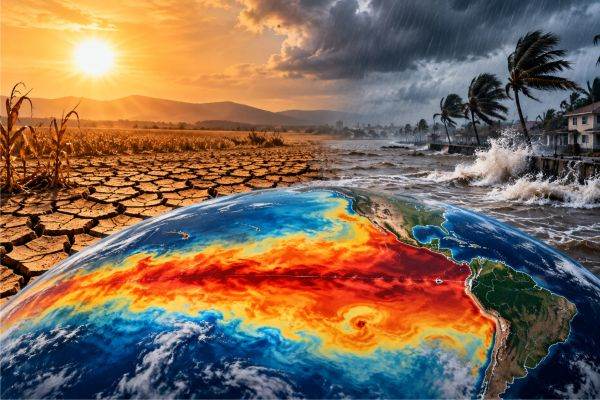
The ongoing El Nino phenomenon could cause 451,000 additional heat-related deaths worldwide by February 2027, amidst rising global temperatures, according to scientific estimates cited by AFP.
The estimates were produced by the Climate Impact Lab at the University of Chicago and cover the period from June 2026 to February 2027. According to the findings, developing countries could bear the brunt of the human toll associated with the heat generated by the phenomenon. Africa's Sahel region could see approximately 66,800 additional heat-related deaths compared to a typical year, with nearly half of these occurring in Nigeria. In Indonesia, the estimate points to 19,300 additional deaths, while the Philippines, Vietnam, Thailand, and Cambodia could collectively record 19,400 additional deaths. For India, the estimate is 15,800 deaths, and for Brazil, 13,300. These estimates have not yet undergone peer review and are slated for publication in a specialized journal.
• Estimates combine climate and mortality data
To calculate these figures, researchers at the Climate Impact Lab utilized studies on the relationship between temperature and excess mortality across 24,378 regions, taking into account local climate conditions and the vulnerability of each area. Subsequently, the results were correlated with long-term temperature forecasts to estimate the number of additional deaths likely to be caused by the El Nino phenomenon, compared to the statistical average for the 1996-2025 period.
• A record-intensity El Nino event
The natural phenomenon, declared in June, is expected to reach peak intensity towards the end of this year and could become the strongest El Nino event ever recorded, according to information cited by AFP. By warming the ocean's surface waters, El Nino alters weather patterns and wind circulation over the Pacific. These effects then propagate globally, influencing precipitation and temperatures. At the same time, the phenomenon amplifies the effects of human-induced climate change.
• UN warns of health risks
The estimates regarding heat-related mortality follow a warning issued by the United Nations on September 22 concerning the "significant threat" posed by El Nino's potential health impacts, AFP reports.
In addition to high temperatures, which can aggravate certain medical conditions, El Nino can negatively affect air quality, particularly by intensifying wildfires. The phenomenon can also contribute to the incidence of malnutrition and cholera, conditions exacerbated by droughts and floods. The World Health Organization has recommended that nations strengthen their health systems and disease monitoring mechanisms, and prepare to ensure the continuity of medical services in vulnerable areas.























 Euro
Euro Dolar SUA
 Franc elveţian
 Liră sterlină
 Gram de aur