English


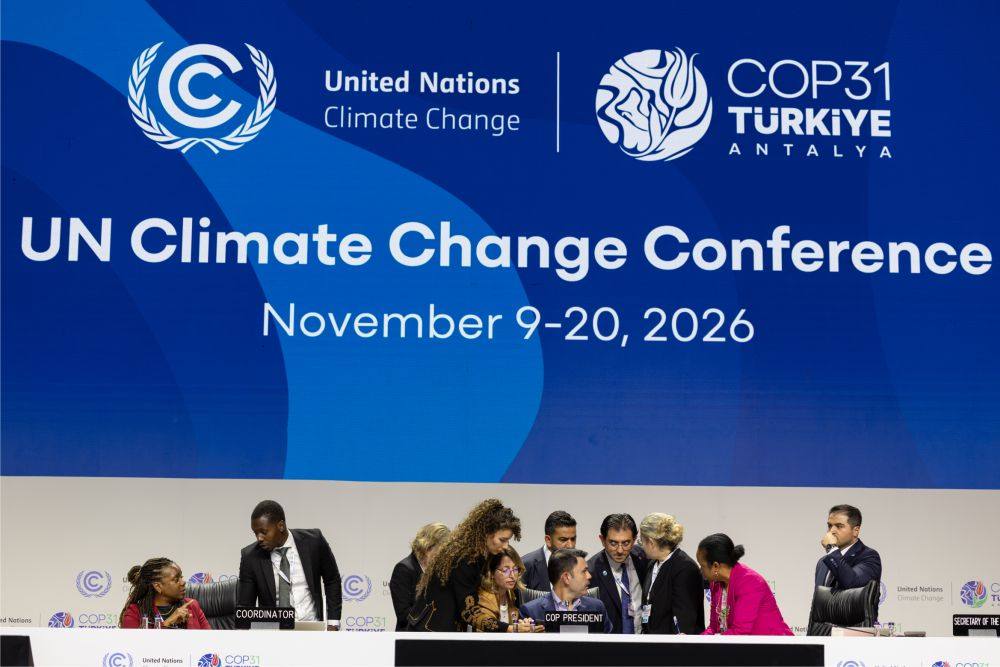
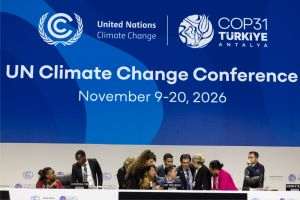
UN climate negotiations held in Antalya concluded without a political agreement on key measures to combat global warming, following two weeks of discussions and a 48-hour extension of the summit. The European Union, the United Kingdom, and over a hundred other nations rejected the final draft, dissatisfied by the lack of a clear reference to the phase-out of fossil fuels and by the language used regarding carbon capture technologies. The failure of the negotiations highlighted the challenges inherent in the UN's consensus-based system, as well as the widening rift between fossil-fuel-producing nations and those calling for an accelerated energy transition. According to an analysis by Politico, the summit ended in a tense atmosphere after efforts by the co-hosts, Turkey and Australia, to broker a political compromise proved unsuccessful. While participating states managed to reach several technical agreements and make progress on the so-called "action agenda," they failed to agree on the primary text, known as the "framework decision." UN climate chief Simon Stiell noted "real progress" within the action agenda but acknowledged the disappointment surrounding the absence of an agreement on the core document. The decision-making process itself also drew criticism. Juan Carlos Navarro, Panama's Minister of the Environment, described the system of absolute consensus-in which nearly 200 nations must agree on the exact same wording-as a "recipe for disaster,” adding that COP meetings have become a laughingstock.
• Fossil fuels: the primary sticking point
One of the main reasons for the failure was the opposition from oil- and gas-producing nations to including references to the phase-out of fossil fuels in the final document, • Politico• reports.
A coalition of approximately 130 countries, led by the European Union and small island states, called for the reaffirmation of the commitment to an energy transition-a pledge made three years ago. For Saudi Arabia and other oil-producing nations, even reiterating this commitment in the final text was a "red line.” Another point of contention concerned carbon capture, utilization, and storage (CCUS) technologies. In earlier drafts, these were framed in a way that could have placed them on equal footing with clean energy sources, such as wind and solar power. Countries advocating for a move away from fossil fuels demanded the removal of these references, arguing that they could be used to justify the continued extraction of oil and gas.
Saudi Arabia rejected the criticism. Negotiator Mohammad Ayoub argued that it is impossible to reconcile the goal of limiting global warming to 1.5 degrees Celsius with the rejection of carbon capture, utilization, and storage technologies-technologies that some participants have dismissed as "greenwashing.” During the final plenary session, the European Union, the United Kingdom, Norway, Switzerland, several Latin American nations, and a number of the world's poorest countries rejected the draft proposal developed by Turkey and Australia. Speaking on behalf of the European Union, Irish Minister for Climate Darragh O'Brien stated that the bloc could not support a decision that disregards scientific data and the gap between stated commitments and actual implemented measures.
"We will not support a tokenistic decision that fails to even mention fossil fuels-the primary driver of climate change. Nor will we agree to negotiate a regression," the official asserted.
• The energy crisis has not served as a catalyst for the green transition
The negotiations in Antalya took place against a backdrop where rising fossil fuel prices-exacerbated by the war in Ukraine-have once again highlighted the vulnerability of nations dependent on oil and gas imports. Several governments have cited energy security, costs, and national sovereignty as justifications for accelerating the shift toward clean energy sources. Turkey and Australia sought to leverage this situation to promote electrification measures, including the replacement of gasoline-powered cars with electric vehicles. The two countries proposed increasing the share of electricity in global energy consumption from the current 23% to 35% by 2035. This target was included in the final draft but was rejected alongside the other proposals. The dispute also focused on the conditions under which the electrification would take place. Several states insisted that it be accompanied by an increase in renewable energy production, in order to avoid expanding the use of coal, oil, and natural gas. According to the International Energy Agency, achieving the net-zero emissions goal by the middle of the century, this entails a significant increase in electrification and a rise in the share of clean sources-such as wind and solar energy-to approximately 90% of electricity production, up from 42% today.
• Climate finance and geopolitical tensions have deepened divisions
The failure of the negotiations was not driven solely by the dispute over fossil fuels. Wealthy nations showed reluctance to make concrete financial commitments, while developing countries-hit by climate-related disasters and the burden of debt-demanded additional support for emissions reduction and climate change adaptation. Geopolitical tensions further complicated the talks. Conflicts in the Middle East and Ukraine, the rise of the far-right, and pressures on national budgets led many governments to adopt a more cautious stance regarding climate commitments. The absence of the United States-following its withdrawal, ordered for the second time by President Donald Trump-also shifted the balance of the discussions. According to European diplomats cited by • Politico• , Washington's presence could have helped limit Saudi Arabia's influence in the negotiations.
At the same time, disagreements over financing highlighted the divide between developed nations and those vulnerable to the impacts of climate change. For many poorer countries, reducing emissions cannot be separated from having access to the resources needed to protect their populations and infrastructure. • Contested Negotiations and an Impossible Compromise
Dissatisfaction regarding how the discussions were conducted grew during the final stage of the summit. The first draft of the proposed agreement, published on Monday, included an extensive list of requests from the participating states. A second version did not appear until Thursday, and what was considered the final version was distributed after midnight on Sunday-well past the conference's original deadline. Xolisa Joseph Ngwadla, an advisor to the chair of the African negotiating group, criticized the lack of transparency and consultation, noting that delegations had not seen the full text for over 48 hours and had not met with all parties for more than three days.
During the final plenary session, China, India, and a group of African nations announced that they would not oppose the adoption of the document. However, since summit decisions required the consensus of all participating states, the opposition from the EU-led coalition prevented the agreement from being finalized. Turkish Minister Murat Kurum, who presided over the discussions, was forced to acknowledge the failure of the draft. The conference concluded only after it had already become the longest climate summit in the 30-year history of the COP process.
• Artificial Intelligence and Energy Demand: Underaddressed Issues
Another topic that received little attention during the summit was the rising global demand for electricity-driven by the expansion of data centers, economic development, and the proliferation of electric vehicles.
The expansion of artificial intelligence places additional pressure on energy systems. According to an analysis by Politico, some companies in the technology sector are increasingly turning to natural gas to power new facilities built for data centers-a trend that risks driving up emissions.
At the same time, the draft agreement failed to provide a convincing response to the issue of exceeding the 1.5-degree Celsius threshold. Scientists note that mitigating the impacts of such an overshoot would require drastic emissions cuts alongside the development of technologies to remove carbon dioxide from the atmosphere-many of which have yet to prove their effectiveness at the necessary scale. The European Union and the United Kingdom have stated that they remain committed to international climate agreements. In a joint statement, Darragh O'Brien and Wopke Hoekstra, the European climate commissioner, emphasized that their stance does not represent a rejection of multilateralism, but rather a defense of a system capable of delivering results. However, the Antalya summit underscored just how challenging it is to translate an energy and climate crisis into a global political agreement. Instead of accelerating the transition, disagreements over fossil fuels, financing, and carbon capture technologies stalled the negotiations, leaving the international community without a new, shared commitment.























 Euro
 Dolar SUA
 Franc elveţian
 Liră sterlină
 Gram de aur