English


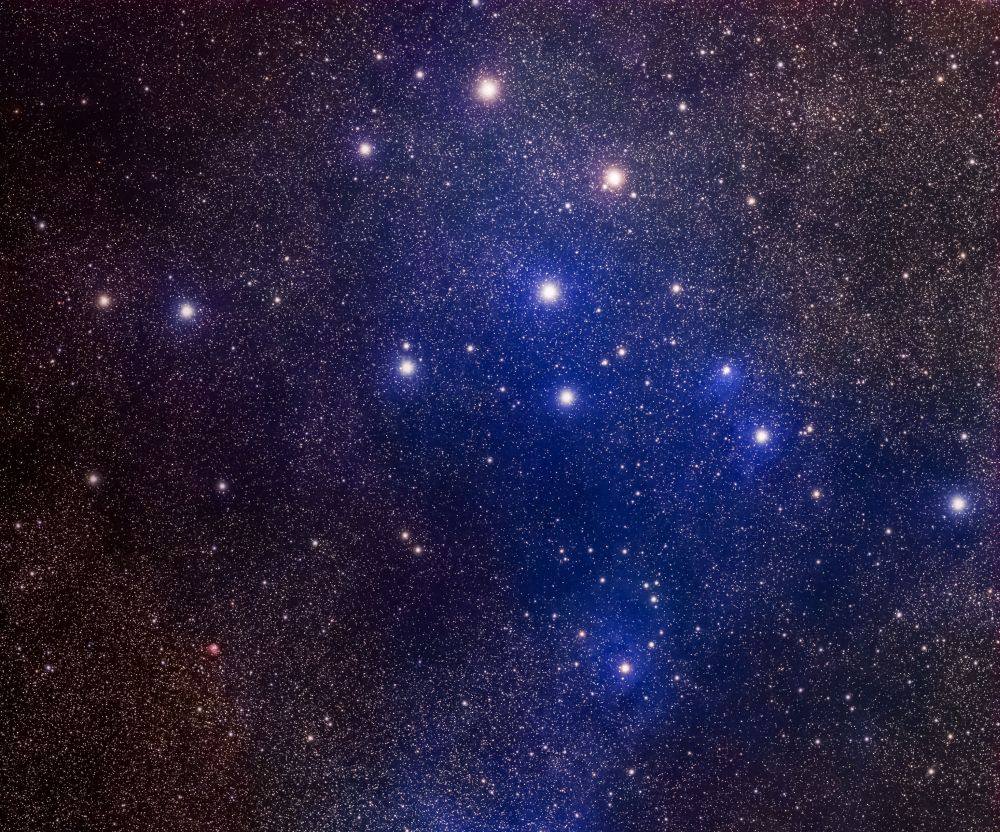
For the first time, astronomers have reconstructed the complete evolution of a stellar merger-from the initial signs of the stars drawing closer to one of them disappearing inside the other. The event took place approximately 2.5 million light-years from Earth, in the Andromeda Galaxy; observations made using several telescopes, including NASA's James Webb Space Telescope, allowed researchers to reconstruct the various stages of the phenomenon.
The discovery was presented by NASA last week and published in the scientific journal • Nature• in a study titled "An inspiral of a star inside a common envelope with its giant companion." The stellar system, designated AT 2025abao, consisted of a red giant and a much smaller star orbiting it. The researchers dubbed them "Big Bao" and "Little Bao."
• A star seven times more massive than the Sun
Before the merger, Big Bao had a mass approximately seven times that of the Sun and a diameter about 700 times that of our own star. Its radius had reached roughly 350 times the solar radius, and its luminosity was approximately 18,000 times greater. Its companion, Little Bao, had an estimated mass of about 70% of the Sun's mass. The significant disparity between the two stars meant that their approach unfolded in a way that had previously been difficult to observe or reconstruct. According to researchers, the system began to show changes in brightness in 2018. The smaller star gradually entered the extended atmosphere of the red giant, losing energy due to friction with the surrounding gas. Over the course of approximately seven years-and in fewer than ten orbits-it drew progressively closer to the core of the primary star.
In astrophysics, this phenomenon is known as "common envelope" evolution. The two stars end up sharing, in effect, the same gaseous atmosphere, and the resulting friction causes the distance between them to shrink until they merge.
On October 17, 2025, the system produced a bright outburst, with its luminosity increasing roughly 100-fold in less than a month. The event was first identified by Japanese amateur astronomer Koichi Itagaki, and subsequent observations were carried out by research teams from several countries. Astronomers tracked changes in brightness and spectral composition using data from both ground-based and space-based observatories. This information made it possible to identify the gases released during the merger and to estimate the velocity at which the material was ejected. The James Webb Space Telescope played a decisive role; infrared observations conducted on December 24, 2025, provided clues regarding the dust and material expelled by the giant star. When correlated with earlier data and computer simulations, these findings confirmed that the smaller star failed to escape and instead reached the core of its companion. Following the merger, a portion of the red giant's outer envelope was expelled into space, and the system became a single stellar object.
• The significance of the discovery
Stellar mergers are phenomena known to astronomers, yet capturing them through all their stages is extremely difficult. They unfold over very short periods relative to the lifespan of stars, which can span billions of years. Until now, researchers have primarily attempted to reconstruct such events based on the traces left behind. In the case of AT 2025abao, they had access to observations made before, during, and after the merger. This allowed them to test theoretical models concerning energy transfer, mass loss, and the behavior of stars sharing a common envelope. The findings are also significant for understanding the formation of compact stellar systems. In some scenarios, following such a phase, stars may survive as very close pairs, which can subsequently evolve into systems containing neutron stars or black holes. In the instance observed in Andromeda, however, the smaller companion was absorbed by the core of the red giant. Researchers believe that new telescopes and automated sky-monitoring programs will enable the identification of more such events. Instruments that could contribute to future discoveries include the Vera Rubin Observatory and the Nancy Grace Roman Space Telescope. The study demonstrates how coordinated observations from instruments on Earth and in space can transform a rare cosmic phenomenon into a process that can be tracked and explained in near real-time.























 Euro
 Dolar SUA
 Franc elveţian
 Liră sterlină
 Gram de aur