 English
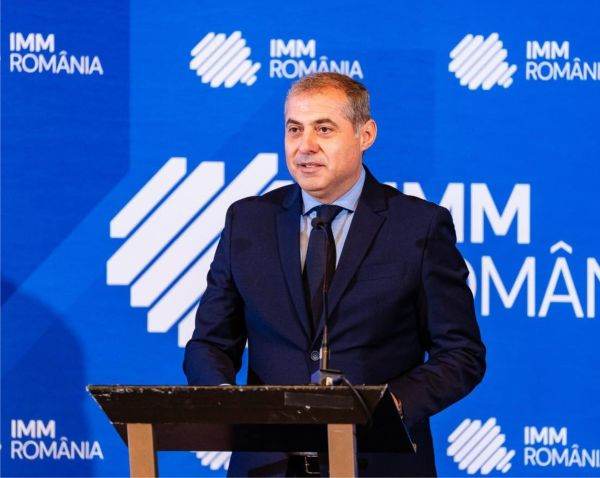
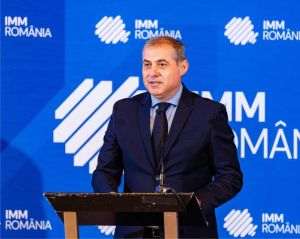
Any increase in the national minimum wage in 2027 must be discussed alongside cuts in labour taxation and measures to revive the economy, argues Florin Jianu, President of the National Council of Small and Medium-Sized Private Enterprises in Romania (IMM România). Speaking at a press conference yesterday, he announced that he would ask the National Tripartite Council to keep the minimum wage at its current level throughout next year. The business representative warned that small enterprises are already under pressure from rising energy and fuel prices, and that another increase in wage costs would further constrain their ability to operate.
Florin Jianu stated: "We will firmly request that the national minimum wage remain unchanged in 2027 and that labour taxation be reduced. The new Government's public discourse did not begin with economic recovery or concrete measures to support it. Instead, we are discussing how to pass on the burden of rising wage and tax costs by raising the minimum wage, with nothing concrete to boost recovery and competitiveness.”
In making his case, the President of IMM România highlighted the situation of entrepreneurs who run their own businesses but are left with modest incomes after paying their expenses and taxes. According to the figures he presented, Romanian microenterprises have an average turnover of RON 164,754 and an average annual gross profit of RON 28,818. He maintains that, under the cost-increase scenarios outlined at the conference, the income left to the entrepreneur could fall to around RON 1,900 a month.
Florin Jianu said: "98% of companies in Romania are microenterprises, and 84.4% of these have just one employee and an average turnover of RON 164,754. The average annual gross profit of these firms is just RON 28,818. Add the 14% increase in energy prices and the 18% increase in fuel prices. A RON 300 increase in the minimum wage means an additional cost of RON 3,105 a year, leaving a gross profit of RON 24,609. A RON 500 increase means an additional cost of RON 4,175 a year, leaving a gross profit of RON 23,538. After corporate income tax and dividend tax, the money left to the entrepreneur for an entire year is RON 22,823, or RON 1,900 net a month! I would point out that 696,951 firms in our country are microenterprises, so they fall within the profitability figures outlined above. In practice, an entrepreneur lives on less than the net minimum wage while assuming all the risks. You would be better off taking a job as a driver at a town hall and earning five times as much!”
Asked about the trade unions' proposal to raise the gross minimum wage to RON 5,000 and the position he would take in the negotiations, Florin Jianu replied: "We will make it clear that the state cannot keep collecting indefinitely from an economy that is gasping for breath. With entrepreneurs making a monthly profit of RON 1,900, where is the money for additional payments supposed to come from? More than 125,000 firms closed in the first eight months, and unemployment is rising; we are heading towards 100,000 jobs lost this year.”
The President of IMM România argues that the minimum wage debate should not turn employers' and employees' representatives into adversaries, stressing that the two sides' objectives can be reconciled if the state agrees to reduce the tax burden.
"The social partners should not be enemies. Everyone wants higher wages and competitiveness, but the only winner in this equation is the state, which takes 68% of the increase. When the gross minimum wage rises by RON 300, the state takes 68% of that amount-RON 212-while the employee receives just RON 100 because of changes in personal allowance thresholds. The state is the main beneficiary of the wage increase! I would have liked the Government to discuss reducing energy and fuel costs first, instead of coming to the table unprepared,” Florin Jianu said.
The solutions advocated by IMM România include reducing labour taxation, increasing the tax-exempt amount from RON 200 to RON 400, and adopting a differentiated tax approach reflecting the difficulties faced by individual economic sectors. Florin Jianu cited the experience of tax incentives previously granted to certain sectors and called for support for manufacturing: "Look at how much good lower taxation in IT, agriculture and construction has done for the economy. Manufacturing is suffering enormously across Europe right now and needs tax support.”
The business representative called for negotiations to start from the concrete effects of each option on employees' incomes and on companies. "We are asking the Government for a comparative analysis and genuine dialogue. Three objectives must be achieved simultaneously: higher take-home pay for employees, continued business competitiveness and a predictable tax system,” he stated.
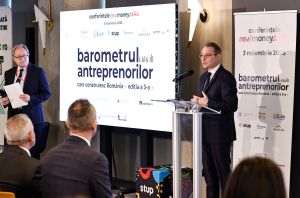
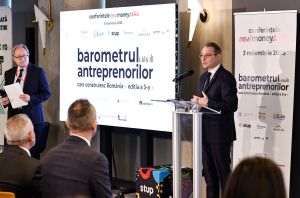
The President of IMM România linked the pressure on Romanian enterprises to the difficulties facing the European business community. Florin Jianu announced that SMEunited, the European employers' organisation of which he is a Vice-President, was sending a letter to Ursula von der Leyen and Antonio Costa, as well as to national authorities, calling for measures to strengthen SME competitiveness. According to the European barometer indicators cited at the conference, SME turnover fell by 5.4%, while orders and investment also deteriorated.
"Manufacturing is the hardest-hit industry because of expensive energy, labour costs and bureaucracy. We are calling for 2027-2028 to be years devoted to consolidation, with a legislative brake, no additional regulations and a reduction in duplicate reporting,” Florin Jianu said.
Energy costs were addressed in greater detail by Felix Căprariu, President of IMM Bucureşti-Ilfov, who called for a multiannual national programme supporting energy efficiency and generation for self-consumption. He argues that small firms struggle to absorb price increases and cannot always pass them on through product prices without weakening their market position.
"Experience has shown that government support has always arrived very quickly for large energy consumers, but less so for consumers in the SME sector. We therefore believe that renewable energy, energy efficiency and energy independence for SMEs must become a national priority. We propose establishing a multiannual national programme providing support schemes to address the substantial cost disadvantages we face as a result of rising energy tariffs,” Căprariu stated.
The programme proposed by IMM România, called "IMM Energie Rezilientă” ("SME Energy Resilience”), would include grants of up to EUR 90,000, support of up to EUR 200,000 for investment and technological upgrades, and financing of up to EUR 500,000 for production.
Access to financing completes the picture of the difficulties described by SME representatives. Asked about banks' reluctance to lend to small enterprises and their preference for government securities, Florin Jianu criticised the reduction in support through guarantee programmes: "This is happening because programmes such as IMM Invest no longer exist, while the Guarantee Fund has been overshadowed by the Investment and Development Bank, which made a poor entry into the SME market. Measures to revive the economy must be unblocked urgently.”
For the employers' leader, entrepreneurs have already run out of time, and the minimum wage debate must form part of a broader economic response covering energy, financing and investment. Asked how much longer the business community could wait, Jianu replied: "They cannot wait any longer; the economy is already collapsing! The only engine of growth has been construction, but the National Recovery and Resilience Plan is coming to an end, and we have nothing to replace it.”













 Euro
 Dolar SUA
 Franc elveţian
 Liră sterlină
 Gram de aur

























Reader's Opinion