 English

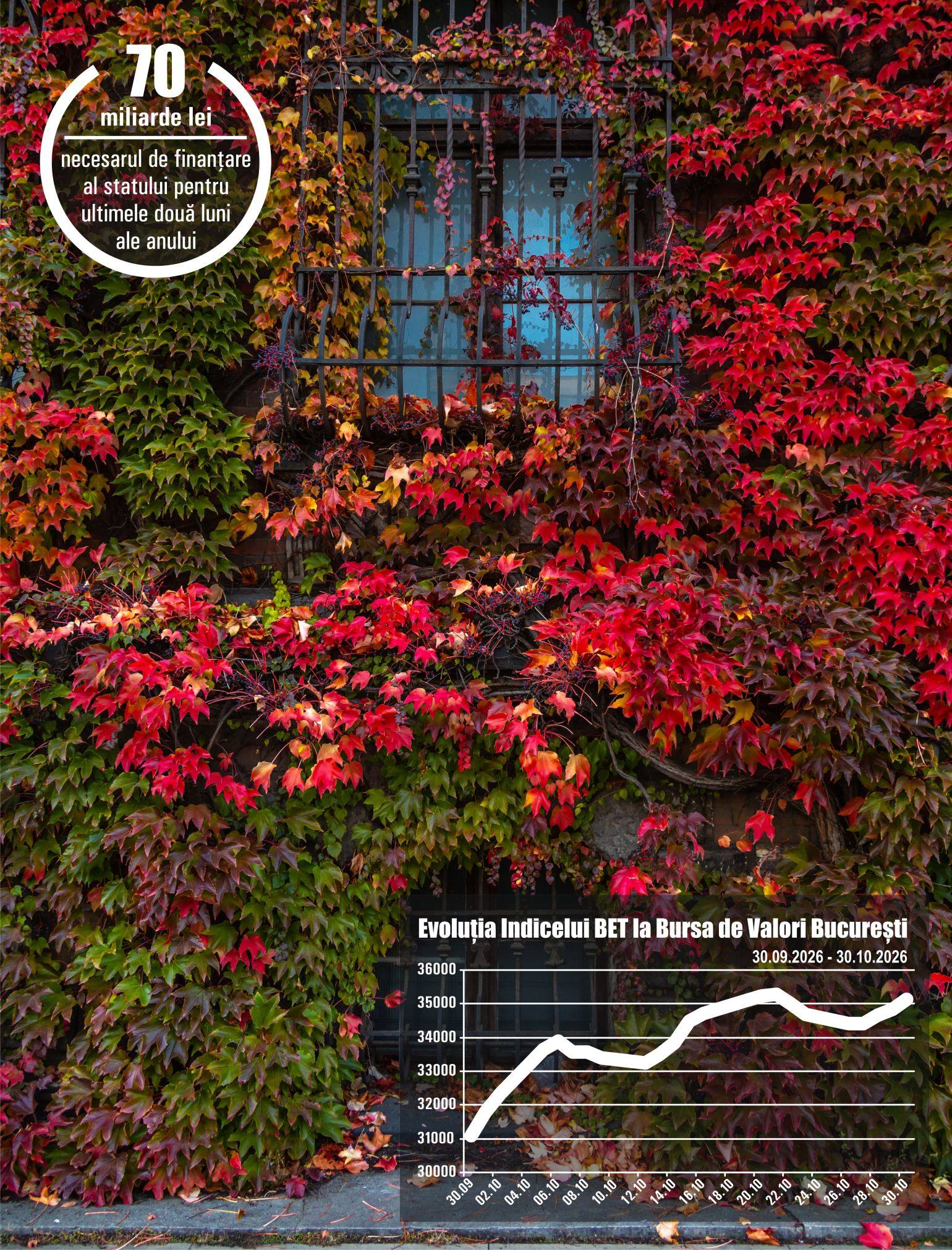
Mid-autumn brought an end to the country's political crisis and the period of an interim government; however, the new administration now faces a weakened economy and a budget burdened by debt. The Luca Niculescu Cabinet received a vote of confidence from Parliament on October 20, with 280 votes in favor and 58 against, following nearly six months of political turmoil. This vote restored the authority of a fully empowered government, yet financial resources remain contingent upon tax revenues, European funds, and the willingness of creditors to finance the state.
October began on a positive note: the international agency Standard & Poor's reaffirmed the country's BBB- rating, while maintaining a negative outlook. Toward the end of the month, the first budgetary revision was adopted (on October 30), allowing the government to secure funding for urgent obligations in the healthcare, pension, and local administration sectors. The nine-month budget execution report, published on October 26, confirmed a reduction in the deficit to 78.30 billion lei, or 3.81% of GDP. While investments reached 107.77 billion lei, interest payments consumed 50.63 billion lei, an amount exceeding the total revenue collected from wage and income taxes. Fiscal adjustment is yielding results in the state's current accounts, even as accumulated imbalances continue to generate costs.
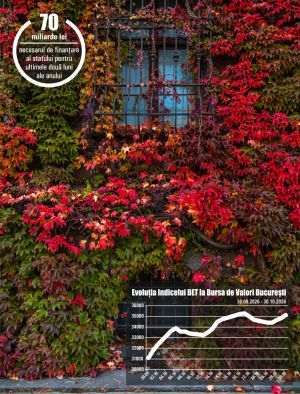
Upon presenting the budget revision, Minister of Finance Alexandru Nazare warned that the country still required 70 billion lei in financing over the next eight weeks. This, in effect, represents the threshold for the political victory achieved in October: while the new Cabinet possesses full decision-making authority, every promise must withstand the test of financial viability.
• PSD returns to the center of power
The investiture of the new Government on October 20 altered the political landscape that will oversee the close of the fiscal year and the preparation of the 2027 budget. Prime Minister Luca Niculescu assumed office at Victoria Palace following the failure of previous governing arrangements and the rejection of the proposed Siegfried Mureşan Cabinet, which had secured only 182 votes in favor on September 30. The 280 votes in favor exceeded the threshold required for investiture by 47. This marked an increase of 98 favorable votes compared to the September ballot, reflecting a political arrangement that succeeded in garnering support beyond the parties represented within the Executive.
The PSD has returned to the heart of government, holding 12 out of 16 ministerial portfolios, while the PNL provided the support necessary to resolve the crisis without joining the Cabinet. The UDMR backed the investiture, whereas AUR and USR voted against it, calling instead for snap elections. Among the new Government's priorities are the indexation of pensions in 2027, support for vulnerable individuals, and the development of a new law on public sector wages.
The Niculescu Cabinet began its term under relatively favorable auspices, as Standard & Poor's confirmed its long-term and short-term sovereign ratings at BBB-/A-3, for both local and foreign currency, on October 2. Romania remains at the lowest rung of the investment-grade category, with a negative outlook. While this assessment averted an immediate downgrade, it explicitly highlighted the risk of one occurring in the future.
According to the rating agency's statement, key vulnerabilities included the implementation of fiscal consolidation, the reduction of the external deficit, and sensitivity to shifts in investor confidence. Given the substantial financing requirements and the significant share of public debt held by non-residents, political developments have a direct impact on the state's access to funding.
S&P's downside scenario linked a potential rating downgrade to the possibility that a delayed formation of the Government could hinder deficit reduction efforts in 2027 and 2028. The agency also factored in external risks, such as energy-related disruptions that could negatively affect inflation, economic growth, and the balance of payments. Conversely, stabilizing the outlook would require a reduction in imbalances and a credible medium-term plan.
The economic assessment was stark. In its press release, S&P projected a 0.5% contraction of the national economy in 2026, driven by fiscal consolidation, inflation, and a decline in real wages. European funds and public investments served as the primary counterbalance. The agency estimated a current account deficit of 7.5% of GDP and raised concerns regarding the quality of external financing, given the weakening of direct investments.
Consequently, the formation of the Government has fulfilled an important political condition; however, maintaining the credit rating will depend on actual results. The Niculescu cabinet will draft the 2027 budget, but it must also demonstrate that its stated commitments can withstand social pressures and parliamentary negotiations.
• Budget deficit lower than in 2025
The budget execution data published by the Ministry of Finance on October 26 showed a deficit of 78.30 billion lei for the first nine months of the current year, compared to 102.47 billion lei in the same period of 2025. The nominal reduction was 24.17 billion lei-approximately 23.6%-while the deficit-to-GDP ratio fell from 5.31% to 3.81%.
Total revenues reached 522.69 billion lei, 11.9% above the previous level, while expenditures rose by 5.5% to approximately 601 billion lei. Regarding expenditures, personnel costs totaled 122.25 billion lei-4.43 billion less than the previous year-whereas spending on goods and services reached 77.70 billion lei, an increase of 9.4% compared to 2025. Social assistance totaled 187.93 billion lei, remaining close to the previous level.
Interest expenditures for the nine-month period reached 50.63 billion lei, 10.69 billion lei higher than in the corresponding period of 2025. This represents an increase of approximately 26.8%-significantly outpacing the growth in total expenditures. Interest payments accounted for about 2.5% of GDP; it should be noted that these payments do not reduce the principal of the debt, but rather serve to compensate for the financing obtained and maintain relations with creditors, while loans reaching maturity must be either repaid or refinanced separately. Therefore, when presenting the budgetary revision that took place at the end of last month, Minister of Finance Alexandru Nazare indicated a financing requirement of 70 billion lei for the next eight weeks.
• The first budgetary revision, for the functioning of the state
On October 30, the Niculescu Government adopted the first budgetary revision via Emergency Government Ordinance (OUG) no. 41/2026. The legislative act stipulates a reduction in revenues by 3.427 billion lei and in expenditures-in terms of budgetary credits-by 1.936 billion lei. Consequently, the deficit for this budget increases by 1.491 billion lei. Commitment credits are reduced by 8.294 billion lei. These figures pertain to the state budget, which is a component of the general consolidated budget.
Regarding the consolidated budget as a whole, the Ministry of Finance's statement on the adopted revision indicates an increase in the nominal deficit by approximately 3.5 billion lei, reaching 130.3 billion lei. The institution set the cash-basis deficit target at approximately 6.2% of GDP, based on an updated nominal GDP of 2,086.3 billion lei. The revenue revision included upward adjustments of 7.18 billion lei for VAT, 2.03 billion lei for personal income tax, and 1.19 billion lei for corporate income tax. Conversely, excise duties were adjusted downward by 3.68 billion lei, non-tax revenues by 1.87 billion lei, and EU reimbursements by 5.91 billion lei, according to the same statement. The healthcare system was the primary beneficiary of the funding measures introduced alongside the budget revision. The budget of the National Single Social Health Insurance Fund was supplemented by 3.22 billion lei, of which 3.20 billion is earmarked for medicines, medical supplies, and medical services-including national health programs and the reimbursement of hospital services. Separately, the National Health Insurance House (CNAS) was authorized to utilize approximately 3.9 billion lei that had been withheld at the beginning of the year. An additional 774 million lei was allocated through the Ministry of Health: 183 million for the salaries of county ambulance service personnel, 200 million for emergency departments (UPU/SMURD) within locally-administered hospitals, and 391 million for priority initiatives and programs in hospitals under the Ministry's jurisdiction.
Regarding pensions, transfers to the state social insurance budget increased by 3.47 billion lei, while the budget of the Ministry of Labor saw a net increase of 3.32 billion lei. These funds are intended to cover the payment of existing entitlements through the end of the year.
Local budgets received a net supplement of 2.808 billion lei, drawn from VAT revenue allocations. The largest portion-two billion lei-was directed toward a mechanism for clearing arrears, an intervention designed to address the cycle of debt between public authorities, suppliers, and the state budget. According to a statement from the Ministry of Finance, this mechanism applies to obligations recorded as of September 30 by local authorities, institutions funded through their budgets, and hospitals within the local network. This includes suppliers of goods, services, and works, as well as operators of district heating and public transport systems. The budgetary adjustment also increased funding for services upon which vulnerable individuals depend. Emergency Ordinance (OUG) no. 41 allocates approximately 106.6 million lei for the remuneration of personal assistants for individuals with severe disabilities, or for the corresponding allowances. Resources have also been earmarked for day centers-aimed at preventing the separation of children from their families-as well as for services catering to adults with disabilities.
• Investments of 107.77 billion lei
Public investments made during the first nine months totaled 107.77 billion lei-an increase of approximately 25.15 billion lei compared to the same period in the previous year. This growth, of about 30.4%, served as one of the primary arguments used by the authorities to contend that the fiscal adjustment has not halted development. Data from the Ministry of Finance indicate that 65.6% of investments consisted of payments for European projects carried out under the 2021-2027 multiannual EU budget, as well as for the grant and loan components of the National Recovery and Resilience Plan (NRRP). Payments in these categories increased by 23.75 billion lei, while investments financed from national sources declined. The budgetary revision adopted on October 30 allocated resources toward the completion of projects. This includes an additional 2.7 billion lei for the loan component of the NRRP-comprising 2 billion lei for local budgets and 746 million lei for the state budget-along with the provision for redistributing unused budget appropriations across various programs and authorizing officers, in accordance with the law.
In the same session, the Government extended the deadline-to November 30-for the verification, authorization, and payment of transfer requests as part of the NRRP closure process. Regarding hospital projects removed from the plan, the Executive established the necessary framework to incorporate them into the 2021-2027 Health Program, subject to eligibility criteria and the availability of funds. Furthermore, the Government authorized the redistribution, effective November, of certain sums previously reserved for beneficiaries of the "Anghel Saligny" program.
• Government opens access to loans for district heating
The government meeting on October 30 included preparations for the national energy system for the period from November 1, 2026, to March 31, 2027. In light of hydrological drought, uncertainties regarding the availability of generation capacity, and the risk of extreme weather events, the government established a "Winter Energy Task Force." The measures adopted focus on maintaining safety stocks of coal, ensuring a minimum energy reserve in hydroelectric reservoirs, and keeping gas storage levels at 90% of total capacity. The withdrawal of gas from storage must be managed to ensure that resources remain available for the February-March period. Plans include maintenance work, the acceleration of repairs at the CET Vest (Western Combined Heat and Power Plant), preparations at CET Paroşeni, and efforts to keep four lignite-fired units at the Oltenia Energy Complex-three at Rovinari and one at Turceni-in operation.
Specific financial mechanisms have been introduced for district heating. Local authorities have been authorized-under defined conditions-to provide guarantees for loans taken out by operators to procure fuel for the cold season. For local administrations lacking practical access to bank credit, a 300-million-lei ceiling has been set for loans via the State Treasury, sourced from privatization revenues; these funds may be used to cover outstanding invoices and induced losses. Applications may be submitted until December 31, 2026.
This funding is repayable and shifts part of the burden to the budgets of future years; however, it addresses an urgent need that could not wait for an economic recovery: ensuring the continued supply of thermal energy for the approaching winter.
• NBR maintains the key policy rate at 6.50%
On October 8, the National Bank of Romania (NBR) Board maintained the monetary policy interest rate at 6.50% per annum, the lending facility rate at 7.50%, and the deposit facility rate at 5.50%. The minimum reserve requirement ratios for banks' liabilities in both lei and foreign currency also remained unchanged. The NBR statement highlights significant uncertainties and the importance of a balanced mix of macroeconomic policies and structural reforms.
Data from the National Institute of Statistics (INS) published on October 13 confirmed that price pressures persist. Annual inflation in September rose to 6.61%, up from 6.17% in August. Prices for services increased by 11.12%, non-food goods by 7.06%, and food products by 3%. Compared to August, consumer prices rose by 0.77%, and compared to December 2025, by 5.4%.
The Harmonized Index of Consumer Prices (HICP)-used for European comparisons-showed an annual inflation rate of 6.5%. The average change in consumer prices over the last 12 months, compared to the preceding 12 months, stood at 9.2% according to the national indicator. The structure of the economy revealed divergent trends. According to data published by the National Institute of Statistics (INS) on October 9, the construction sector made a positive contribution of 1.2 percentage points to GDP growth in the first half of the year, while the industrial sector contributed a negative 0.6 percentage points, and the combined activities of trade, transport, and the hospitality sector (HoReCA) contributed a negative 0.9 percentage points. Household consumption also made a negative contribution of 1.9 percentage points, based on INS data, which further indicates that industrial production fell by 3.4% (unadjusted series) and 3.7% (adjusted series) between January and August. In the manufacturing sector, the declines were 4.4% and 4.8%, respectively.
In light of the figures released by the INS, it is evident that the national economy is one where investments support activity, yet production and consumption remain vulnerable.
Against this backdrop, the National Bank of Romania (BNR) announced in the middle of last month that the current account deficit for the first eight months of 2026 reached 19.925 billion euros, compared to 18.983 billion euros during the same period in 2025. This deterioration-amounting to 942 million euros, indicating that the reduction in the budget deficit is not accompanied by a corresponding correction in the external imbalance. According to central bank data, the balance of goods recorded a deficit of 22.385 billion euros, while services generated a surplus of 9.344 billion euros. The transport sector made a positive contribution of 4.629 billion euros, and telecommunications, computer, and information services contributed 5.079 billion euros. Tourism and travel, however, recorded a deficit of 2.983 billion euros. Direct investments by non-residents totaled 2.122 billion euros, compared to 5.657 billion euros in the first eight months of 2025. This represents a 62.5% decline, which underscores the growing importance of other forms of external financing.
Total external debt reached 238.078 billion euros-an increase of 7.450 billion since the end of 2025. Of this total, 184.784 billion consisted of long-term debt, while 53.294 billion was short-term debt. The coverage ratio of short-term external debt (calculated based on residual maturity) by foreign exchange reserves fell from 102.8% to 93.5%.
These indicators encompass obligations from both the public and private sectors. They illustrate why political stability and the continued flow of European funds carried broader implications than mere budget execution: the economy needed to attract sufficient capital to finance its external imbalance. It should also be noted that, as of October 31, the National Bank of Romania's (BNR) foreign exchange reserves stood at 58.553 billion euros, down from 60.060 billion euros at the end of September. This represents a decrease of 1.507 billion euros, or approximately 2.5%.
Gold reserves remained at 103.6 tonnes, valued at 11.823 billion euros. Total international reserves, including gold, fell to 70.376 billion euros, down from 72.340 billion euros in September. For November, public debt payments due in foreign currency amounted to approximately 1.482 billion euros.
• Mangalia Shipyard sold for 138 million euros
On October 9, CITR, the judicial liquidator for Damen Shipyards Mangalia, announced the sale of the shipyard following an auction won by Rheinmetall Real Estate România SRL for 138,034,320.47 euros (excluding VAT). The sale took place after four previous auctions had failed to yield a result. The initial starting price-approximately 184 million euros-had been reduced to 75% of its value, amounting to roughly 138 million euros. This difference of approximately 46 million euros also became the focal point of a legal dispute. Damen Holding BV, a 49% shareholder and the company's principal creditor, challenged the decision that had allowed for a change in procedure and a lowering of the sale threshold-a significant point, given that the Dutch group holds approximately 70% of the total claims directly, and another 25% indirectly.
Rheinmetall stated that the Mangalia shipyard will play a key role in the construction of four vessels commissioned by Romania: two 96-meter patrol ships and two 43-meter diver support vessels. The Naval Systems division announced plans to expand and modernize the infrastructure, improve production conditions, and adapt capacity for future projects in Southeast Europe. The government presented the operation as the outcome of negotiations under the SAFE program. The executive branch maintained that the procurement of military equipment from Rheinmetall was contingent upon investments in the Romanian defense industry, including at Mangalia. The economic rationale centered on linking equipment orders to local production, technology transfer, and job creation.













 Euro
 Dolar SUA
 Franc elveţian
 Liră sterlină
 Gram de aur



























Reader's Opinion