 English
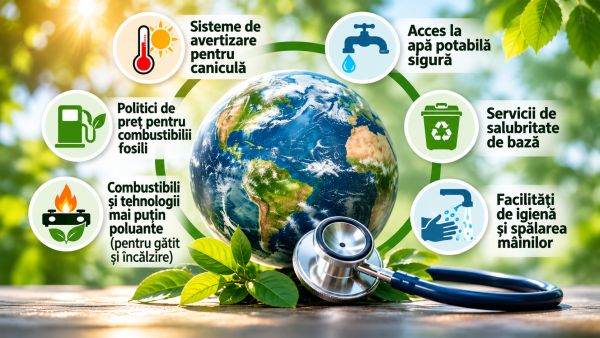
Implementing six measures globally - designed to limit the health impacts of climate change- could prevent 1.56 million deaths per year and generate economic benefits amounting to trillions of dollars, according to a World Health Organization (WHO) report cited by AFP. The document is being released just days before the UN Climate Change Conference (COP31), scheduled for November 9-20 in Antalya, Turkey. The report highlights a "triple benefit" of these interventions: improving public health, reducing greenhouse gas emissions, and strengthening economies. "The climate crisis is a health crisis, but many of the negative effects it causes can be prevented with the tools we already have," stated WHO Director-General Tedros Adhanom Ghebreyesus, as quoted on the organization's website. He urged governments to place health protection at the heart of their climate policies.
• The six measures recommended by the WHO
The measures analyzed by the organization aim both to directly protect the population from climate-related risks and to reduce pollution and emissions. These include: implementing early-warning systems for the health impacts of heatwaves; developing drinking water supply services adapted to climate change; ensuring basic sanitation services; and installing hygiene facilities while promoting handwashing. the use of less polluting fuels and technologies for cooking and heating;
the introduction of effective pricing policies for fossil fuels.
According to WHO estimates, implementing these measures could prevent 16.67 billion tonnes of carbon dioxide equivalent emissions annually.
• Economic benefits in the trillions of dollars
The estimated economic impact is also significant. The six interventions could generate benefits of nearly $4 trillion annually in terms of economic welfare. This calculation includes the economic value of lives saved, disasters averted, and savings achieved in healthcare. Budgetary benefits for states could reach approximately $5.44 trillion. Projections, developed for 187 countries covering the 2024-2075 period, indicate significant differences between the measures analyzed. Heat-health warning systems would offer the best cost-benefit ratio, with an estimated return of $836 for every dollar invested.
Conversely, fossil fuel pricing policies would have the greatest cumulative impact on health and emissions. According to the WHO, these policies alone could prevent 1.2 million deaths annually and account for the avoidance of 98% of the CO2-equivalent emissions projected across all six measures. Furthermore, they would yield substantial budgetary benefits for states. Low-income countries could gain disproportionately more
• The WHO emphasizes that low- and middle-income countries could reap
disproportionately greater benefits than wealthy nations, in terms of both population health and economic well-being. The organization acknowledges that these estimates have limitations, stemming from the ambitious nature of the scenarios analyzed, data gaps, and the uncertainties inherent in long-term projections. Nevertheless, the report maintains that investments in measures with proven effectiveness can yield significant health and climate benefits. The WHO urges governments to integrate health objectives into climate policies and to accelerate the implementation of recommended interventions. The organization's Director-General is set to attend COP31 next week, where he will advocate for the inclusion of health in climate negotiations. According to Diarmid Campbell-Lendrum, the WHO official responsible for climate change, the organization aims to encourage states to pay greater attention to the health dimension of the climate crisis.

























 Euro
 Dolar SUA
 Franc elveţian
 Liră sterlină
 Gram de aur






























Reader's Opinion