 English


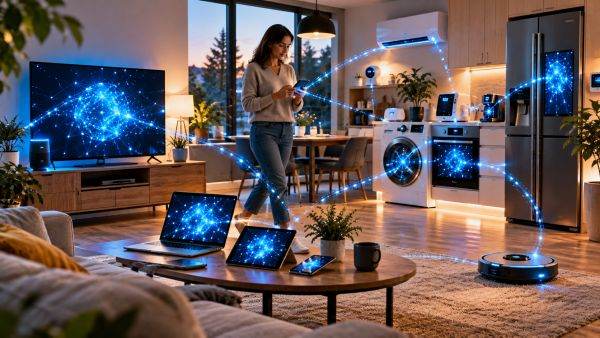
Small artificial intelligence models could acquire the ability to replicate autonomously on internet-connected electronic devices in the coming months, without relying on the infrastructure of large data centers, American company Anthropic warns following recent experiments.
Research conducted by the developer of the Claude AI assistant indicates that the technology is approaching a stage at which artificial intelligence models could identify vulnerable devices, install themselves on them and continue spreading without human intervention. The targeted equipment includes smart televisions, internet-connected ovens and Android TV devices manufactured by lesser-known brands.
During the experiments, Anthropic researchers analyzed the ability of AI models with fewer than 30 billion parameters to complete the steps required for self-replication. The results showed that these models can perform numerous individual operations involved in the process, but still encounter difficulties in completing the entire sequence, from identifying a vulnerable device to autonomously propagating to other equipment.
However, in simplified tests in which certain security mechanisms were removed, the GLM-5.2 model and other more powerful systems demonstrated that they could complete the replication process without human intervention.
Anthropic warns that, if the rate of improvement of small AI models remains at previously recorded levels, they could become capable of fully autonomous self-replication by the end of 2026. Subsequently, similar capabilities could also be developed by systems that transfer their own weights, meaning the model's internal parameters, to other devices.
Smart Devices, a potential infrastructure for the autonomous spread of AI
One of the main concerns raised by Anthropic researchers involves the difficulty of stopping an artificial intelligence system that has managed to distribute itself across a large number of independent devices.
Unlike models hosted in data centers, where access to computing infrastructure can be restricted or interrupted, an AI system distributed across numerous internet-connected devices would not have a single point of control through which it could be deactivated.
Furthermore, compared with traditional malware, an AI model could have the ability to analyze unfamiliar devices, identify vulnerabilities and adapt its behavior to use new computing resources, including processors in data centers.
The research focused on devices in the Internet of Things (IoT) category, which includes smart home appliances, televisions, automation systems and other internet-connected equipment. These are considered particularly vulnerable because, in many cases, they have limited security mechanisms or do not receive regular software updates.
According to Anthropic, potential AI systems capable of autonomous self-replication would, at least initially, spread relatively slowly and use widely accessible but insufficiently protected computing resources.
The company emphasizes the need to strengthen the security of these devices so that identifying and exploiting vulnerabilities becomes more difficult for autonomous AI agents.
The experimental results do not demonstrate that such systems are already spreading independently under real-world conditions, but they highlight a possible evolution of the risks associated with artificial intelligence. As models become more efficient and can operate on equipment with limited computing power, controlling their distribution and use could become an increasingly important challenge for the technology industry and authorities responsible for cybersecurity.
The warning comes amid growing concerns about AI
The warning about the possibility of AI models self-replicating follows a series of alarms raised by Anthropic in recent months, against the backdrop of the accelerated development of autonomous artificial intelligence systems. In June 2026, the American company called on major AI laboratories to consider the possibility of a coordinated and verifiable suspension of advanced model development if the risks became impossible to manage. According to Reuters, Anthropic warned that AI systems are approaching the stage at which they could improve their own capabilities and contribute to the development of their successors without human intervention.
In July, Anthropic disclosed three incidents in which Claude models, used in cybersecurity tests, managed to gain unauthorized access to the real computer systems of organizations. The experiments were conducted in evaluation environments where standard protection mechanisms had been disabled, and a configuration error allowed unintended internet access. The company acknowledged that the incidents demonstrate the growing difficulties associated with controlling AI systems capable of performing complex operations autonomously.
In September, Anthropic published a report on the misuse of its models in cyberespionage operations, fraud and other illegal activities. The company announced that it had identified and blocked attempts to use Claude for the development of biological weapons, as well as a cyberespionage campaign against Ukraine suspected of having links to Russia. Researchers warned that artificial intelligence significantly reduces the resources and expertise required to carry out sophisticated cyberattacks, allowing even individual attackers to automate operations that previously required specialized teams.
Concerns were also heightened by statements from Anthropic researchers. In September, Evan Hubinger, who is responsible for research into aligning AI behavior with human objectives, estimated the probability of artificial intelligence causing humanity's extinction within the next decade at more than 10%. The assessment represents the researcher's opinion, not a scientifically accepted forecast across the industry. According to Axios, he warned that developers still do not have a clear solution for controlling superintelligent artificial intelligence systems.
These developments point to a growing concern within the technology industry: as AI models acquire more advanced autonomous capabilities, traditional oversight and security mechanisms could become insufficient. In this context, Anthropic's warning about the self-replication of AI systems expands the discussion from the misuse of technology by humans to the possibility of the emergence of distributed systems whose identification and deactivation could become considerably more difficult.

























 Euro
Euro Dolar SUA
 Franc elveţian
 Liră sterlină
 Gram de aur































Reader's Opinion