English


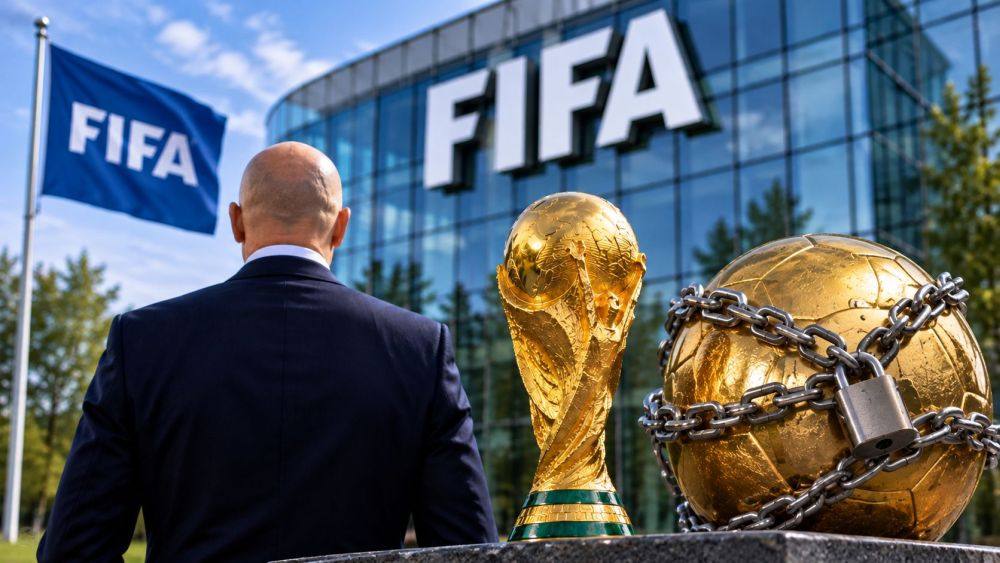
The abandoned plan by FIFA President Gianni Infantino to transfer the commercial rights of the organization's competitions to a for-profit company included licensing agreements renewable in 12-year increments, spanning a total duration of 96 years. Documents reviewed by the British publication The Guardian also reveal the existence of an incentive fund for the new entity's management, which could have amounted to 5% of its equity. The project, dubbed FIFA Forward Enterprise (FFE), carried an initial valuation of $20 billion and was to be developed alongside private investors-with the American investment firm Thrive Capital, founded by Joshua Kushner, identified as the primary proposed financier. The initiative was scrapped this summer following opposition from several football organizations and the emergence of questions regarding transparency and the manner in which the deal had been prepared. According to the documents analyzed by The Guardian, FIFA would have retained a 51% stake indefinitely. The details of the plan were outlined in internal documents drafted on July 17 and 18, ahead of a vote scheduled to take place in New York, amidst preparations for the 2026 World Cup final.
• Thrive Capital would have received a 12-year renewable license
The documents describe a system of successive licenses, each with a 12-year duration, which could be renewed up to a total limit of 96 years. Consequently, the new company would have gained the ability to commercially manage FIFA competitions for a period approaching a century. Another element of the agreement concerned investor protection. Should FIFA breach the agreement or enter into a deal with a competing investor, Thrive Capital could have claimed a penalty of $250 million-equivalent to approximately 215-220 million euros. Furthermore, FIFA would have been barred from negotiating with other potential lead investors for one year or until the transaction was finalized. Joshua Kushner, the founder of Thrive Capital, is the brother of Jared Kushner, the son-in-law of U.S. President Donald Trump.
• An incentive fund of up to 5% of the company's equity
One of the most sensitive aspects of the proposal concerned the remuneration of the future management of the FFE (FIFA's commercial entity). A document submitted by Thrive Capital provided for the creation of an incentive fund that could amount to as much as 5% of the company's equity. According to calculations presented by The Guardian, the mechanism could have generated rewards of up to $50 million for every $1 billion by which the company's value exceeded its initial $20 billion valuation. However, the documents did not specify who would have benefited from these incentives. The equity-granting plan was to be administered by the FFE's board of directors, with Gianni Infantino himself set to serve as its chairman. The FIFA president has repeatedly denied that he could have personally profited financially from the project. For its part, FIFA maintained that the proposed incentive plan was intended exclusively for the management of the new company and that FIFA officials would not have been eligible to participate.
• Transparency of negotiations
The documents also raise issues regarding the process through which the transaction was prepared. An internal FIFA memorandum noted that no competitive selection process for investors had been held, justifying this by citing the specific and unique nature of the proposed investment. Furthermore, an internal risk assessment indicated that FIFA's finance department had not been granted direct access to the terms of the transaction. These details have fueled questions about how a project with an initial valuation of $20 billion-and one with long-term implications for the organization's commercial rights-was negotiated.
The initiative was abandoned on July 31, following opposition from several continental confederations-including UEFA and CONCACAF-and after concerns were raised regarding the project's transparency and governance. The case brings back into focus the relationship between FIFA's leadership, the organization's commercial interests, and the control that member federations can exert over strategic decisions.



















 Euro
 Dolar SUA
 Franc elveţian
 Liră sterlină
 Gram de aur