 English

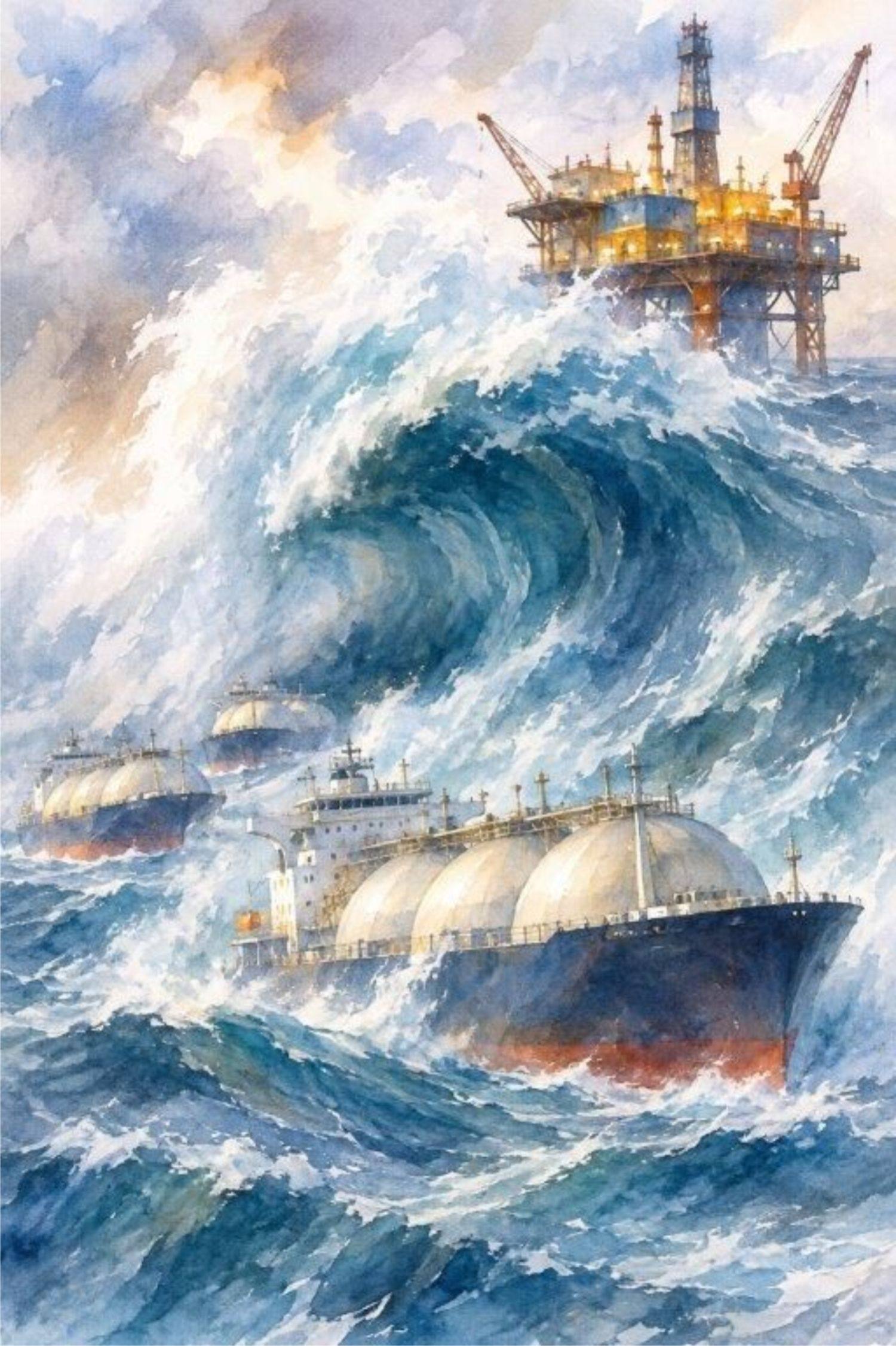
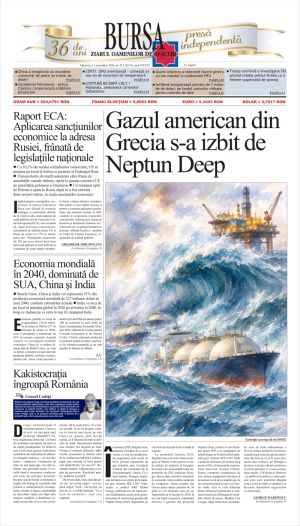
In January 2026, Energy Minister Bogdan Ivan sought a mandate to negotiate an agreement with the United States on imports of liquefied natural gas through the Vertical Corridor from the Alexandroupoli terminal in Greece. A month earlier, Romgaz had rejected the terms of an offer from Greek trader Atlantic SEE LNG Trade. An S&P Global Energy analysis published yesterday by the Greek newspaper Kathimerini now shows how strongly gas from Neptun Deep could compete with the imports Greece hopes to resell across the region.
In January 2026, Bogdan Ivan invoked Romania's strategic relationship with the United States as he called, in his capacity as energy minister, for an agreement that would pave the way for imports of US LNG. Romgaz had already assessed the commercial case. In the adverse scenarios modelled by the company, the offer from Greece could have led to annual losses of between euro50 million and euro310 million. Imports would have started in 2030, three years after gas production was due to begin at Neptun Deep, in which Romgaz holds a 50% stake. A buyer the size of Romgaz would have given Greek trader Atlantic SEE LNG Trade a long-term outlet for LNG supplied by US exporter Venture Global. For the Romanian state-owned company, the same commitment would have meant taking on the risk of buying gas at a higher price than it could sell it for. That gap illustrates how the minister's initiative diverged from Romgaz's commercial interests under the terms on offer at the time. After the controversy surrounding former US ambassador to Greece Kimberly Guilfoyle erupted over US gas routed through Greece, Ivan denied asking anyone to sign a contract. Romgaz said no Romanian official had exerted pressure. A month ago, however, G4Media and HotNews published the letters in which Ivan sought an agreement and a mandate to open negotiations with the United States.
• Neptun Deep changes Greece's calculations. Transporting Romanian gas to Hungary costs nearly half as much
The market analysis explaining Romanian gas's advantage was prepared by Anna Galtsova, a research director at S&P Global Energy. It puts the estimated cost of transporting gas to Hungary at euro2.27 per megawatt-hour (MWh) from the Black Sea, euro4.43/MWh from Revithoussa, euro5.85/MWh from Alexandroupolis via Greece's DESFA network and euro7.51/MWh from the same terminal via the Greece-Bulgaria Interconnector. Tariffs accumulate with every network the gas crosses. Even the cheapest Greek route in the comparison costs nearly twice as much as transporting gas from Neptun Deep. Buyers look at the total delivered price, and Greek suppliers could offset part of the difference by sourcing cheaper gas or if network operators cut tariffs along the route.
Romgaz holds a 50% stake in Neptun Deep. OMV Petrom owns the other half and operates the project. The first gas is expected to enter Romania's national transmission system in the first half of 2027, with plateau production, equivalent to around 8 billion cubic metres a year, expected by the end of the third quarter. Two days ago, Romgaz board member Aristotel Jude compared that output, together with the roughly 8 billion cubic metres currently supplied by onshore fields, with average consumption of around 11 billion cubic metres. That would leave a surplus of about 5 billion cubic metres a year. How much of it can be exported will depend on Romanian consumption, production at other fields and available cross-border capacity.
That is where the pressure on Greece's Alexandroupolis terminal, which receives US LNG, comes from. S&P estimates that Romania could become a major supplier to Moldova and Ukraine and meet part of Hungary's needs. OMV has already told investors it has a contract with Moldova's Energocom. With demand at the same level, every volume of Romanian gas contracted in those markets leaves less room for gas that traders bring in through Greece. Greece still has potential buyers closer to its terminals and must meet its own demand, including by replacing Russian pipeline gas. Its total imports of US LNG may therefore follow a different trajectory from its sales further north. Public accounts of S&P's presentation do not quantify how much US gas Neptun Deep could displace.
• Behind the scenes of the Vertical Corridor, from the Athens memorandum to the meeting with Kimberly Guilfoyle
Against this backdrop, how should Bogdan Ivan's efforts as energy minister between October 2025 and April 2026 to advance US commercial interests be characterised? The documented chronology begins in Athens on 7 November 2025. Transgaz and Nova Power & Gas signed a memorandum with Greek trader Atlantic SEE LNG Trade to explore a commercial relationship for the period from 2030 to 2049. On the same day, US exporter Venture Global announced a 20-year sales agreement with Atlantic SEE, with deliveries starting in 2030 and a minimum of 500,000 tonnes of LNG a year. Venture Global said it had already secured approximately a quarter of the Alexandroupolis terminal's regasification capacity. The Greek trader's next challenge was to find enough buyers in the region. The Athens memorandum opened the way for negotiations on the Romanian side. According to Nova Power & Gas, it expired in February 2026 without an agreement or even a draft contract.
In December 2025, Romgaz told the Ministry of Energy that the terms of Atlantic SEE's offer did not justify signing. The proposal called for a 20-year contract, with delivery at Alexandroupolis and a price linked to the US Henry Hub benchmark. Romgaz estimated a cost of euro33-42/MWh and compared it with forward prices of euro30-40/MWh at the European TTF benchmark for 2030-2040. The company said it was willing to negotiate different terms. On 16 January 2026, Bogdan Ivan wrote to President Nicuşor Dan and Prime Minister Ilie Bolojan, requesting an intergovernmental agreement with the United States and a mandate to negotiate. Among the reasons he cited was the risk of an impasse in Romania's relationship with its US strategic partner.
On 11 February, Ivan held a conference call with the heads of Romgaz and Transgaz. Citing sources, HotNews reported that the minister raised the possibility of buying 1.5 billion cubic metres of US gas through Greek and Romanian intermediaries and that Romgaz again refused. Ivan rejected the allegations that he had exerted pressure. He said Romgaz's talks were exploratory and that he had asked no one to sign. Romgaz likewise said no Romanian official had exerted pressure to secure the signing of a gas contract.
Five days after the call, on 16 February, the Ministry of Energy's inspection unit began its review at Romgaz, according to the company. Both the ministry and Romgaz said the review concerned delays at the 430 MW Iernut power plant.
On 31 March, the Vertical Corridor was on the agenda at Bucharest's Isoletta restaurant, where Sorin Grindeanu, Bogdan Ivan and presidential adviser Florin-Lazăr Vlădică met Kimberly Guilfoyle, then the US ambassador to Greece. Grindeanu confirmed that he and Guilfoyle discussed the Vertical Gas Corridor and Romania's role as a transit country. He said they did not discuss gas contracts. The distinction has practical economic consequences. Transgaz can collect tariffs for transporting a foreign trader's gas, while an import contract would leave the Romanian buyer to pay for the gas and take on the risk of finding customers for it.
The S&P analysis casts those discussions in a new light. The relevant Romanian authorities should examine the conduct of the officials involved, particularly that of then-Energy Minister Bogdan Ivan. From autumn 2027, the phase-out of Russian pipeline gas imports into Europe will put regional supply contracts back up for grabs. Romania can earn revenue from transporting US gas while competing with it for the same buyers. The authorities in Bucharest must explain what happened at the Ministry of Energy under Bogdan Ivan between October 2025 and April 2026. What price, what flexibility and what energy security benefit would have justified a 20-year import commitment starting in 2030, when Romanian gas production from Neptun Deep is due to begin in 2027?





















 Euro
 Dolar SUA
 Franc elveţian
 Liră sterlină
 Gram de aur




























Reader's Opinion