 English

Commercial real estate investment in Romania reached euro606 million in the first nine months of 2026, up 43% from the same period in 2025 and above the euro535 million recorded for the whole of last year, according to a third-quarter market report released yesterday by CBRE. Representatives of the global commercial real estate services, investment and asset management company said that transaction volumes in Romania remain low because the country lacks legislation allowing the establishment of real estate investment trusts (REITs). These are companies that own, manage or finance income-generating properties such as office buildings, shopping centres, warehouses or apartment buildings. Their shares trade on a stock exchange like those of other listed companies.
CBRE expects investment to reach euro800 million for the whole of 2026. Of the roughly euro700 million in deals at an advanced stage, CBRE estimates that around euro500 million could close in 2027.
According to the report, 22 investment transactions were recorded in the first nine months of the year, with the average deal size rising from euro19 million to euro28 million. AFI's acquisition of the MAS retail park portfolio was worth nearly euro280 million.
"Without this deal, the market would have totalled around euro320-325 million across smaller transactions,” said Laura Dumea Bencze, Head of Research and Director of Investment Properties at CBRE Romania. She also pointed to the lack of other large transactions in the euro50-100 million range and of deals worth euro500-600 million, which she attributed to lawmakers' failure to pass REIT legislation. She said REITs could attract more domestic capital and make it possible to finance larger transactions. Dumea Bencze cited the Czech Republic, where, according to the estimates she quoted, domestic funds account for 80% of the market and have the capital to make acquisitions worth hundreds of millions of euros. In Romania, she believes domestic capital could account for at least 50% of the market if a legal framework for REITs were introduced.
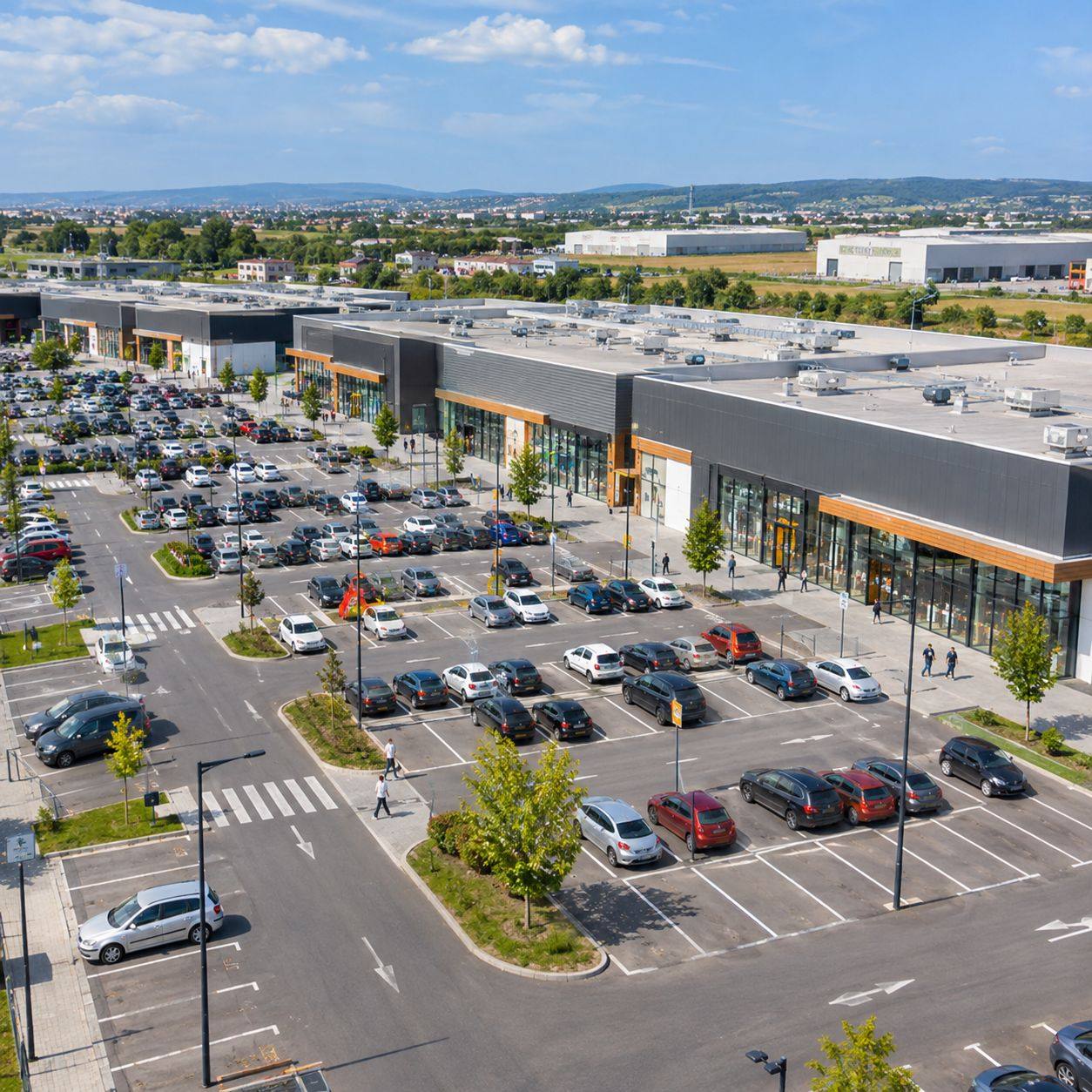
The report also shows that retail parks accounted for 86% of the 110,700 square metres of retail space completed in the first nine months. CBRE expects around 168,600 square metres of new supply in 2026 and says a further 173,000 square metres is under construction for delivery in 2027. Retailers have had a tougher year and have turned to promotions to support sales, but they continue to look for space in formats that suit their expansion plans.
"Retail parks are fully occupied, with waiting lists and significant opportunities in small and mid-sized towns. I think Bucharest could still accommodate a major shopping centre. Our team is working to identify 50 new store locations for 2027, equivalent to more than 15,000 square metres,” said Carmen Ravon, who leads CBRE's retail operations in Central and Eastern Europe. She expects some large grocery stores to reduce or reconfigure their floor space, while DIY and fashion chains are expanding. She added that units of 300 to 700 square metres are currently hard to find.
In the industrial and logistics sector, new leases and renegotiations covered a combined 694,000 square metres in the first nine months, up 2% from the same period in 2025. The number of deals covering more than 10,000 square metres rose from 17 to 21, and Bucharest accounted for 64% of activity. The overall vacancy rate stands at 5.6%, compared with 7-9% across the region, according to CBRE.
Demand for space remains high, but Romania has too few warehouses and industrial buildings to accommodate storage and manufacturing operations.
"The destruction of 800,000 square metres of warehouse space in Kyiv has prompted enquiries about relocating from Ukraine to Romania, where the actual vacancy rate for Class A space is just 4-5%,” said Dana Bordei, CBRE's Head of Industrial & Logistics in Romania and Head of Industrial & Logistics Strategic Client Development for CEE South.
The completion of the A7 Moldova motorway as far as Bacău is opening up new sites, while around Bucharest, CBRE sees the A0 ring motorway as a corridor for major logistics projects. Construction has been slowed by changes to the P118 fire safety code, which, according to Bordei, require developers to revise their plans and permit documentation. She also pointed to higher energy costs, which lengthen the payback period for investments in automation. "Logistics facilities have to be designed around the tenant's specific requirements. That's why build-to-suit projects make more financial sense than speculative developments, especially since a developer can put up a new building in nine months once the land and permits are in place.”
In the office sector, CBRE said total leasing activity in Bucharest fell by 23% in the first nine months, to 142,700 square metres. Third-quarter leasing totalled 36,550 square metres, down 41% from the same quarter in 2025. CBRE reported that leases covering 115,600 square metres were under negotiation and could be signed within three to six months. All 27,600 square metres scheduled for completion in 2026 have been pre-let, while 29% of the 134,800 square metres planned for 2027 has already been leased.
"Prime office rent stands at euro22.50 per square metre, with upward pressure in the central business district, where vacancy is below 5%”, said Laura Dumea Bencze.
Dana Bordei expects rents to rise by at least 5% in the period ahead, with landlords potentially charging a few percentage points more depending on the services they offer tenants.






















 Euro
 Dolar SUA
 Franc elveţian
 Liră sterlină
 Gram de aur






























Reader's Opinion