English


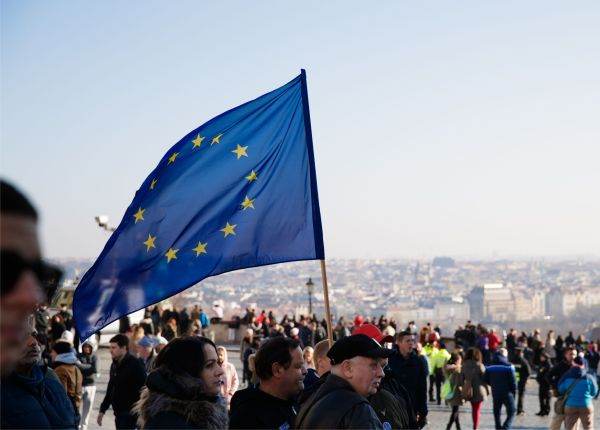
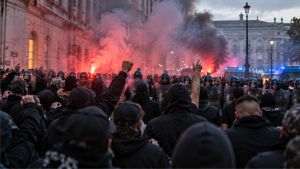
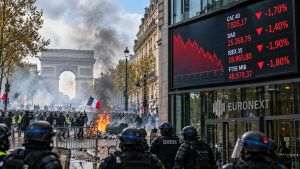
The grievances of European citizens are becoming increasingly apparent, and this is now visible on the streets. These issues are long-standing and run deep. Inflation and the cost of living, armed conflicts, insecurity, and corruption rank among the primary concerns of European Union citizens. Eurobarometer surveys reveal a population increasingly attuned to economic and geopolitical risks, yet they also highlight a contradiction: despite numerous grievances, the majority of Europeans continue to view their country's membership in the European Union as beneficial. Europeans are not dissatisfied with just one single issue, nor can they be characterized by a uniform attitude of rejection toward any specific institution, social group, or political orientation. Data from European surveys point to a complex mix of economic pressures, security fears, and a lack of confidence in the authorities' ability to address everyday problems. According to the Eurobarometer survey conducted for the European Parliament in the spring of 2026, inflation, rising prices, and the cost of living represent the top priority for which citizens seek action at the European level. This issue was cited by 47% of respondents-an increase of six percentage points from the autumn of 2025. The economy and job creation were mentioned by 35%, while the defense and security of the European Union were cited by 34%. The data were presented by the European Parliament in a press release dated July 1, 2026, concerning its spring survey. The research was conducted by Verian between April 9 and May 4, 2026, across the 27 member states, with a sample of 26,421 individuals. The results point to concerns regarding issues that directly affect daily life, as well as the Union's capacity to protect its citizens within an unstable international environment.
• The cost of living: the primary source of discontent
Rising prices affect households differently, depending on factors such as income, savings, debt levels, and the share of mandatory expenses within the family budget. For low-income individuals, the increasing cost of food, energy, and essential services more rapidly depletes the resources available for other types of consumption. In the Standard Eurobarometer 105 survey, published by the European Commission, the cost of living was identified as the top personal concern for 52% of Europeans, and as the primary issue at the national level for 36% of respondents. The discrepancy between these two figures is significant; it suggests that economic pressure is felt directly by a larger segment of the population than the portion that views the cost of living as the country's most pressing problem. People may experience the impact of rising prices on their own budgets without necessarily considering them the sole or most critical issue for society as a whole. Furthermore, trends in nominal wages are not sufficient on their own to assess the standard of living. If incomes grow more slowly than the prices of goods and services purchased on a regular basis, purchasing power declines-even if the figure on one's payslip is higher.
In economies characterized by weak growth, where the costs of housing and services remain high, this pressure can fuel the perception that professional effort no longer provides the same level of stability as it once did. For companies, this situation has indirect consequences: consumers become more price-sensitive, postpone certain purchases, and cut back on discretionary spending. Consequently, dissatisfaction regarding the cost of living is not merely a social issue; it is also a factor that can influence consumption patterns and economic prospects.
• War and insecurity are shifting European priorities
Economic pressures are compounded by a tense geopolitical climate. The war in Ukraine, conflicts in the Middle East, and various security risks have brought defense and border protection back to the forefront of the European debate. According to a European Parliament Eurobarometer survey published this year, 72% of respondents expressed concern regarding ongoing armed conflicts. Terrorism was a source of concern for 67%, cyberattacks for 66%, and uncontrolled migration for 65%.
The same survey indicates that 89% of Europeans believe member states must be more united to address global threats, while 86% want the Union to have a stronger voice on the international stage. The results point to a demand for protection and coordination, rather than necessarily a rejection of the European project. At a time when risks transcend national borders, citizens look to European institutions to provide solutions that individual member states might struggle to deliver on their own.
However, this expectation also carries a political risk. If the authorities fail to explain the costs and outcomes of policies related to defense, security, or migration management, then The gap between public expectations and concrete results can fuel dissatisfaction.
• Corruption: A Problem Affecting Trust in the State
Beyond the economy and security, the perception of corruption serves as a key indicator of the relationship between citizens and institutions. According to the Special Eurobarometer on citizens' attitudes toward corruption in the European Union, published in 2026, 71% of Europeans believe that corruption is widespread in their country. Nearly seven out of ten respondents-69%-agree that high-level corruption cases are not being pursued sufficiently. Only 35% consider their national government's efforts to combat corruption to be effective, while 54% disagree. These data are drawn from the European Commission survey "Citizens' attitudes towards corruption in the EU in 2026," available on the official Eurobarometer portal. The perception of corruption is not the same as a count of actual offenses committed, nor is it a legal assessment of individual institutions. Rather, it reflects how citizens perceive the integrity of the administration, the impartiality of law enforcement, and the authorities' capacity to penalize abuses. For the business environment, these perceptions are particularly significant. When companies and citizens believe that access to contracts, public services, or administrative decisions depends on personal connections and favors, trust in fair competition and market rules can be undermined.
In Romania, this issue is especially relevant, as the perception of corruption shapes the relationship between taxpayers and the public administration. However, comparisons between states must be made based on the same indicators, without conflating public perceptions with data regarding investigations, convictions, or established damages.
• Disinformation and polarization complicate public debate
Another element contributing to the climate of discontent is the information environment. Social media allows for the rapid circulation of information, but it also facilitates the spread of false claims, manipulative content, and material taken out of context. In a society already affected by economic and geopolitical uncertainty, disinformation can amplify fears and diminish the public's willingness to trust institutions, the press, or experts.
The risk lies not only in the existence of false information but also in the difficulty of distinguishing between verified facts, opinions, and messages designed to trigger emotional reactions. Content generated using artificial intelligence further complicates the verification of images, audio recordings, and video material. In this context, economic grievances may become linked to oversimplified explanations or accusations directed at specific social groups, migrants, or European institutions. This does not mean that all criticism of the authorities constitutes disinformation; rather, it highlights that public debate requires verifiable sources and a clear distinction between facts and interpretations.
• Discontent does not equate to the rejection of the European Union
A significant finding from the surveys is that concern regarding economic and security trends coexists with a positive assessment of membership in the European Union. According to Standard Eurobarometer 104, conducted in the autumn of 2025 and published in December, 74% of European citizens believed that their country had benefited from EU membership. At the same time, 48% stated that they trusted the Union. In a European Parliament survey from the spring of 2026, 75% of respondents viewed the Union as a zone of stability in an unstable world, while 74% considered their country's EU membership to be beneficial. These results demonstrate that dissatisfaction regarding prices, corruption, or insecurity does not automatically translate into a rejection of European integration. On the contrary, in times of uncertainty, citizens may call for greater protection and more effective European coordination. The challenge for the institutions lies in transforming these expectations into tangible outcomes: economic policies that support purchasing power, credible mechanisms for combating corruption, and an improved capacity to manage security risks. In the absence of concrete results, the gap between citizens' expectations and the perceived performance of the institutions could become an additional source of social tension.
• A society preoccupied with the present and uncertain about the future
Eurobarometer data depict a European society that cannot be defined by a single grievance. The cost of living strains household budgets, wars and security risks fuel uncertainty, and the perception of corruption undermines trust in institutions. These concerns can feed into one another. Economic insecurity can reduce tolerance for political decisions, while a lack of trust in authorities can heighten receptivity to oversimplified messages and conspiratorial explanations. However, the relationship between these factors cannot be established solely by comparing percentages from opinion polls; further sociological research is required to demonstrate causality.
For the economy, the signal is clear: social stability depends not only on the pace of economic growth, but also on how the outcomes of that growth are experienced by the population, the quality of public services, and the credibility of institutions. Europeans are not necessarily calling for "less union." The data indicate that many expect both national and European institutions to be more effective precisely in those areas where vulnerability is felt most acutely: purchasing power, security, and the integrity of public administration. The political and economic challenge for the coming years will be the authorities' ability to meet these expectations without promising more than they can deliver. Trust is not earned through polls or statements, but through verifiable results in everyday life.












 Euro
 Dolar SUA
 Franc elveţian
 Liră sterlină
 Gram de aur