English
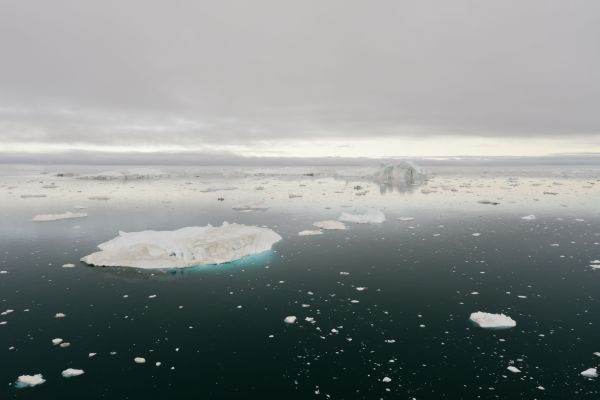
The ice sheets of Greenland and Antarctica are losing ice approximately six times faster than they were in the 1990s, driven by global warming. This accelerated melting threatens to contribute to rising sea levels and increases risks related to avalanches and the instability of water supplies, according to reports published by the International Cryosphere Climate Initiative (ICCI) and the United Nations Environment Programme (UNEP), as cited by DPA. The documents warn of the long-term consequences that a temporary breach of the 1.5-degree Celsius warming threshold - relative to pre-industrial levels - could have on global ice reserves.
• Temporarily exceeding the 1.5-degree Celsius threshold
In 2015, through the Paris Agreement, the international community set a goal to limit global warming to 1.5 degrees Celsius above pre-industrial levels, in order to reduce the risk of the most severe effects of climate change. According to the United Nations, however, achieving this goal is becoming increasingly difficult, and a temporary breach of the threshold is considered ever more likely. This scenario is known as an "overshoot" of the climate target. To subsequently return below this threshold, humanity would need to reach net-negative carbon dioxide emissions - meaning more CO₂ would have to be removed from the atmosphere than is being emitted. The authors of the reports warn that the planet's ice systems will inevitably react, even to a temporary breach of the warming threshold. The effects may persist for a long time, even after global temperatures have decreased.
• Permafrost amplifies climate risks
More intense and prolonged warming would also accelerate the thawing of permafrost - a layer of soil that remains frozen for extended periods. As it thaws, it can release carbon dioxide and methane into the atmosphere, intensifying the greenhouse effect. According to the reports, emissions originating from permafrost could reach a scale comparable to those generated by industrialized nations. The consequences extend beyond the climate; soil instability can compromise the foundations of buildings, roads, and other infrastructure in cold regions. Furthermore, warming may increase the risk of landslides and wildfires.
• Effects on sea levels and water resources
The accelerated loss of ice in Greenland and Antarctica contributes to rising global sea levels, impacting coastal areas and communities vulnerable to flooding. In regions that rely on glaciers to feed their rivers, changes in ice reserves can affect water availability-impacting the general population, agriculture, and energy production. The ICCI and UNEP reports thus underscore that exceeding the 1.5-degree Celsius threshold is not merely an issue of global temperatures; it also poses a risk to ecosystems, infrastructure, and the security of water resources.



















 Euro
 Dolar SUA
 Franc elveţian
 Liră sterlină
 Gram de aur