 English


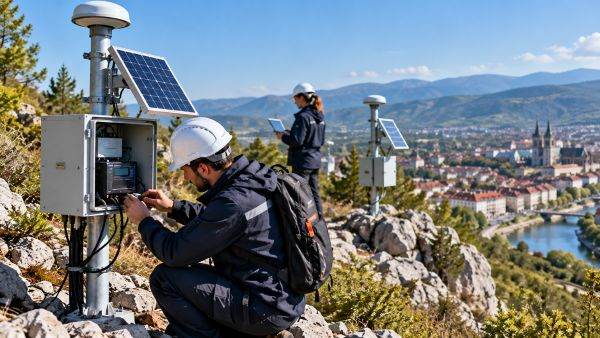
The Croatian Seismological Service has unveiled the Crossnet project-a euro13 million investment funded by the European Union-aimed at modernizing earthquake monitoring infrastructure. Romanian seismologists are also participating in the project; the new network is expected to improve the monitoring of seismic activity and the flow of information to emergency services and the public, according to the Croatian news agency Hina. Crossnet was launched in response to the need to modernize the seismic monitoring system-a necessity highlighted by the devastating earthquakes that struck Zagreb and the Banovina region in 2020. Those earthquakes caused casualties and significant material damage, exposing the limitations of the equipment available to the Croatian Seismological Service at the time. According to project coordinator Tomislav Fiket, the existing infrastructure was inadequate for a country located in an active seismic zone, where major earthquakes occur on average every 30 years. The Croatian state co-financed the value-added tax (VAT), and the project's implementation period has been extended until the end of the year, at which point the final cost will be determined. The main objectives have already been achieved, Fiket stated, as reported by Hina. • Approximately 180 seismic stations upon project completion
The Crossnet project established a network of new seismic stations designed to provide more precise data on seismic activity and improve information flow to authorities and the public. Currently, over 125 stations are operational. An additional 90+ stations equipped with accelerographs have been installed to monitor national heritage sites, in collaboration with the Ministry of Culture and Media. By the project's completion, the network is expected to comprise approximately 180 stations. The collected data will enable researchers to better analyze soil characteristics and identify areas where the soil might amplify earthquake effects. This information could contribute to the design of safer structures and to certification processes. The project also included the recruitment and training of nine young specialists who will assist with equipment installation and maintenance. Fiket described the network as an investment intended to serve the next 40 years.
• Near real-time data and research for early warning
The installed instruments can transmit data to a collection center in near real-time, facilitating the assessment of significant seismic events. The public will also be able to view information online regarding seismic activity recorded in their area. Data provided by the network could support the development of an early warning system. Researchers from the Department of Geophysics at the Faculty of Science, in collaboration with specialists from Switzerland and Romania, are developing a project for early earthquake detection using this information. However, the Crossnet coordinator emphasized that the technology does not allow for earthquake prediction. Warning systems react after a seismic event has begun, detecting its signals and estimating the ensuing effects. Since major seismic faults are located near large cities, the available warning window can be short. Nevertheless, even a few seconds of warning can be useful for triggering automated safety measures and informing the public, depending on the earthquake's characteristics and the distance from the affected area.



















 Euro
Euro Dolar SUA
 Franc elveţian
 Liră sterlină
 Gram de aur































Reader's Opinion