 English


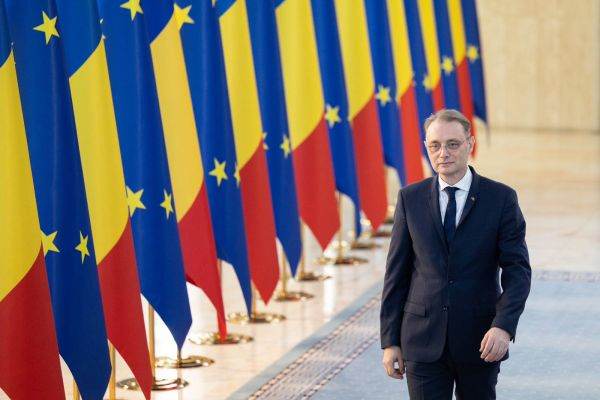
The government approved by Parliament two days ago bears Luca Niculescu's name; however, an emergency ordinance regarding the organization of the Executive, adopted during the government's first meeting, grants Deputy Prime Minister Marian Neacşu an administrative role that raises an uncomfortable question: who will actually be in charge at Victoria Palace?
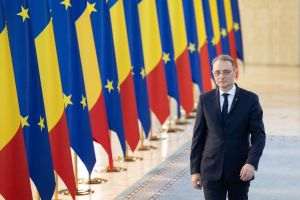
To understand the new Niculescu government, one must examine the official group photograph alongside the organizational ordinance. The photograph shows who took the oath of office; the ordinance reveals who holds the actual levers of power.
A statement issued by the Government following its October 20, 2026, meeting describes this legislative act as a mere administrative implementation of the vote of confidence granted by Parliament. The phrasing employs the subtle, understated tone typical of bureaucratic language, implying little more than the shifting of a few files, the updating of letterheads, and the ordering of new nameplates for office doors. In reality, the text establishes a central coordination hub around Deputy Prime Minister Marian Neacşu, who also heads the Ministry of Internal Affairs. While Luca Niculescu bears public responsibility for the entire administration, Neacşu occupies a position that allows him to leave his own distinct mark on the Government's day-to-day operations.
Article 1, paragraph (3) of the emergency ordinance stipulates that the Deputy Prime Minister, who also serves as Minister of Internal Affairs, is tasked with coordinating public institutions and the various structures that make up the Government's working apparatus. The wording is broad, and the institutions in question are not enumerated in that article; however, it establishes a coordinating authority over the government apparatus, the precise scope of which will need to be tracked in subsequent legal acts. The preceding paragraph specifies that his duties as Deputy Prime Minister are to be determined by a decision of the Prime Minister. Consequently, it will fall to Niculescu to define the extent of the power he delegates, as well as the limits placed upon it.
This coordinating role comes with its own dedicated infrastructure: a State Counselor, two Secretaries of State, and a personal office (cabinet) comprising three contractual positions, entirely separate from the staff attached to the ministry Neacşu heads. The Deputy Prime Minister thus has a team for his government-level responsibilities, in addition to the structure associated with his Interior portfolio. Appointments to this personal staff are made via a decision by the Prime Minister, acting upon the proposal of the Deputy Prime Minister. The distinction is crucial: while the formal authority to sign off on appointments rests with Niculescu, the initiative regarding the composition of the team lies with Neacşu. The degree to which the former's authority remains independent of the latter's influence is one of the questions that will define this mandate.
This is the crux of the term "Prime Minister on paper." Such a Prime Minister may possess all the formal prerogatives of the office, yet still accept a situation where administrative initiative is concentrated elsewhere. There is no need to physically seize his official seal; it suffices that documents, personnel, and solutions reach him only after the significant choices have already been made. The office remains intact in the eyes of the law, while its practical exercise becomes increasingly hollow. In this eventuality, the new organizational structure gives cause for vigilance, even if it does not, in itself, constitute proof that the Prime Minister is merely a figurehead.
Moreover, the text of the emergency ordinance stipulates that, should the Deputy Prime Minister himself be temporarily unable to perform his duties, he may, under specified conditions, delegate them to state secretaries or state counselors within his own office. In other words, the mechanism built around Marian Neacşu also includes a provision for continuity: he has a team, funding, and the authority to distribute responsibilities internally.
Superimposed on this architecture is a change in the seating arrangement at the Government table, a detail noted by Ioana Dogioiu, a former government spokesperson, following the new cabinet's first meeting: Niculescu took a seat among the ministers, rather than at the head of the table as in the previous term. Furniture alone cannot prove that a Prime Minister is subordinate to others; a chair would be far too modest an instrument upon which to base such a conclusion. It could, perhaps, be intended as a gesture of collegiality and openness. Yet, these symbols take on a different significance when viewed alongside the organizational chart: the Prime Minister moves closer, in terms of protocol, to the ministers at the very moment the Deputy Prime Minister is granted a substantial administrative position. Naturally, ensuring equal spacing between chairs is far easier than ensuring an equal distribution of influence.
Nor does the explanatory memorandum for the normative act, approved during the first meeting of the Niculescu government, serve to dispel these questions. It cites the efficiency of the administrative apparatus and the implementation of the government program, describes functions and support structures, yet leaves the financial impact table without any quantified figures. The ordinance specifies that the relevant expenditures are to be covered within the limits of approved budget allocations, establishing a financing framework, but failing to provide a cost calculation. While citizens can see how many positions are allocated to specific offices, the table does not reveal the cost of the organizational structure presented is necessary. Efficiency is proclaimed with conviction; its cost, however, is shrouded in admirable discretion.
The Niculescu government thus begins with a question of authority that no ceremony can resolve. Marian Neacşu is being handed tools that could make him the true center of gravity within the Executive branch; the Prime Minister must demonstrate that he retains control over how these tools are wielded. If he succeeds, any suspicion that he is merely a "Prime Minister on paper" will be dispelled by his actions. If, however, he allows the initiative, the selection of personnel, and the actual coordination of affairs to gravitate around the Deputy Prime Minister, then his name on the Cabinet's masthead will become nothing more than a matter of protocol. At Victoria Palace, the decisive question remains: who actually sets the institutions in motion once the cameras have left the room?
















 Euro
 Dolar SUA
 Franc elveţian
 Liră sterlină
 Gram de aur

































Reader's Opinion