 English


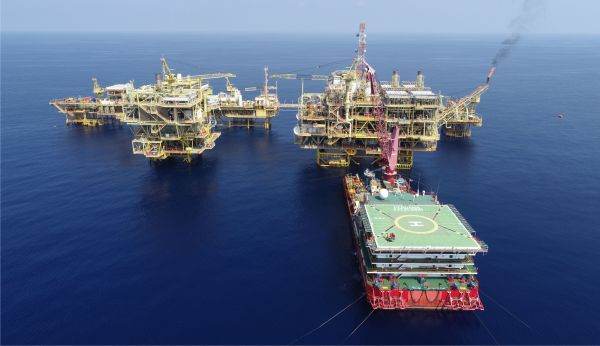
Oil exports from the Persian Gulf have exceeded the levels recorded before the outbreak of the war, as an alternative maritime transport system, organized under the protection of the United States, allows crude oil shipments to continue despite the intensification of Iranian attacks on vessels transiting the Strait of Hormuz.
According to The Wall Street Journal, the new configuration of trade routes and operators' willingness to assume additional risks have contributed to the recovery of oil flows from the region.
According to data provided by maritime transport tracking company Kpler, oil flows from the Middle East, including both shipments through the Strait of Hormuz and deliveries via alternative routes, exceeded an average of 24 million barrels per day in the week ending October 18. The volume is higher than the 23.3 million barrels per day recorded before the conflict.
Preliminary data indicate that shipments through the Strait of Hormuz, including ship-to-ship oil transfers offshore in the Gulf of Oman, reached approximately 14 million barrels per day during the same period, equivalent to 82% of pre-war levels.
However, the recovery in maritime transport has not translated into a significant decline in oil prices. Benchmark Brent crude has risen in recent days, reaching around $108 per barrel on Tuesday, amid investor concerns about the sustainability of the current transport system. A possible resumption or intensification of military confrontations could once again disrupt shipments, at a time when declining global inventories are limiting the market's ability to absorb additional shocks.
Moreover, maintaining oil flows involves considerable operational costs, generated by war-risk insurance premiums, high freight rates and additional security measures. These expenses are gradually passed along the supply chain and ultimately influence the prices paid by end consumers for fuel.
The resilience of oil shipments nevertheless marks an important shift in the dispute over control of one of the world's most strategic energy routes. Although Iran continues to pose a threat to commercial vessels and can cause transport costs to rise significantly, Tehran's ability to deter transit through the Strait of Hormuz has diminished, reducing its leverage in negotiations with the United States.
Hamad Hussain, a senior commodities economist at Capital Economics, believes that commercial operators have managed to develop a functional transport mechanism through an area exposed to high military risks. According to him, the consolidation of the shipping system and companies' growing willingness to accept the risks associated with oil exports explain the maintenance of high shipment volumes.
Oil pipelines in Saudi Arabia and the United Arab Emirates also play an important role in the reorganization of energy flows, allowing crude oil to be transported along routes that bypass the Strait of Hormuz. Kpler estimates show that, in September, approximately 40% of the crude oil exported from the Gulf by countries in the region, excluding Iran, was transported via alternative routes, compared with only 17% before the outbreak of the war.
This adaptation contrasts with the situation of Iranian exports, which have been severely restricted by the maritime blockade imposed by the United States. While neighboring countries have managed to diversify their trade routes and maintain shipments, Tehran is facing difficulties in selling its own oil.
Under these circumstances, there is a risk that Iran will attempt to restore its influence over regional shipping by intensifying attacks against commercial vessels. Such a development could lead to a new confrontation with the United States, just two weeks before the U.S. midterm congressional elections.
According to a compilation prepared by The Wall Street Journal based on reports from the British United Kingdom Maritime Trade Operations (UKMTO) and companies specializing in maritime security, approximately 30 attacks on vessels were reported in October alone.
Christopher Long, a former British naval officer and current representative of Neptune P2P Group, believes that Iran is attempting to reestablish control over the Strait of Hormuz through a campaign of intimidation and attacks on commercial shipping.
Despite these risks, numerous oil traders and shipowners believe that the potential profits justify crossing the conflict zone. The differences between purchase and resale prices have increased considerably, turning shipments from the Persian Gulf into an extremely profitable activity for operators willing to accept the associated dangers.
Homayoun Falakshahi, head of crude oil market analysis at Kpler, estimates that operators can currently earn an additional profit of approximately $20 for every barrel of Iraqi oil resold, compared with the pre-war period. In the case of a supertanker, this difference can generate additional revenue of approximately $40 million for a single shipment, The Wall Street Journal reports.
According to his calculations, three such voyages could fully cover the cost of purchasing a second-hand oil tanker, valued at approximately $100 million.
The high profitability of shipping is also reflected in the remuneration offered to crews. Seafarers who agree to navigate through the dangerous areas of the Persian Gulf can receive bonuses equivalent to two or three regular monthly salaries. The Wall Street Journal reported that a crew recruitment company in China offered up to $25,000 for a round trip, which normally lasts between one and two weeks.
Falakshahi believes that the maintenance of high shipping volumes, despite the increasing number of attacks, is primarily driven by the considerable profits that traders and maritime operators can earn.
The unprecedented freight rates charged in the region have also prompted the repositioning of older oil tankers previously used to transport oil from Venezuela and Russia. According to maritime brokers, the owners of these vessels are seeking to capitalize on the high demand for shipping capacity in the Persian Gulf.
An important part of the current system relies on short maritime voyages between oil terminals inside the Gulf and transfer areas located near Oman. Vessels load oil at ports in the region, cross the Strait of Hormuz and subsequently transfer their cargo to other tankers, which continue the journey to international markets.
The operations benefit from a degree of protection provided by U.S. military aircraft, particularly along a maritime corridor located near the coast of Oman. To reduce the risks of detection and attack, some tankers cross the area with their position-transmitting systems switched off.
After transferring their cargo in the Gulf of Oman, the vessels return to the Persian Gulf to collect new shipments, thus repeating the operations in the area with the highest risk of attack.
Meanwhile, Iran's Islamic Revolutionary Guard Corps uses drones and missiles to obstruct the transit of commercial vessels. Iranian forces have also begun resorting to guerrilla-style tactics, similar to those used by Houthi rebels in Yemen against maritime shipping near the Red Sea. These methods include using fishing boats to monitor traffic and deploying fighters at sea to identify and attack targets.
The intensification of attacks has led to a rapid increase in transport costs for oil exported from the Gulf. Kpler data show that the cost of transporting a barrel of crude oil from the region to China aboard a supertanker reached approximately $37.37 this week, approaching a record level.
At the same time, war-risk insurance costs have risen sharply. According to analyst Michelle Wiese Bockmann of Windward, insurance premiums have climbed to as much as 10% of a vessel's value, compared with less than 3% previously.
Natasha Kaneva, head of global commodities market strategy at JPMorgan, believes that the main problem facing the oil market has changed significantly in recent months. While in April the major difficulty was the insufficient quantity of oil available, in October the principal challenge has become the cost of transporting it to consumer markets, according to The Wall Street Journal.
Nevertheless, oil flows from the Persian Gulf continue to remain at high levels, despite previous warnings issued by Iran that Tehran would not allow neighboring countries to export their oil if its own shipments were blocked.
























 Euro
 Dolar SUA
 Franc elveţian
 Liră sterlină
 Gram de aur

































Reader's Opinion