 English



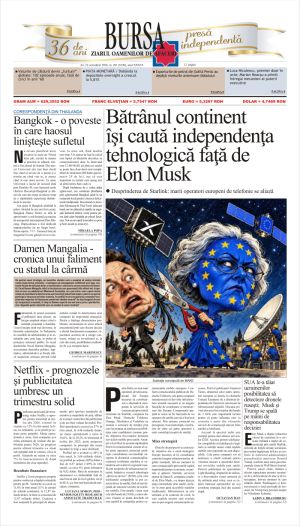
Four of Europe's largest telecommunications operators are seeking to build a European alternative to the satellite communication services currently dominated by Starlink, the company owned by Elon Musk. Deutsche Telekom, Orange, Telefonica, and Vodafone have signed a letter of intent to explore a joint bid for frequencies designated for mobile satellite services. The announcement was made this week. According to a joint statement from the four operators, the project aims to strengthen European sovereignty in the field of communications, enhance network resilience, and extend services to regions with insufficient terrestrial infrastructure coverage. The initiative focuses on "direct-to-device" (D2D) technology, which allows compatible phones to connect directly to satellites, eliminating the need for terrestrial mobile network antennas. The frequencies in question fall within the 2 GHz band; their future allocation could open a new chapter in the competition for mobile communications in Europe. As stated in the release issued by Deutsche Telekom, the four companies intend to develop the necessary terrestrial infrastructure and handle coordination and monitoring functions from within Europe. The space-based component would be provided by a satellite operator that has yet to be selected. Consequently, at this stage, the project does not entail the four operators building their own satellite constellation.
• Europe Seeks to Reduce Dependence on American Infrastructure
Beyond the commercial perspective, this initiative carries strategic stakes. Europe is attempting to strengthen its control over essential digital infrastructure at a time when satellite communications are becoming increasingly important for the economy, security, and defense. Starlink-a service operated by SpaceX, the company led by Elon Musk-has already established a strong position in the satellite internet market, including in areas difficult for traditional networks to reach. Its infrastructure is also utilized during crises, when terrestrial networks are damaged or unable to provide the necessary communications. According to the Financial Times, the move by these four European operators aligns with the European Union's efforts to reduce reliance on American providers of digital infrastructure. The discussion surrounding the allocation of frequencies in the 2 GHz band is significant precisely because it could influence who controls a portion of future direct-to-device (D2D) communication services-connecting satellites directly to mobile phones.
Access to the radio spectrum is essential for the development of D2D services. These allow compatible phones to establish a link with satellites when conventional mobile networks are unavailable. The four companies intend to explore a joint bid for the upcoming allocation of spectrum designated for mobile satellite services. According to the industry publication Light Reading, the rights to use these frequencies are set to be awarded next year, which explains the operators' interest in coordinating their strategy at this early stage. An important element of the project is the intention to allow all mobile network operators to offer D2D (direct-to-device) services through an open and non-discriminatory access model. Thus, the initiative would not be reserved exclusively for the four founding companies, but could instead support the development of a broader European market. It remains to be determined, however, which satellite operator will provide the space-based infrastructure and under what terms the services will be implemented. Neither the commercial timeline nor the costs for end-users have been specified.
• Connectivity in areas without signal
For consumers, the primary advantage could be the ability to use a mobile phone in regions where terrestrial signal is unavailable-such as in isolated rural areas or during natural disasters that disrupt conventional networks. The technology could also play a significant role in maintaining communications during emergencies, when terrestrial infrastructure is damaged. At the same time, satellite connectivity could prove relevant for the transport sector, industrial activities, and other fields where continuous communication is essential. However, D2D services should not be confused with satellite internet provided via an antenna installed on a home or vehicle. In the case of direct connectivity, the mobile phone communicates directly with the satellite; performance depends on the technology employed, the specific device, and reception conditions. The French publication Le Monde has noted that such solutions are particularly useful in areas lacking mobile cell towers or when terrestrial networks are interrupted. On the other hand, in their current form, they do not represent a universal substitute for mobile networks of high capacity, especially in urban environments or inside buildings.
• An alliance that does not eliminate existing partnerships
The collaboration between Deutsche Telekom, Orange, Telefonica, and Vodafone does not mean that these operators are abandoning commercial agreements already in place with satellite service providers. The official statement explicitly clarifies that the letter of intent does not replace existing partnerships. This distinction is significant in a market where telecommunications companies are simultaneously attempting to launch new services while maintaining their commercial flexibility. An operator might collaborate with a satellite provider to rapidly roll out services, while simultaneously participating in the development of a long-term European alternative. For Europe, the challenge lies in transforming the ambition for digital sovereignty into a functional, competitive, and accessible infrastructure. While the presence of strong operators and the coordination of investments are advantageous, they do not eliminate challenges related to technology, regulation, costs, and spectrum access. For now, the project is in its early stages. Should it progress, it could foster the emergence of a European market for satellite-based mobile communications and reduce reliance on a limited number of global providers. For end-users, however, the tangible outcome will depend on the timing of the launch, handset compatibility, and the cost of the services.
























 Euro
 Dolar SUA
 Franc elveţian
 Liră sterlină
 Gram de aur
































Reader's Opinion