English


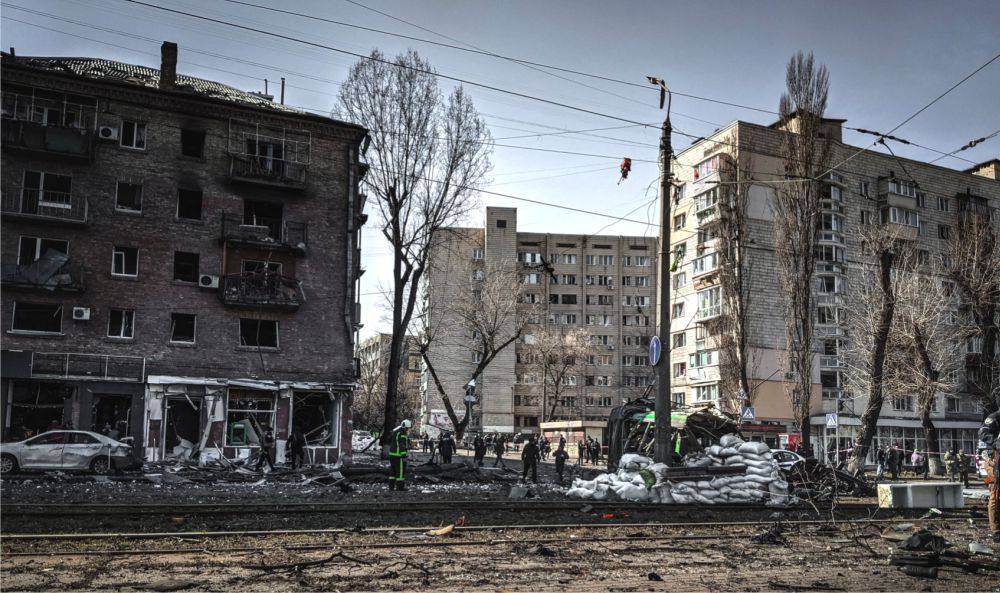
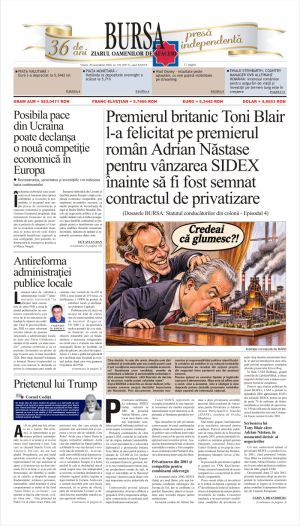
The end of the Russo-Ukrainian War would signify more than just a cessation of hostilities and a return to normalcy; it would mark the beginning of an extensive process of reconstruction and economic and geopolitical realignment. The European Union is already preparing financial instruments worth tens of billions of euros, security guarantees, and projects aimed at integrating Ukraine into the EU economy. Romania could emerge as one of the primary regional beneficiaries of this new landscape, thanks to its ports, transport infrastructure, and strategic position on the Black Sea.
The end of the war in Ukraine would usher in a new phase for Europe-one with economic implications comparable, in terms of the scale of investment required, to the major reconstruction programs that followed the Second World War. Beyond the political negotiations and military guarantees intended to secure a lasting peace, the continent is preparing for a transformation that could reshape trade flows, investment patterns, the defense industry, and economic relations between states. While there is no single, definitive European plan for the post-war period, several financial mechanisms and strategic initiatives-already approved or currently being implemented-are beginning to define the direction in which Europe is heading. Some are focused on the reconstruction of Ukraine, while others aim to strengthen continental security and reduce economic and military dependencies.
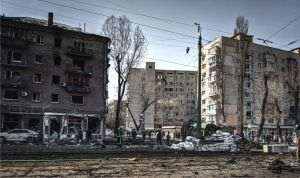
The stakes are significant. According to the fifth Rapid Damage and Needs Assessment (RDNA5) for Ukraine-conducted by the Ukrainian government, the World Bank, the European Commission, and the United Nations-the country's reconstruction and recovery needs are estimated at nearly $588 billion over the next ten years, based on the situation as of December 31, 2025. This figure represents nearly three times Ukraine's estimated nominal GDP for 2025, according to a statement published by the World Bank on February 23, 2026. Direct damages exceed $195 billion, with the most severely affected sectors being transport, energy, housing, industry, and agriculture. Estimated needs for the transport sector exceed $96 billion; for energy, they approach $91 billion; and the reconstruction of housing requires approximately $90 billion. These figures indicate that the recovery process will not be limited to repairing destroyed infrastructure, but will instead entail a comprehensive restructuring of the Ukrainian economy.
• A market worth hundreds of billions of dollars
The European Union is seeking to secure a central role in this process, including by attracting private capital. The European Commission has already established a financial framework to facilitate the preparation of investments ahead of the conflict's conclusion. One of the primary instruments is the "Ukraine Facility"-a support program valued at euro50 billion for the 2024-2027 period. Within this framework operates the Ukraine Investment Framework, a mechanism designed to mobilize public and private investment for reconstruction and modernization. According to the European Commission, this instrument has a financial capacity of euro9.6 billion-comprising guarantees and grants-aimed at mobilizing up to euro40 billion in investments. To date, euro8.5 billion in guarantees and grants has been allocated, contributing to the mobilization of a total of euro25.7 billion in investments.
Targeted sectors include transport infrastructure, renewable energy, digitalization, manufacturing, agriculture, and supply chains. Support also extends to investments in dual-use technologies (for both civilian and military application), as well as projects aimed at businesses affected by the war. The European Commission states that these mechanisms are designed to link reconstruction with the economic and institutional reforms necessary for Ukraine's alignment with the European Union. In other words, the funding is intended not merely to restore what has been destroyed, but to build an economy compatible with the EU single market. For European companies, this prospect opens up a vast market. Construction, infrastructure materials, machinery, energy equipment, financial services, and digital technologies will all play a significant role in the reconstruction process. However, access to this market will depend on financing conditions, security guarantees, contract transparency, and the capacity of companies to participate in large-scale international projects.
• Europe is preparing security guarantees for the post-war period
Economic reconstruction cannot take place without a security solution that reduces the risk of a resumption of hostilities. For this reason, European states have begun to prepare mechanisms that could become operational following the establishment of a credible armistice.
An important document in this regard is the Paris Declaration of January 6, 2026, adopted by members of the Coalition of the Willing, Ukraine, and the United States. According to the document published by the Council of the European Union, the participants agreed on the need for robust security guarantees to accompany any peace agreement. The measures envisaged include the monitoring and verification of a potential armistice, the continuation of military support for Ukraine, the preparation of a multinational force, and the establishment of commitments for support in the event of renewed Russian aggression. This multinational force would be led by Europeans, with the participation of states wishing to contribute and with the proposed support of the United States. Such structures would be deployed at Ukraine's request, following a credible cessation of hostilities. This does not refer to a pre-existing European army, nor to a guaranteed military deployment, but rather to the preparation of a security mechanism designed to prevent a potential armistice from becoming merely a pause before a new conflict. For Europe, this approach also has an economic dimension. Without security guarantees, private investors might avoid Ukraine, regardless of the scale of available public funds. Military risk will influence the cost of financing, the price of insurance, and the willingness of companies to make long-term investments.
• The Defense Industry: Between a War Economy and a New Security Architecture
A potential peace will not automatically lead to the European defense industry returning to pre-conflict production levels. On the contrary, the war has demonstrated that Europe requires significantly greater industrial capacity for the production of ammunition, missiles, drones, air defense systems, and military equipment. To this end, the European Commission has developed the "Readiness 2030" plan-also known as "ReArm Europe"-which aims to mobilize up to 800 billion euros to strengthen the defense capabilities of member states. A key component is the SAFE (Security Action for Europe) instrument, through which the European Union provides member states with access to loans totaling up to 150 billion euros for the joint procurement of equipment and investments in the defense industry. The regulation was adopted by the Council of the EU in May 2025. According to the European Commission, the objective is to develop a European defense market capable of large-scale production and reduced reliance on external suppliers. Ukraine is included in this strategy, with its defense industry eligible to participate in certain joint procurement initiatives and cooperative projects. The European defense readiness plan for 2030 also encompasses the development of shared capabilities in air defense, counter-drone systems, surveillance of the eastern flank, and space security. Consequently, even if the war were to end, investments in defense would not cease. Some of the industrial capacities developed in recent years could be maintained, and the experience Ukraine has gained in the use of drones and military technologies could become an asset for the entire European industry.
• Ukraine's integration into the EU will reshape the single market
Another process with major economic implications is Ukraine's growing alignment with the European Union. Accession negotiations progressed in 2026, and on October 13-according to the Council of the EU-negotiations were opened for the clusters of chapters concerning the internal market, competitiveness, and inclusive growth. Accession is not automatic; it requires meeting specific conditions regarding the rule of law, the functioning of institutions, competition, and the harmonization of legislation. Nevertheless, the political direction is clear: Ukraine is set to become part of the European economic space. The consequences for the single market will be significant. Ukrainian agriculture, industry, transport, and natural resources will become increasingly relevant elements within the European economy. At the same time, this integration will create competitive pressures on certain sectors in member states, particularly in agriculture and transport. For Central and Eastern Europe, this prospect brings both commercial opportunities and the need to adapt economic policies. Integrating an economy the size of Ukraine will alter competitive dynamics within the single market and necessitate investments in cross-border infrastructure.
• Romania as a potential beneficiary of reconstruction and the new Black Sea economy
Its geographical position could transform Romania into a key player in the reconstruction of Ukraine. The Port of Constanţa, the Danube ports, rail and road infrastructure, as well as connections with the Republic of Moldova, can become components of an expanded regional logistics system. European Commission Romania has already supported the development of "solidarity lanes," which allow Ukraine to maintain access to international markets despite the blockades and risks in the Black Sea. On March 6, 2026, Romania, the Republic of Moldova, and Ukraine-together with representatives of the European Commission-agreed to continue developing the "Danube Action Plan 2.0." This initiative aims to improve navigation, foster cooperation among the ports of the three countries, increase transport capacity, and develop alternative rail and road routes. The European Commission notes that these measures are intended not only for managing crisis situations but also for building an integrated, secure, and resilient regional transport system.
For Romania, the opportunities extend beyond the transit of goods. Reconstruction could generate demand for construction materials, machinery, engineering services, energy equipment, financial services, and logistics solutions. Romanian companies could participate in infrastructure projects and regional supply chains.
However, these advantages are not guaranteed. Capitalizing on them depends on investments in national infrastructure, the capacity of ports and railways, customs procedures, and the competitiveness of local companies. Without such improvements, Romania risks remaining merely a transit country for the investments and goods of other nations.
• Peace will not mean a return to pre-war economic relations
Another major issue will be the economic relationship between the European Union and Russia. The cessation of hostilities will not automatically lead to the lifting of sanctions, nor to the resumption of trade under the conditions that existed prior to February 2022. European states will need to determine under what terms economic restrictions might be adjusted, what will become of frozen Russian assets, and how to prevent the re-emergence of the strategic dependencies that left the EU economy vulnerable. Simultaneously, European companies will have to assess whether returning to the Russian market is economically justified and whether sufficient legal safeguards for investments exist. Even in the event of peace, relations between Brussels and Moscow may remain strained. Economic trust, once lost, cannot be restored simply by signing a ceasefire agreement.
• A New Competition for Capital and Economic Influence
The reconstruction of Ukraine could become one of Europe's most significant economic projects over the coming decade. However, the competition will not be limited to the companies participating in infrastructure restoration; it will also encompass the distribution of economic and political influence in Eastern Europe, control over supply chains, access to resources, and the development of new trade corridors. States that invest early in infrastructure, industrial capacity, and economic partnerships could secure significant advantages. Conversely, those that wait until the war has ended to prepare their projects risk entering a competitive landscape already dominated by better-organized companies and economies. For the European Union, the challenge will be to transform the expenditures and support mechanisms developed during the war into a coherent economic project-one that provides stability to Ukraine while strengthening the continent's competitiveness. Peace, therefore, will not mark the end of Europe's economic mobilization, but rather a shift in its objectives. While recent years have seen resources directed primarily toward supporting Ukraine's resistance and bolstering European defense, the post-war period could shift the focus toward investment, infrastructure, economic integration, and reconstruction.



















 Euro
 Dolar SUA
 Franc elveţian
 Liră sterlină
 Gram de aur