 English


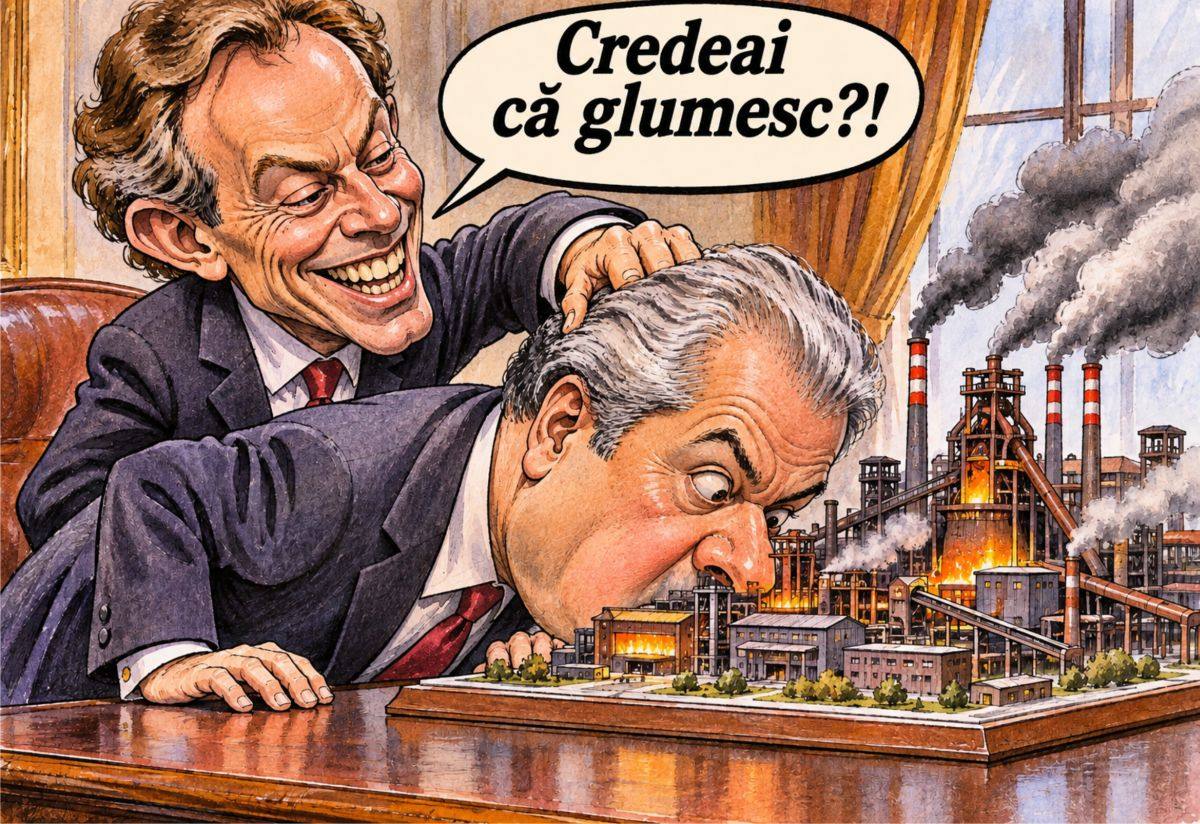
The privatisation of the SIDEX Galaţi steelworks, carried out in 2001 by the Adrian Năstase government, sparked one of the most significant scandals concerning foreign political influence over the Romanian economy.
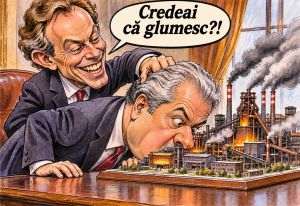
The takeover of the steelworks by the LNM group, controlled by Indian-born billionaire Lakshmi Mittal, was preceded by a diplomatic intervention by British Prime Minister Tony Blair, whose party had received a donation of £125,000 from the businessman. At the same time, French, German, Turkish and Russian companies had expressed interest in the Romanian steel producer, while the authorities in Bucharest were negotiating the sale of one of the country's most important industrial assets.
Controversies surrounding the selection of the buyer, the offshore structure of the LNM group and compliance with contractual obligations continued long after the transaction was completed.

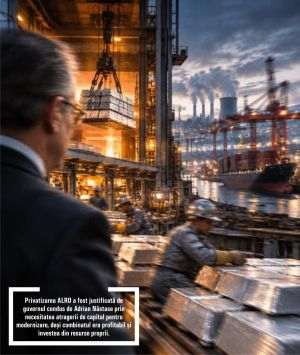
The SIDEX case represents an example of how the economic interests of major international corporations can intersect with diplomacy and political party financing.
Unlike other controversial privatisations, in the case of the Galaţi steelworks there are public documents and testimonies confirming the direct intervention of a foreign head of government in support of a private investor. However, these do not demonstrate that the Romanian authorities' decision was bought or that the donation to the Labour Party prompted Blair's intervention.
• The 2001 privatisation and the competition for the steelworks
In the early 2000s, SIDEX Galaţi was one of the most important steelworks in Eastern Europe, but it was facing financial losses, debts and the need for major modernisation investments.
The government led by Adrian Năstase decided to privatise the company, with the process coordinated by the Authority for Privatisation and Management of State Holdings (APAPS), headed by Ovidiu Muşetescu.
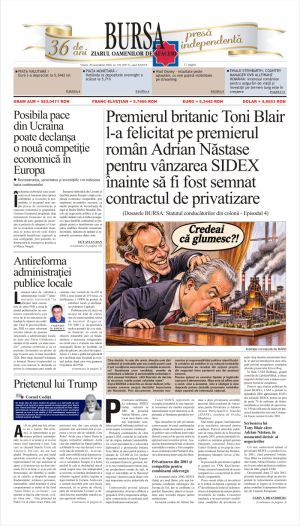
Several international groups expressed interest in the steelworks. According to an article published by ziarul BURSA in 2001, potential investors included the German group Salzgitter, the French-Turkish consortium Usinor-Erdemir and a group of Romanian companies consisting of Metalexportimport, Metanef, Grivco and Metaltrade.
The Russian group TNK Kaz Chrome also emerged during the privatisation process. However, the interest expressed by these companies did not materialise into comparable final bids.
The press at the time reported that investors were required to provide a guarantee of $47 million and demonstrate that they had the resources for environmental investments. The Romanian consortium also cited changes to the privatisation conditions shortly before the deadline, particularly the introduction of obligations concerning the recovery of receivables related to the Krivoi Rog project.
Ultimately, LNM Holdings, the group controlled by Lakshmi Mittal, remained the only bidder to submit a firm purchase proposal.
According to a retrospective published by ziarul BURSA in 2018, LNM acquired approximately 91.6% of SIDEX's shares in November 2001 for a price exceeding $70 million, undertaking investments of approximately $350 million over the following ten years. The contract had been signed in July 2001.
• Tony Blair's letter to Adrian Năstase at the decisive moment of negotiations
The most controversial episode of the SIDEX privatisation occurred in July 2001, when British Prime Minister Tony Blair sent his Romanian counterpart, Adrian Năstase, a letter welcoming the takeover of the steelworks by the LNM group.
The document, dated July 23, 2001, presented the transaction as an important step in restructuring the Romanian economy and suggested that the investment could contribute to Romania's rapprochement with the European Union.
Blair expressed his satisfaction that Romania's partner was a company he described as British, although LNM Holdings was registered in the Netherlands Antilles and controlled by Indian businessman Lakshmi Mittal.
According to an investigation published by The Guardian on February 13, 2002, the letter was not sent at a commercially insignificant moment. The signing of the contract had been postponed, and the French group Usinor was trying to persuade the Romanian authorities to accept an alternative to LNM's offer.
French Prime Minister Lionel Jospin was due to arrive in Bucharest on July 23, and Usinor representatives hoped that the visit would strengthen the French company's position.
In this context, Blair's letter could be interpreted as a signal of political support for the Indian investor.
However, the Romanian government rejected the idea that the British Prime Minister's intervention had determined the choice of buyer. According to a government statement cited by Adevărul in February 2002, the memorandum concerning the completion of negotiations and the form of the contract had been approved on July 19, 2001, four days before the date of the letter.
Therefore, the documents indicate that the formal decision had been made before Blair's intervention, even though the contract was signed subsequently.
• The £125,000 donation to Labour and the "Mittalgate” scandal
The controversy acquired a major political dimension in Great Britain after the press revealed that Lakshmi Mittal had contributed financially to the Labour Party's election campaign.
According to information published by The Guardian on February 10, 2002, the businessman had donated £125,000 to the Labour Party on June 26, 2001, approximately four weeks before Tony Blair signed the letter addressed to Adrian Năstase.
The donation was not secret. It had been included in the United Kingdom's public political financing records, administered by the Electoral Commission, the institution responsible for overseeing donations to political parties.
In August 2001, the Press Trust of India news agency, cited by Rediff, reported that Mittal was among the Labour Party's main individual donors, according to data released by the British electoral authority.
The scandal became known in the British press as "Mittalgate”, with the opposition demanding explanations regarding the relationship between the financial contribution and the diplomatic support granted to the investor.
On February 13, 2002, Tony Blair was questioned in the House of Commons. According to the official transcript of the parliamentary debate, the Prime Minister acknowledged that Mittal's donation was public information, but maintained that it had had no influence on his decision to sign the letter.
Blair explained that the intervention had been requested by the British Embassy in Bucharest and that supporting a company based in the United Kingdom was a normal diplomatic practice.
However, the opposition challenged this argument, emphasising that LNM was registered in an offshore jurisdiction and had very few employees in Great Britain.
The controversy was intensified by the fact that the Mittal group competed in the international market with British steel producers, including Corus, a company that had carried out significant workforce reductions.
The donation records demonstrate the existence of a financial relationship between Mittal and Labour, but do not establish that the amount was offered in exchange for the British Prime Minister's intervention.
• The privatisation file, the confidential contract and the Court of Accounts' investigations
Controversies surrounding SIDEX continued after the takeover of the steelworks, particularly because of limited access to the privatisation documents and the manner in which the investor fulfilled its obligations.
In March 2008, BURSA reported that the Authority for State Assets Recovery (AVAS) maintained that it could not declassify the contract without the consent of ArcelorMittal, the successor to the group that had acquired the steelworks.
According to the institution, the contract had been signed on July 25, 2001, and the price for the 92.12% shareholding was $70.7 million, to which interest and penalties paid subsequently were added. The percentage communicated by AVAS differs from the 91.6% stake mentioned in some economic retrospectives.
In June 2009, a group of 53 members of parliament requested the establishment of a parliamentary committee to investigate the privatisation and the obligations undertaken by the buyer. According to BURSA, the initiators also called for the declassification of the contract.
Two months later, MP Mihail Boldea announced the filing of a criminal complaint with the Prosecutor General's Office against representatives of the Năstase government and the privatisation authority, citing alleged offences of abuse of office and undermining the national economy.
However, the filing of the complaint does not amount to the establishment of criminal acts, and the sources consulted do not confirm the existence of a final conviction concerning the award of the SIDEX contract.
There were, however, official findings concerning the fulfilment of contractual obligations. According to an article published by BURSA on February 6, 2013, which presented the Court of Accounts' report for 2011, the investigations had identified failures to comply with certain investment commitments undertaken by the buyer.
The document showed that AVAS had resumed proceedings in 2012 before the International Court of Arbitration in Paris to recover penalties of approximately $1.63 million.
These findings document the existence of genuine contractual disputes, distinct from the political accusations concerning the initial conditions of the privatisation.
• EBRD financing and questions regarding British support
Another controversy concerned the financing granted to the Mittal group by the European Bank for Reconstruction and Development (EBRD).
According to the institution's official documents, the EBRD granted a $100 million loan, initially signed in October 2001 and subsequently restructured to support the modernisation of the steelworks.
Questions arose in Great Britain regarding the possible influence of the Blair government over the approval of the financing, given that the United Kingdom was one of the institution's shareholders.
In February 2002, Noreen Doyle, responsible for the EBRD's banking operations, rejected the existence of political pressure. According to The Guardian, the official stated that the institution had assessed the project on financial criteria and had received no requests for intervention from the British government.
EBRD representatives also explained that the French offer involved the temporary management of the steelworks, with the possibility of a subsequent acquisition, while LNM had submitted an actual purchase offer.
This difference is essential for evaluating the privatisation: the existence of several interested investors does not mean that the Romanian authorities had several firm and equivalent offers before them.
• The SIDEX privatisation, between economic diplomacy and the responsibility of the Romanian authorities
A quarter of a century after the privatisation, the SIDEX case remains relevant to understanding external influences on major economic decisions in Romania.
Documents and investigations published in Great Britain confirm that Tony Blair intervened diplomatically in support of the LNM group, that Lakshmi Mittal had previously financed the Labour Party and that the British intervention coincided with a period when French investors were attempting to secure a role in the management of the steelworks.
However, Romanian government documents show that formal approval of the privatisation had taken place before Blair's letter. Furthermore, the French offer was not equivalent to the purchase proposal submitted by LNM, and the EBRD denied the existence of political pressure concerning the financing.


















 Euro
 Dolar SUA
 Franc elveţian
 Liră sterlină
 Gram de aur


























Reader's Opinion