English

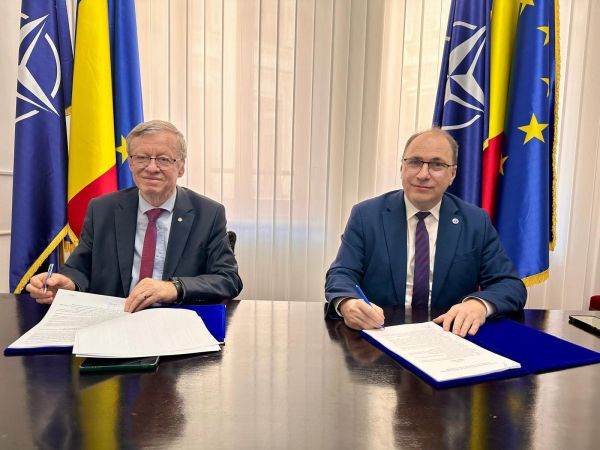
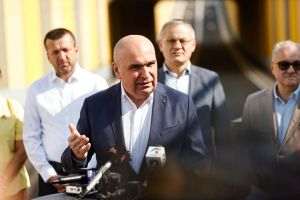
Romania's Minister of Education and Research, Mihai Dimian, and the president of the National Trade Union Federation "Alma Mater,” Anton Hadăr, have signed a collective labor agreement for higher education, applicable at the level of institutions affiliated with the union federation.
The document was signed at the headquarters of the Ministry of Education and Research, in what is considered a difficult context for the education system, marked by budgetary pressures and the need for structural reforms.
Institutional stability in a tense climate
The signing of the new collective labor agreement comes at a time when Romanian universities face multiple challenges, from insufficient funding to the retention of teaching and research staff.
According to the minister, the document represents "an act of stability” for the entire university system.
"The signing of the collective labor agreement is an act of stability, for the benefit of those involved in higher education, but it is also proof of the importance both parties attach to social dialogue based on understanding and respect, even in this difficult period,” Mihai Dimian said in a post on social media.
The official's statement highlights the role of collective negotiations in maintaining a predictable environment for academic and support staff, in a sector where legislative and financial fluctuations can directly impact the quality of education.
The role of unions and collective bargaining
The National Trade Union Federation "Alma Mater,” one of the main representative organizations in higher education, played an active role in the negotiation process.
Sources from the academic environment, cited by Edupedu.ro, indicate that the talks addressed, among other things, the clarification of provisions regarding teaching workload standards, salary rights, and institutional dialogue mechanisms between employers and employees.
Social dialogue between necessity and budgetary pressure
According to officials, the signing of the agreement reflects a balance between union demands and the state's budgetary constraints.
In recent years, the higher education system has been affected by chronic underfunding, leading to frequent tensions between authorities and trade unions. In this context, maintaining a functional social dialogue becomes essential to prevent labor conflicts and ensure continuity in the educational process.
Ministry representatives praised the "responsibility shown during the negotiations” by both the government and union sides.
Implications for the university system
The collective labor agreement signed at the level of institutions affiliated with the "Alma Mater” Federation aims to standardize certain working conditions and provide a predictable framework for employees.
At the same time, it may serve as a precedent for other union structures within the higher education system.
Education policy experts emphasize that such agreements are essential for strengthening university autonomy and increasing the attractiveness of academic careers in Romania, within a competitive European context.



















 Euro
Euro Dolar SUA
 Franc elveţian
 Liră sterlină
 Gram de aur