 English
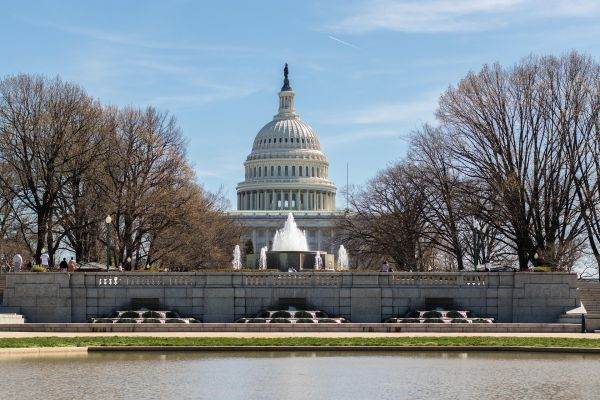
The U.S. midterm elections, held on November 3, 2026, have shifted the balance of power in Washington and opened the prospect of two years of confrontation between Republican President Donald Trump and Democratic majorities in both chambers of Congress. The Democrats' victory goes beyond reclaiming competitive districts, as Republicans lost Senate seats in states considered conservative strongholds, including Texas, Kansas and South Carolina. For Donald Trump, the outcome calls into question his ability to transfer the political authority he has built around his own persona to Republican Party candidates. For Democrats, success brings congressional power and an obligation to respond to dissatisfied voters who elected them without necessarily placing full confidence in them.
According to figures reported by U.S. media outlets - CNN, Fox News, PBS News, ABC, CNBC, NPR and the New York Post - the Democratic caucus had reached 54 Senate seats, including allied independents, compared with 44 for Republicans, with two seats still awaiting confirmation at press time. For the House of Representatives, Ballotpedia listed 231 Democratic seats and 141 Republican seats, with the count still incomplete. These figures must be presented as such: they are interim tallies of seats awarded, rather than certified results. Nevertheless, the Democratic Party's crossing of the thresholds needed for a majority - 218 seats to control the House of Representatives and 51 to control the Senate - already establishes the political direction of the U.S. midterm elections.
The seven Democratic pickups of Republican-held Senate seats illustrate the scale of the setback: Roy Cooper in North Carolina, Annie Andrews in South Carolina, Sherrod Brown in Ohio, James Talarico in Texas, Adam Hamilton in Kansas, Josh Turek in Iowa and Troy Jackson in Maine. Democrats also retained important seats in Georgia, through Jon Ossoff, and Michigan, through Abdul El-Sayed.
The institutional shift will take place on January 3, 2027, when the new Congress takes office. Democrat Hakeem Jeffries is the favorite to become Speaker of the House of Representatives and would be the first African American to hold the position. Until then, the current Congress remains in office. Between electoral victory and the exercise of power, there is therefore a transition period during which Democrats must organize their majorities, establish committee priorities and turn campaign messages into a legislative agenda.
Control of both chambers will give Democrats concrete tools to scrutinize the Trump administration. They will be able to launch and lead investigations, request documents and testimony, block Trump administration initiatives and reject appointments requiring Senate confirmation. They will also be able to influence budget negotiations and bring issues that a Republican majority had little interest in examining to the forefront of public debate. Donald Trump, however, retains his veto power and substantial executive authority.
In practical terms, the midterm election results create a check on Donald Trump's power without placing the new Democratic congressional majority in charge of the U.S. executive branch. Compromise, gridlock and confrontation will depend on how each side uses its powers.
• Donald Trump acknowledges the Democrats' victory
Donald Trump's reaction combined acceptance of the verdict with a refusal to take personal responsibility for it. "I am absolutely willing to accept these results; the Democrats worked very well in this election campaign,” the president said, according to ANSA, citing remarks reported by The New York Times. He spoke about working with Democrats and the possibility of reaching an agreement. The message carries weight in an election preceded by fears that the results might be challenged. Yet a willingness to cooperate does not amount to accepting a change in policy imposed by the opposition.
At the same time, President Donald Trump sought to distance himself from his party's defeat. "I wasn't on the ballot, and if I had been, we would have won in a landslide!” he claimed on social media, according to Euronews. In comments to Fox News, Trump attributed some of the losses that cost Republicans control of Congress to the party's candidates and insisted that the outcome should not be viewed as a personal rejection. This attempt to distance himself from the defeat sits uneasily with a campaign strategy in which his authority, rallies and endorsements played a central role. This is particularly striking given that, over the final ten days, President Trump mounted a major publicity push, attending 26 campaign rallies, according to figures published by U.S. media. Republicans must now explain why rallying around the president failed to protect seats in states that had previously supported his victory.
Speaking on Fox News after voting ended, Donald Trump argued that the clear outcome in the Democrats' favor had also been influenced by the war against Iran, which drove up fuel and energy prices. The U.S. president said voters understood the importance of the White House's objective but were unwilling to bear the immediate costs. Also on Fox News, discussing his future relationship with Democrats, Trump said that although he accepted the election result, he would use his veto whenever he considered it necessary. In effect, Donald Trump is promising to negotiate while showing Democrats the instrument he can use to stop their legislation.
Republican leaders offered various explanations for the election defeat. Mike Johnson, the current Speaker of the House of Representatives, cited the historical difficulty of midterm elections for the party occupying the White House. John Thune, the Senate Republican leader, defended the party's record and promised to resist Democratic attempts to repeal measures adopted so far during Donald Trump's second presidential term.
Elon Musk reacted sarcastically, writing on X that his supposed "space lasers,” allegedly used to influence elections in other countries, had apparently failed to work this time. The joke followed nearly half a billion dollars in financial support for Republican political efforts, according to Agence France-Presse, cited by Arab News. The money gave the Republican Party campaigning capacity but did not guarantee protection against voter dissatisfaction.
• Democrats announce investigations into all acts of corruption in the Trump Administration
Democrats are seeking to turn their victory into a mandate for change. Former President Barack Obama interpreted the outcome as a demand for less divisive politics focused on practical problems. He attributed the success to candidates from different backgrounds and regions, including areas considered difficult to win, united by a commitment to public service. According to Obama, the majority was built through the diversity of its candidates and their ability to address shared grievances, without requiring ideological uniformity.
Hakeem Jeffries, the future Speaker of the House of Representatives, announced a more combative agenda. "We will hold accountable everyone who has inflicted unprecedented corruption on this country,” the Democratic leader promised, as quoted by CNN, ABC, CNBC, Fox News and PBS. His statement indicates that Democrats are preparing the House of Representatives to focus on oversight of the Trump administration, although political accusations will have to be substantiated through investigations and evidence. Former Vice President Kamala Harris celebrated the outcome in a short video with the exclamation "Hallelujah!”
Beyond the statements, voter surveys reveal strong economic pressure. According to a poll presented by PBS, 39% of voters identified the economy as the most important issue. The same poll revealed an uncomfortable combination for both parties: 43% of voters said they had voted to express opposition to Trump, while 54% held an unfavorable view of the Democratic Party. The Democratic victory can therefore be read as a rebuke to the administration without being turned into an unlimited vote of confidence in the winners.
• How americans voted
Charts published by CNN and NPR, based on an SSRS survey of 100,000 people across 15 representative U.S. states, provide an analysis of voting patterns in the House of Representatives elections.
First, a strong generational divide is evident: 72% of voters aged 18-29 voted for Democrats and just 25% for Republicans, a lead of 47 percentage points. Among voters aged 30-44, the split was 60% for Democrats against 36% for Republicans, a 24-point Democratic advantage. These results show broad support for Democrats among voters under 45. The relative size of the groups changes the perspective. People aged 18-29 accounted for only 11% of voters, while those aged 30-44 represented 20%. By contrast, the 45-64 age group accounted for 34%, and people aged 65 or older for 35%. Almost seven in ten voters in this distribution were therefore at least 45 years old. Among those aged 45-64, 51% preferred Democrats, compared with 47% who voted for Republicans, while 51% of seniors aged 65 or older voted for Republicans and just 48% for Democrats.
According to the cited survey, women's votes appear to have played a significant role in the Democratic victory. Women accounted for 53% of the electorate, and 58% of them voted for the Democratic Party, compared with just 40% for Republicans-an 18-percentage-point gap against Donald Trump's camp.
Men, by comparison, accounted for 46% of voters, and their vote was evenly split, at 49% for each party. The Democratic advantage among women was therefore not matched by an equivalent Republican advantage among men. People reporting another gender identity accounted for 1% of the electorate and gave Democrats 85% of their votes, but the group's small size meant it did not have a strong impact on the election outcome.
The geographical distribution of votes explains the importance of U.S. suburbs and suburban areas, which accounted for 45% of voters, making them the largest category in the chart. Within this category, 58% voted for Democrats and 40% for Republicans. In urban areas alone, which represented 20% of the electorate, Democrats won 71% of the vote against just 27% for Republicans, a huge gap of 44 percentage points. This matters enormously given that large cities and suburbs together accounted for 65% of voters.
Republicans remained stronger in small towns and rural areas. In the first category, representing 19% of the electorate, they won 55% of the vote, compared with 43% for Democrats. In rural areas, accounting for 16%, Republicans secured 61% of the vote against 36% for Democrats.
Education reveals another divide. College graduates accounted for 47% of the electorate, with 62% voting for Democrats and 36% for Republicans. Those without a college degree made up 53% of the electorate, and 51% of their votes went to Republicans, compared with 47% to Democrats. The Democrats' 26-point advantage among graduates was much larger than the Republicans' four-point lead among nongraduates. Simply observing that most voters do not have a college degree is therefore insufficient to infer an overall Republican advantage: the strength of each group's preference also matters.
Voting patterns by race and ethnicity show a substantial Democratic lead among minority groups. Black voters, who accounted for 9% of the electorate, voted 89% for Democrats. Among Asian voters, representing 4% of the electorate, the split was 70% for Democrats against just 29% for Republicans, while among Hispanic and Latino voters, accounting for 10% of the electorate, the ratio was 62%-35% in the Democrats' favor. Among voters of other racial and ethnic backgrounds, who made up 5%, Democrats led 53%-43%.
White voters, however, accounted for 72% of the electorate, making the relatively small gap between the parties within this category particularly important: 51% for Republicans and 48% for Democrats. Republicans led, but not by a margin large enough to render Democratic advantages in other groups irrelevant. The result describes a coalition in which minority support combines with close competition within the numerically dominant group.
The SSRS survey presented by CNN and NPR has a margin of error of ±0.6 percentage points.
The explanation for the victory nevertheless extends beyond demographics. The Spanish daily El País also highlights how candidates adapted to conservative states. In Kansas, Adam Hamilton benefited from his profile as a well-known pastor with moderate positions, against a backdrop of economic dissatisfaction. In Texas, James Talarico combined Democratic messages with Christian references and ran against a controversial opponent. This interpretation suggests that candidates who establish local credibility can capitalize more effectively on a favorable national environment. It does not, however, establish the precise contribution of each factor to the vote.
• Global reactions to the Democratic victory
Europe is viewing the result from two perspectives: the satisfaction of those who see the Republican defeat as a rejection of Trumpism, and the caution of governments aware that the U.S. president remains in office. Spanish Prime Minister Pedro Sanchez linked the vote to opposition to policies that impoverish people, hatred, climate change denial and elite privileges. "It happened in Brazil. It has just happened in the U.S. And it will happen soon in Spain,” he wrote on X, according to the Spanish press.
British Prime Minister Andy Burham said the U.S. elections had opened a window of opportunity to end the war in Iran and reduce the cost of living, according to the BBC and The Guardian.
Norwegian Prime Minister Jonas Gahr Støre sees the U.S. election outcome as a strong signal of a shift in voters' preferences and the emergence of voices closer to European positions on climate, the environment, foreign policy and development aid.
European Parliament Vice President Christel Schaldemose expressed cautious optimism, particularly regarding a resolution to the conflict in Ukraine and the green transition, but stressed the need for the European Union to strengthen its own capacity to act.
According to ZDFheute and Deutsche Welle, German Defense Minister Boris Pistorius congratulated Democrats on their historic victory, while noting that the U.S. administration remains the same and that Berlin will continue working with it. Germany intends to maintain contacts with both parties. This position captures the practical challenge facing allies: the new majority can reshape negotiations and congressional oversight, but relations with the Republican executive branch remain indispensable.
According to TASS, Dmitry Peskov, the Russian president's spokesman, said: "President Trump remains in office, and we sincerely hope he will continue his efforts for peace.”
Deputy Foreign Minister Sergei Ryabkov called for the final results to be awaited, according to the same source, described the Democratic leadership's approach to Russia as strongly negative and said Russian policy did not depend on electoral fluctuations in other countries. This is the position of Russian diplomacy, suggesting that Moscow is factoring in a more hostile congressional majority without announcing any change to its own objectives, particularly regarding the armed conflict in Ukraine.
In Asia, official reactions were more restrained than the messages from some European leaders. The central authorities in Beijing described the elections as an internal U.S. affair. Mao Ning, the Chinese Foreign Ministry spokeswoman, reaffirmed China's willingness to implement the understandings reached between the two countries' leaders, strengthen communication and manage differences. The message does not celebrate Trump's defeat but emphasizes continuity in the relationship and preserving room for negotiation, according to the Xinhua news agency.
The Japanese government referred to the stability of the NATO alliance. Minoru Kihara, a representative of the Japanese government, said relations with the United States remained the foundation of Japan's foreign and security policy, regardless of the election outcome.
























 Euro
 Dolar SUA
 Franc elveţian
 Liră sterlină
 Gram de aur






























Reader's Opinion