 English
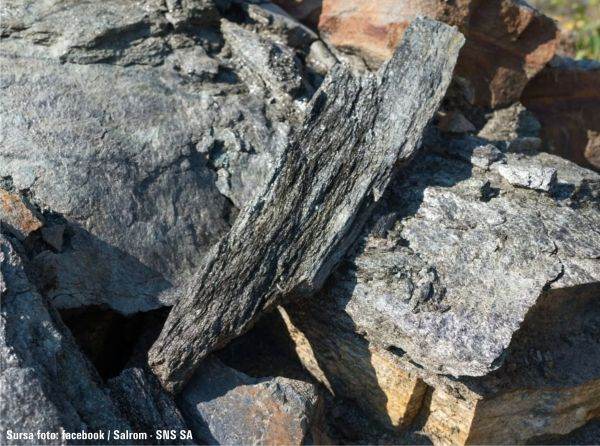
Daniel Zamfir, Minister of Economy, Digitalization, Entrepreneurship, and Tourism, stated during a political debate on Antena 3 that he intends for graphite extraction at Baia de Fier to begin next year. He added that the extracted graphite would be processed domestically, ultimately being converted into graphene.
"I no longer want us to simply extract raw materials and export them," Daniel Zamfir noted.
This sentiment echoes statements made by his predecessors at the helm of the Ministry of Economy, who previously announced studies, investments, and European-funded projects for this same deposit. They argued that the country could generate greater value by selling processed goods and that Gorj County would, in turn, attract investments leading to the creation of new jobs. The challenge, thus far, has been transitioning from these stated goals to actual, operational extraction.
In recent years, the graphite deposit at Baia de Fier has yielded little more than promises. Each leadership change at the Ministry of Economy brought fresh declarations regarding the value of the deposit, the potential for battery production and graphene, and Romania's opportunity to play a significant role in a strategic industry. Timelines, studies, and investments totaling hundreds of millions of euros were announced yet, extraction has yet to begin.
While some administrative hurdles have been cleared, commercial production remains elusive. In the commune of Baia de Fier, residents want to know when the jobs they have been hearing about for years will finally materialize.
• The license remained in effect; the mines remained closed
The Baia de Fier area contains the Cătălinu and Ungurelaşu sites, which hold resources of graphitic shale. Mining operations ceased in the 2000s due to a lack of profitability, and the sites were subsequently placed on the list of facilities slated for permanent closure and environmental monitoring.
Interest in the resource resurged as graphite became increasingly sought after for battery manufacturing. However, reopening the sites required resolving the status of operations that the state had previously decided to shut down.
In 2020, an administrative step was taken. According to details later released by Salrom, an addendum signed on August 7 extended mining license no. 634/1999 until August 9, 2025, with an option for further extension. The license maintained the possibility of exploiting the deposit. Yet, resuming operations still required legal clarifications, technical documentation, and funding.
On August 31, 2021, Claudiu Năsui, then Romania's Minister of Economy, announced that the German firm Roland Berger had won the international tender organized by Salrom for a feasibility study.
"Romania has the potential to become a very significant hub for the battery industry," stated Claudiu Năsui, who currently serves as the Minister of Economy for the Republic of Moldova. He maintained that the project could be developed without subsidies or state aid schemes, and even spoke of manufacturing graphene in Romania. He also cited prospecting data suggesting that the two mining sites held enough resources for several decades of operation.
However, a change in the ministry's leadership brought about a dispute regarding the project. In September 2021, Virgil Popescu, the interim Minister of Economy, announced an audit of the company Salrom concerning its feasibility study and graphite extraction operations. He stated that he was awaiting the results of the investigation before confirming whether any issues existed, and he defended the decisions made regarding the company's management.
Regarding the mineral deposit, his message was unequivocal: the resource "will be exploited in Romania, by Romanians."
In Baia de Fier, these statements arrived without much explanation as to what was actually planned for the commune. In a report published by Radio Free Europe (Europa Liberă) in October 2021, Mayor Dumitru Turbăceanu stated that he had received no information from the Government or Salrom regarding an imminent reopening.
"We hope something gets done. I haven't been informed of anything," the mayor declared.
• Investment promises for 2023, followed by a stalemate
In May 2022, the Minister of Economy, Florin Spătaru, explained why graphite extraction could not be restarted immediately: the mines had been closed by government decree, and resuming operations would require legislative changes. The new Minister of Economy wanted the necessary regulatory acts to be adopted by the end of 2022, so that "actual investments could begin in 2023." Furthermore, Florin Spătaru announced discussions with the European Commission to secure the funding required for the mine's technological upgrade; he also cautioned that the reopening process would take time and that the project's viability depended, among other factors, on the quality of the graphite.
In November 2022, in an interview with the newspaper BURSA, Florin Spătaru stated: "Salrom SA aims to conduct a feasibility study, but in full compliance with the law."
According to the minister, the initiative, which began in 2021, faced legislative hurdles, particularly regarding ownership and licensing. That's needed to be clarified before a study for a potential investment could be conducted. More than a year after the announcement regarding the selection of a consultant, the discussion still centered on the conditions under which the project could be prepared.
These delays were also highlighted by trade union representatives involved in the European debate on raw materials. In an interview with the newspaper • BURSA• in November 2022, Dumitru Forneam General Secretary of CSN Meridian and rapporteur for the European Economic and Social Committee on the subject of critical raw materials, compared Romania's situation to that of Norway, where a graphite mine was already in operation.
Dumitru Fornea stated: "In Romania, at Baia de Fier, despite having an extraordinary opportunity regarding graphite, nothing has been done." He warned that postponing the reopening of mining operations carried a social cost: workers were leaving mining regions to seek employment abroad, thereby diminishing the prospects for any future revival. In his view, a resource strategy must be accompanied by investments in industrial infrastructure and measures to preserve jobs.
• Radu Oprea and projects worth hundreds of millions of euros
In August 2024, the graphite deposits at Baia de Fier returned to the political agenda. After the USR party urged the Government to submit the project to the European Commission, Minister of Economy Ştefan-Radu Oprea announced that Salrom had prepared two projects.
"The first project involves the extraction and primary processing of graphitic schists to produce battery-grade graphite," explained Radu Oprea. For this component, the requested amount was approximately 198.3 million euros. The second project, dedicated to advanced processing, had an announced value of approximately 247 million euros. The Minister of Economy also spoke of a future component focused on recycling and the circular economy. The plans had thus become much more extensive: extraction was to be complemented by facilities designed to transform the raw material into a product in demand by the battery industry.
Unfortunately, the legal status of the mining sites continued to complicate matters. According to explanations later provided by Salrom, the company had requested, as early as February 2022, the removal of the Ungurelaşu site from the list of areas approved for closure; however, this request was not accepted by the Ministry of Justice. Salrom representatives maintained that it was only following the amendment of the Mining Law in September 2024 that the necessary conditions were established to allow operations to continue at sites deemed viable.
On March 25, 2025, the new Minister of Economy, Bogdan Ivan, presented the Salrom project within the context of certain Romanian investments being selected as European strategic projects. The Minister of Economy spoke of an investment of approximately 200 million euros and an annual production capacity of 15,000 tons of graphite. The material was intended for use in the automotive industry, the defense sector, and energy storage.
"We are talking about a 100% Romanian project," stated Bogdan Ivan, adding, during the PRO TV program • România, te iubesc!• ("Romania, I Love You!"), that "we are preparing a second project, which involves processing graphite into graphene; this project is currently in the development phase." Moreover, European recognition represented a concrete step forward. The Salrom project for extraction and primary processing had been included in the first list of strategic projects approved by the European Commission on March 25, 2025. However, the funds required to carry out the investment still had to be secured separately. This distinction became a point of contention following a change in minister. In July 2025, Radu Miruţăm who succeeded Bogdan Ivan at the helm of the Ministry of Economy, stated that he had found no documents within the ministry to substantiate the previously announced funding.
Salrom offered its own clarification: the projects first had to be designated as being of strategic interest, after which a financial mechanism would be identified. In a press release dated July 10, 2025, the company mentioned ongoing discussions with potential financiers and interested institutions; it did not claim that full funding had already been secured.
In August 2025, Minister Radu Miruţă announced the signing of a government decision regarding the license, asserting that the resource "will bring jobs, economic development, and a sense of pride to the Romanian people."
Salrom had previously noted that, in July, it had signed the addenda to extend the concession agreement.
• On-site preparations underway, yet no firm timeline for the resumption of graphite mining
In the spring of 2026, site-clearing and development work was announced at Baia de Fier. Mayor Dumitru Turbăceanu explained that the local administration had issued a permit for the construction work planned for the area. The mayor stated that the documents issued by the town hall were distinct from the authorizations required for mining operations. As for the timeline, his response remained cautious: "I cannot say exactly when the work is set to begin."
The mayor of Baia de Fier recounted that he had spoken with an engineer from Salrom, who had conveyed an intention to begin as soon as possible, without, however, providing a precise information. Locals had begun inquiring about job opportunities, and the mayor spoke of the anticipated gains for the municipality: "There will be jobs; there will be royalties."
Compared to 2021, when the mayor stated he had not been informed of any reopening, there were now signs of progress. Nevertheless, even by the spring of 2026, the town hall could not specify when operations would actually commence.
In August 2026, Minister of Economy Irineu Darău announced that the process of removing these mining sites from the list of closed facilities was nearing completion. According to him, an international tender for pre-feasibility and feasibility studies was set to follow.
"We hope that initial mining activities can begin in 2028," Darău stated, according to a USR press release that recounted remarks made by ministers during a press conference.
On August 14, 2026, the Bolojan government announced the removal of the Cătălinu mine and the Ungurelaşu quarry from the list of sites slated for permanent closure. This cleared one of the obstacles that had previously stalled the project.
Now, Daniel Zamfir is pointing to 2027, a year earlier than the timeline suggested during the summer. To hold them to this promise, the Ministry of Economy needs to clarify what it means by the "start of operations", whether this refers to preparatory mining work, trial extraction, or full-scale commercial production. Each entails a different phase and different outcomes.
This is especially relevant given that the project's history is marked by a persistent accumulation of problems. The status of certain mining operations approved for closure had to be changed, licenses required extensions, and technical documentation and financing followed their own distinct procedures meaning that resolving one aspect did not automatically conclude the others.
Furthermore, graphite intended for batteries must undergo several operations following extraction. In November 2025, Salrom announced a euro250 million project to transform graphite concentrate into material for lithium-ion battery anodes. The described process includes micronization, spheroidization, purification, carbon coating, and quality checks. Such facilities are essential if Romania aims to derive greater value from its resources; however, they also add costs and technical requirements to the mining project.
In April 2026, Salrom also announced the submission of the GRAPH-SECURE project to the European Commission's Innovation Fund, requesting a grant of euro21.42 million. Developed in collaboration with Romanian and American partners, the project proposes a primary processing facility with a capacity to process approximately 120,000 tons of ore per year.
• Graphene: A promise requiring its own substantiation
In statements made by government ministers, graphite and graphene are frequently mentioned together; however, for the purpose of evaluating an investment, the two must be treated separately. Graphene consists of a single layer of carbon atoms, possessing properties that enable a wide range of applications. Producing it from graphite requires specific processes and quality control measures tailored to the intended end-use. Consequently, the reopening of the Baia de Fier mine would be merely one step on the path toward potential graphene production. This would further require technology, facilities, funding, and customers. While its status as a "strategic resource" may bolster the investment, its economic viability must be demonstrated through concrete calculations.
For the local community, the stakes are tangible: job creation, revenue, and business opportunities for local firms. An investment that incorporates processing could introduce new trades and specialized skills to a county hit hard by the decline of coal mining. Indeed, professional retraining is among the stated objectives of the Salrom projects.
At both the national and European levels, interest is also driven by a dependency on China. According to the International Energy Agency's 2025 report on electric vehicles, China accounted for approximately 80% of global graphite extraction and over 90% of its refining in 2023.
There is, therefore, a genuine industrial stake involved. So far, Romania has taken the necessary administrative steps, secured European recognition for the project, and submitted applications for funding. Meanwhile, government ministers have continued to tout the potential of the Gorj deposit. In Baia de Fier, the local population is waiting to find out when hiring will begin.

















 Euro
 Dolar SUA
 Franc elveţian
 Liră sterlină
 Gram de aur




























Reader's Opinion