 English

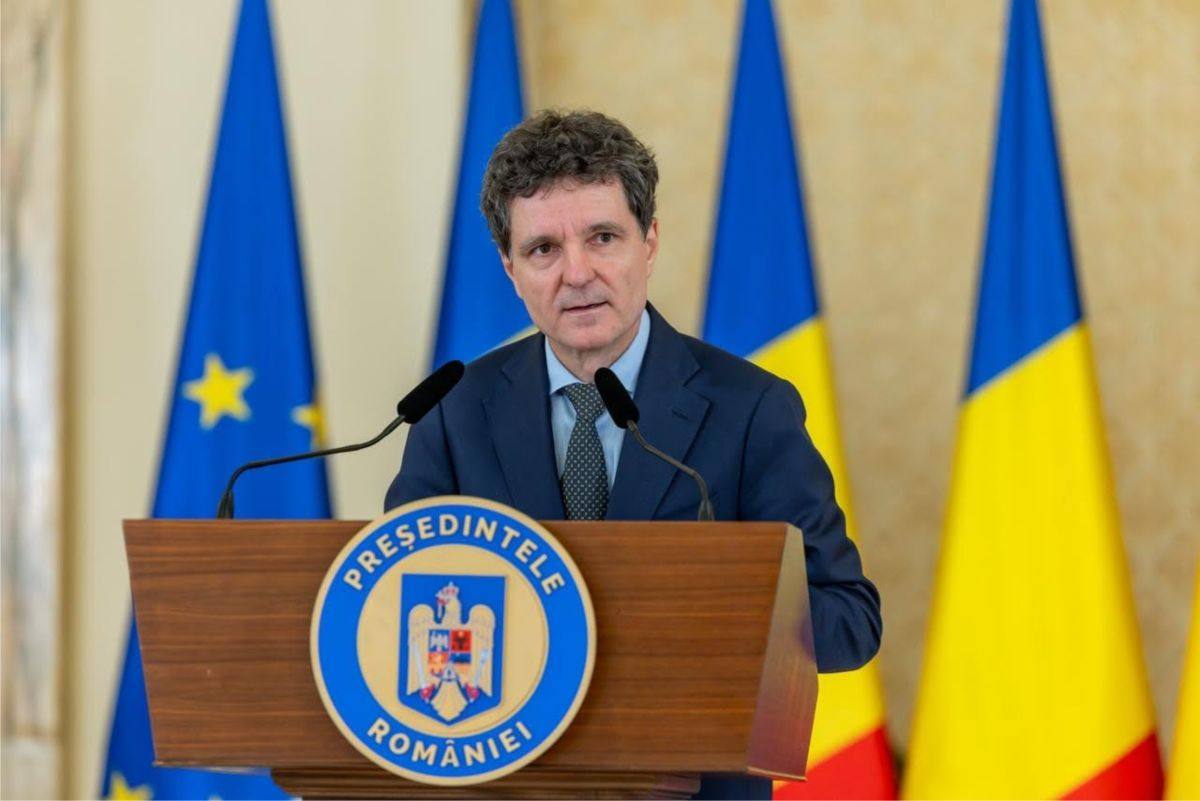
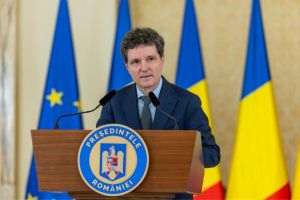
Nicuşor Dan entered politics with the promise that he would restore citizens' control over the administration, dismantle dysfunctional structures, and open up institutions to public participation. Seven years later, during a press conference held on November 10 at Cotroceni Palace, the President of Romania justified maintaining the existing political system by citing the threat of a sovereign credit rating downgrade; he explained the limitations of democratic choices through a simple arithmetic calculation, acknowledged the abandonment of a promise regarding VAT, and announced that a particular "inconvenient" journalist would no longer be permitted to ask questions at Cotroceni for the remainder of his term. Between the candidate who sought to change the system and the president who now argues for its preservation lies a history of promises colliding with the exercise of power. Two articles published by BURSA in 2019 and 2022 provide key insights into this transformation.


"I am the same person whom the people voted for," declared Nicuşor Dan during the press conference held on Tuesday evening at Cotroceni Palace. This statement is the key to his entire intervention, but also the starting point for an uncomfortable question: how much of Nicuşor Dan-the activist for transparency, civic participation, and administrative reform-still remains in Nicuşor Dan, the leader who justifies the current power structure through the imperatives of financial stability?
The answer cannot be found solely in last night's statements. It must also be sought in what he said before coming to power, in how he has managed the Municipality of Bucharest, and in his current approach toward citizens, political parties, institutions, and the press.
• The citizen, with no role in political decision-making
In September 2019, in an interview with the newspaper "BURSA", Nicuşor Dan stated that the capital's administrative sectors were dysfunctional and should be abolished. He advocated for the centralization of budgetary decisions to facilitate major investments, the reorganization of the administration based on neighborhoods, and even the unification of Bucharest with Ilfov County. He proposed auditing administrative services and estimated that the administrative apparatus could be significantly reduced. This was the rhetoric of a politician who believed that existing structures should be judged by their utility, rather than preserved simply because they exist. The administration was to be reorganized according to the needs of the citizens, and institutions were expected to justify their costs through tangible results.
In November 2026, the leader's discourse is dominated by a different concern: maintaining institutional stability, honoring financial commitments, and preserving the confidence of creditors. This shift does not automatically constitute a contradiction. The responsibilities of a mayoral candidate differ radically from those of a head of government. However, the shift in emphasis is too significant to go unnoticed.
In 2019, Nicuşor Dan called for the transformation of institutions to make them more efficient. In 2026, he explains why the risks of political transformation can be so great that certain alternatives must be avoided. Between these two positions lies a question that Tuesday evening's press conference failed to clarify: how can the state still be reformed when maintaining stability becomes the primary criterion for governance?
There is, however, another episode-also documented by "BURSA"-which shows that the gap between the promise of citizen participation and the actual exercise of power had emerged long before the move to Cotroceni.
In June 2022, the newspaper "BURSA" noted that the Capital's City Hall, led by Nicuşor Dan, had allocated only one million lei to participatory budgeting out of an annual budget of approximately five billion lei-that is, 0.02% of the municipality's resources. Moreover, this sum had been halved compared to the previous year, and the four projects previously selected had not yet reached the implementation stage. This proportion speaks volumes-more than any solemn declaration regarding citizen involvement. For every 10,000 lei in the municipal budget, only two lei were made available for participatory decision-making. The rest remained within the conventional mechanisms of representative administration.
This serves as an important precedent for understanding Tuesday evening's press conference. Nicuşor Dan spoke at length about the constraints imposed by financial markets, what Romania cannot afford, and the limitations of parliamentary majorities. The role reserved for the citizen in determining the country's direction was far less clear.
In 2022, citizens could directly decide on 0.02% of the municipal budget. In 2026, the president explains to them why certain policy options cannot be accepted without major financial risks. While these two situations are not institutionally equivalent, they raise the same question regarding the relationship between democratic participation and decision-making concentrated in the hands of those who hold power.
• The limits of a journalist's freedom of expression,definited by the President of Romania
The most revealing moment of the conference, however, was the confrontation with journalist Ovidiu Vanghele. His question concerned the conduct of Prosecutor General Cristina Chiriac and a vote cast within the Prosecutors' Section of the Superior Council of Magistracy, regarding a referral to the Judicial Inspection to investigate alleged interference. It was a question about the functioning of the justice system, the obligation to recuse oneself in situations involving a potential conflict of interest, and the standards of the judicial reform promised by the President.
Nicuşor Dan did not address the substance of the question. Instead, he cited insults the journalist had allegedly directed at him in the past and informed him that he had already ordered a ban on his access to press conferences for the remainder of his term. Thus, while the conduct of the Prosecutor General remained unclarified, the journalist's situation had already been decided.
The President could have challenged the premise of the question, requested the relevant documents, explained the rules regarding recusal, or simply stated that he lacked the necessary information. Instead, he chose to announce the sanction imposed on the person asking the question.
Furthermore, Nicuşor Dan spoke of his subordinates who, out of pity, had allegedly overlooked the established ban. The phrasing is telling. Media access to a public institution is framed here as a personal concession, rather than as an integral part of the democratic mechanism for informing the public and holding power accountable. Cotroceni Palace is not the private property of the person holding the presidential office. And the accreditation of journalists should not depend on the President's personal sympathies or antipathies. Of course, freedom of the press does not grant an unlimited right to insult, nor does it negate the rules of conduct within public institutions. However, any restriction on access must be justified by clear, objective, and proportionate criteria. A personal conflict-no matter how unpleasant-cannot serve as a substitute for a transparent institutional procedure.
• The Head of the SPP: Nicuşor Dan's Frequent Dining Companion
A similar difficulty in providing full explanations arose during a discussion regarding General Lucian Pahonţu-head of the Protection and Guard Service (SPP)-who attended a dinner in Timişoara last autumn alongside the President and other prominent figures. When asked in what capacity the SPP chief had attended the gathering, Nicuşor Dan downplayed the significance of the matter, describing the service primarily in terms of its protection duties.
The mere presence of an official at a dinner does not, in itself, constitute evidence of any wrongdoing. Yet, it is entirely legitimate to ask in what capacity the head of a service-which also specializes in intelligence gathering-participates in a meeting with politicians and representatives of the Church. This touches upon the distinction between institutional mandates and informal power relations. A president seeking public trust must be prepared to answer questions about his own institutional circle, not just those concerning his political opponents. This is especially pertinent given that, in late June 2026, Nicuşor Dan was spotted dining once again with Lucian Pahonţu-this time in Brussels, in the company of PNL Members of the European Parliament. The picture that emerges is that of a presidency that asks for patience while institutional issues are being clarified, yet reacts immediately whenever the authority of its incumbent is called into question.
Nicuşor Dan entered public life by demanding that institutions be held accountable to the citizens. At a press conference on Tuesday evening, he spoke at length about why citizens must accept the constraints imposed by institutions. At the heart of these two stances lies the fundamental question regarding the exercise of power: who controls whom?




















 Euro
 Dolar SUA
 Franc elveţian
 Liră sterlină
 Gram de aur





























Reader's Opinion