English

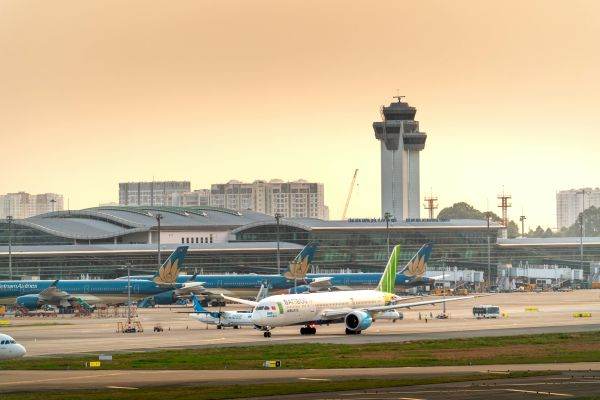
The government yesterday approved an investment of 169 million lei for the digitalization and security of 17 civil airports, a large-scale project that brings to the forefront advanced recognition and artificial intelligence technologies, aimed at redefining the passenger experience and raising safety standards to an unprecedented level. According to the substantiation note of the government decision and its annex, at the heart of this initiative is the complete transformation of the way airports operate, by integrating all operational flows into a unified digital system, capable of processing huge volumes of data in real time and optimizing each stage, from terminal access to security control, reducing waiting times and eliminating the bottlenecks that have become, in recent years, a constant for travelers.
The government is counting on the implementation by the Romanian Intelligence Service of intelligent video analysis solutions, which allow the automatic identification of suspicious objects and behaviors, as well as on Visual Artificial Intelligence technologies, capable of continuously monitoring airport flows and triggering alerts in real time, thus increasing the response capacity in critical situations and reducing security risks. In parallel, vehicle control and equipment verification will be completely digitalized, eliminating vulnerabilities generated by manual processes and introducing a fast, standardized and much more efficient verification system.
The passenger experience is to be rewritten through an integrated digital platform, which will provide instant access to information about flights, security procedures and the necessary steps at the airport, in an intuitive and accessible format from any device, while automatic transcription and artificial intelligence-assisted translation solutions will eliminate language barriers and facilitate communication in crowded areas.
A key element of the project is the introduction of the concept of remote screening, which allows the remote operation of baggage scanning equipment, in an interconnected infrastructure, with operational redundancy and high availability, which means faster, more accurate controls and less dependent on the physical limitations of each airport.
At the same time, the Government is preparing a national secure communications network, which will connect all 17 airports in a centralized digital hub, where data will be collected, analyzed and used for the unified coordination of operations, ensuring identical security and efficiency standards throughout the country.
Through this investment, the authorities are not only modernizing the airport infrastructure, but also creating a complex digital ecosystem, in which technology becomes the main tool for control, optimization and prevention, at a time when the pressure on air transport systems is constantly increasing, and security requirements are becoming increasingly strict.






















 Euro
Euro Dolar SUA
 Franc elveţian
 Liră sterlină
 Gram de aur