 English
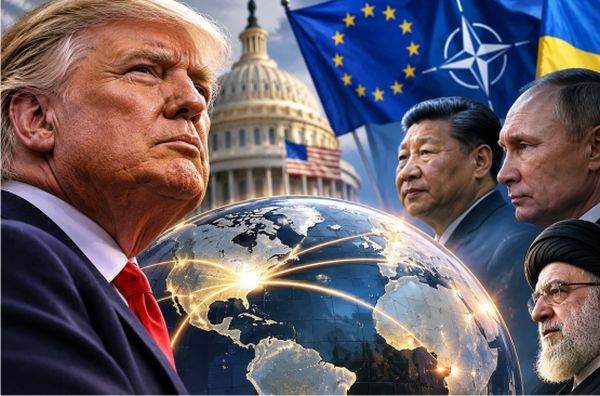
In Europe, the hope that Trump might be reined in coexists with the fear that expectations are set too high. In a commentary for the Spanish daily El País, international policy expert Amanda Sloat warns that increased congressional oversight will not immediately mend transatlantic relations, nor will it eliminate the president's leverage in areas such as trade, defense, or policy toward Ukraine. There is also the risk that a president constrained on the domestic front might pursue foreign policy initiatives to assert his authority. Politico suggests that the Republican camp's electoral losses will prompt Donald Trump to exert pressure on NATO allies and Ukraine.
According to media outlets in the Asia-Pacific region (Japan and South Korea), the midterm elections will have implications for the continuity of alliances, trade pressures, and potential overtures from Trump toward the authorities in Pyongyang.
Meanwhile, Chinese state media emphasize the issue of polarization. In a piece picked up by People's Daily Online, Xinhua describes campaign episodes as "farces," while other reports focus on election-related legal disputes and the use of artificial intelligence to spread disinformation.
TASS also reported on Trump's statement - citing an interview with the New York Post - that he would exercise his veto power should the Democrats win.
In Iran, the news agencies Mehr and Tasnim indicate that, regardless of the outcome of the U.S. elections, the authorities in Tehran do not expect Donald Trump to alter his vision for the Middle East; instead, they are bracing for a "massive attack" previously signaled by the American president. For Romania, what is at stake will be reflected in American security commitments, European defense capabilities, and the funding that is actually approved and executed. A Congress can impose conditions, exercise budgetary oversight, and raise the political cost of a given decision. How these tools are wielded matters more than the party label of the majority. Viewed from Romania, the election results will begin to take shape during the night of Tuesday to Wednesday, November 3-4. At that time, Romania is seven hours ahead of the U.S. East Coast. The first polling stations, in parts of Indiana and Kentucky, close at 01:00 Romanian time. By 02:00, polls close in several East Coast states, including Georgia and Virginia; by 02:30, they close in states such as Ohio and North Carolina. Between 03:00 and 04:00, reporting expands to include states that are significant for the composition of Congress, some of which span multiple time zones. Polls in California close at 06:00, while in Alaska, the final polls close between 07:00 and 08:00, depending on the area. These times mark the end of voting, but they do not guarantee that winners will be declared immediately.
In the early hours, net gains will be more telling than the total number of declared victories. Retaining a seat already held does not shift the balance, and a party that captures seats from its opponent may simultaneously lose some of its own. In the House of Representatives, several tight races could delay the determination of which party holds the majority. Gubernatorial contests carry their own significance, and the Electoral College plays no role in these races-it pertains solely to the election of the president. For example, the state of Alaska allows for the receipt of mail-in ballots after Election Day, provided that legal deadlines and conditions are met. The official schedule includes counting phases that extend into the second half of November. An unclear result on Wednesday morning may simply be the consequence of standard procedures.
























 Euro
 Dolar SUA
 Franc elveţian
 Liră sterlină
 Gram de aur




























Reader's Opinion