English

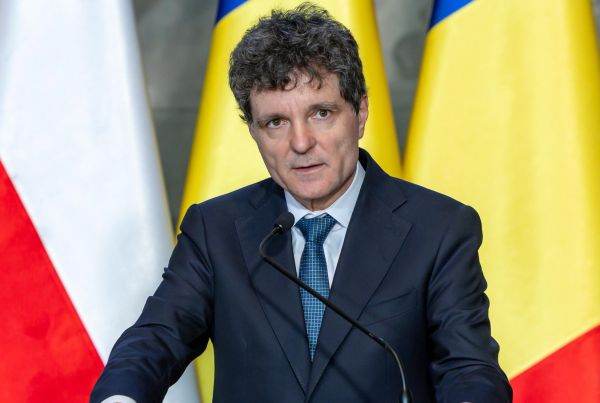
Nicuşor Dan is the "head of the system” only when the system fits into a statement. When the same system has to produce a government, the head disappears, and in his place appears the commentator from Cotroceni, who notes that the parties do not get along, the Parliament holds the votes, the Constitution limits its powers and, in general, responsibility always resides at another address.
Recently, the president declared that "you cannot fight the system when you are the head of the system”, that he prefers "a dog that bites” to one that barks and that he will reform the state without causing anarchy. After the words started to bite from the author's image, Nicuşor Dan muzzled them: he would not really be the head of the system, but only the head of some structures in a set of authorities and power relations in which there are also groups that act illegitimately. In other words, the system has a boss, but the boss does not know exactly what he is boss of, nor does he tell us who is leading the illegitimate side.
In the political crisis that has lasted for over 70 days, Nicuşor Dan has reduced his role to that of a distributor of responsibility. According to his statements last Thursday, the solution lies with the parties, the votes are in Parliament, and the majority must be found by others. The president has already proposed two options, he has mediated, he has discussed informally, and now he is waiting. The head of the system has submitted his ideas to the parties' counter and periodically checks whether the status of the request has changed.
Worse, Nicuşor Dan claims that he does not have a deadline for appointing the prime minister because "it is not something that depends on me." The statement would be comical if it did not come from the very man to whom the Constitution entrusts the appointment of the candidate for the position of prime minister. Obviously, the president cannot fabricate 233 votes. But between not controlling the Parliament and claiming that your own decision does not depend on you is exactly the distance between prudence and evasion of responsibility.
When journalists insist, Nicuşor Dan replies that he could propose them for the position of prime minister or sends them to ask for explanations from the party leaders. It is easier to ironize the question than to explain why the head of state refuses to assume the risk of a decision. The press receives homework, the parties receive the blame, and the president keeps his innocence intact.
Nicuşor Dan wants a presidential republic when he calls himself the head of the system and a parliamentary one when he is asked for results. The power is his in speech, the responsibility is others in practice. If he nominates a prime minister and he fails, the parties have changed their minds. If he does not nominate, the parties have not come to an agreement. If the interim continues, the parties are to blame. In any case, the only one who does not lose is the head of the system.
The president admits that the interim government is paralyzing the government and endangering the projects in the PNRR, but he does not set any deadline and does not announce any way out of the deadlock. The diagnosis is at Cotroceni, the treatment is at the parties, and the bill is at the Romanians.
After over 70 days of crisis, the "biting dog" has not bitten anything. He looks at the gate, studies the pack and waits for consensus. Romania finally has a head of the system perfectly adapted to the system: he leads when he speaks and declares himself powerless when he has to decide.








 Euro
Euro Dolar SUA
 Franc elveţian
 Liră sterlină
 Gram de aur