 English
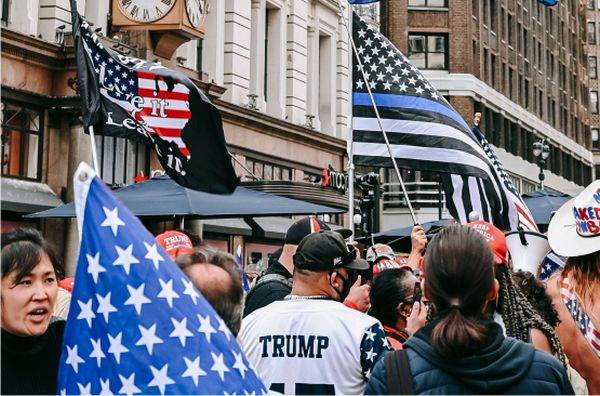
For Trump, the prospect of losing control of Congress carries stakes that go beyond the mere blocking of legislation. Nearly two years into his term, a series of controversies has accumulated-matters that an opposition party, once in charge of congressional committees, might seek to transform into formal investigations. Some have already led to court rulings; others are currently the subject of oversight requests. Together, these issues explain why the battle for a majority is also a battle for access to the documents of power.
On the very day of his inauguration-January 20, 2025-Trump granted pardons and commutations related to the assault on the Capitol. These actions, documented by the Department of Justice, have reignited the debate over the use of presidential prerogative to benefit those involved in the violent challenge to the transfer of power. While the power to grant pardons exists, it does not absolve one of political accountability for the message such a decision conveys.
A few days later, on January 24, the President dismissed 17 inspectors general, according to Reuters. Their professional association questioned whether the legal requirements for notification and justification had been met, while Trump defended the move as routine. The independence of these officials is significant because they investigate waste, fraud, and abuse within the administration. The promise to "clean up" the government becomes difficult to assess when those tasked with auditing its spending are removed.
Unprecedented sums of money were also raised in connection with the inauguration. An analysis by the Brennan Center points to a total of over $245 million for the inaugural committee-a figure exceeding the $239 million cited in initial reports. While inaugural donations are not subject to the same caps as standard campaign contributions, they remain governed by certain rules, including those regarding foreign sources. The concentration of contributions and subsequent reimbursements raise questions about the access granted to donors and any potential advantages they may have secured later. The sum alone, however, does not constitute proof that policy decisions were purchased.
The Trump family's crypto ventures have further blurred the line between private interests and public office. The $TRUMP token, launched on January 17, 2025, continued to spark controversy even after the president took office; for instance, attendance at a dinner on May 22 was contingent upon holding the token. Reuters estimated that eligible investors had spent $148 million on these tokens-a figure that represents neither the cost of tickets nor a proven personal profit for Trump. The White House has pointed to the fact that these assets are managed through a trust overseen by Trump's sons-an arrangement that separates the president from the day-to-day management of the assets, though it does not automatically eliminate his underlying economic interest.
• World Liberty Financial: A goldmine for the Trump Administration?
World Liberty Financial has raised further questions. In February 2026, Senators Elizabeth Warren and Andy Kim called for an examination of the security implications surrounding a reported $500 million investment-securing a 49% stake-linked to a high-ranking Emirati official. According to Reuters, the request for a review centers on the potential overlap between the Trump family's business dealings and public policy decisions concerning the investor or his home state. The MGX fund utilized World Liberty's USD1 stablecoin in a two-billion-dollar investment in Binance. On October 23, 2025, Donald Trump granted a pardon to Binance founder Changpeng Zhao. Reuters documented the sequence of events without establishing a direct link-a quid pro quo-between the transaction and the pardon. Lawyers for Binance and Zhao have denied any such connection; however, the potential relationship between a commercial benefit and a public policy decision warrants clarification through evidence.
In March 2026, the World Liberty project offered investors who locked up five million dollars' worth of tokens access to certain team members. According to Reuters, the firm clarified that neither Trump nor his family were part of this arrangement. While this offer remains relevant to the broader discussion regarding influence, it cannot be characterized as the sale of a meeting with the President.
Relations with Gulf states also sparked controversy surrounding an aircraft gifted by Qatar. In May 2025, the Pentagon confirmed the acceptance of a Boeing 747 for official use. The aircraft's estimated $400 million value, along with costs related to modifications, security, and its eventual disposition, fueled criticism. According to CNN, the Trump administration framed the acquisition as a gift to the government, while critics pointed to regulations concerning benefits received from foreign states.
Another scandal involving Donald Trump concerns his activities in Vietnam. In March 2025, Reuters reported on multi-billion-dollar real estate and golf projects pursued by the Trump Organization and its partners, even as Vietnam was negotiating under the threat of U.S. tariffs. The overlap between these commercial interests and public policy raises questions regarding the independence of official decision-making. Financial statements published in May 2026, cited by PBS News, highlighted first-quarter operations with a cumulative value ranging from approximately $220 million to $750 million. This range refers to transactions, not net earnings, and Trump Organization has stated that independent financial institutions manage its operations, without receiving instructions from or providing prior information to the family. However, the ownership of assets sensitive to government policy keeps the issue of transparency alive.
For this reason, Democratic senators requested in April 2026 an inquiry into certain transactions in stock, commodity, and prediction markets-trades that appeared well-timed in relation to announcements concerning tariffs and foreign policy, as reported by the Associated Press. The White House denied any wrongdoing, noting that staff had been warned against using non-public information. According to the cited sources, the matter remains at the stage of suspicion and calls for an investigation.
In a ten-billion-dollar lawsuit filed by Trump against the tax authority, the dispute reached a judicial ruling. In July 2026, Judge Kathleen Williams blocked the implementation of a settlement, finding-according to Reuters-that the legal process had been improperly used for personal gain. The conduct of certain attorneys has been referred for disciplinary review. The source does not indicate any subsequent developments on appeal.
• The White House Ballroom: Donald Trump's priority project
Another controversy concerns the White House ballroom project, valued at approximately $400 million, which began following the demolition of the East Wing. This project has also sparked a broader confrontation regarding the limits of executive power. While lower courts challenged the legality of the construction, the Supreme Court allowed work to continue in August 2026, pending the resolution of the litigation. In its defense, the Trump administration cited national security. The provisional decision does not resolve all disputes, including those concerning the authorization and influence of corporate donors.
The relationship between the President and major media companies raises further issues. In July 2025, Paramount agreed to pay $16 million to settle litigation regarding the editing of a CBS interview with Kamala Harris, with the funds earmarked for a future presidential library. While the settlement does not constitute a formal ruling that the interview was falsified, it does call into question the position of a company negotiating with a plaintiff who holds the nation's highest executive office.
In 2025, Meta agreed to a settlement of approximately $25 million, X to one of about $10 million, and YouTube to one of $24.5 million, in lawsuits initiated by Trump following the suspension of his accounts in 2021. As part of the YouTube settlement, $22 million was directed to the Trust for the National Mall, in connection with the ballroom. Amazon MGM paid $40 million to license the documentary "Melania" and an accompanying series. In January 2026, Reuters also reported an additional $35 million investment in promotion and distribution. Melania Trump serves as a producer, though the licensing fee does not equate to her net income. According to information published by Reuters, Amazon, the production team, and Donald Trump have all rejected the suggestion that this amounted to purchasing the administration's favor.
• The removal of undesirables: a hallmark of the Trump Administration
The credibility of economic institutions was put to the test after Trump dismissed the head of the Bureau of Labor Statistics (BLS), Erika McEntarfer, on August 1, 2025, following an unfavorable employment report and downward revisions. Reuters notes that the presidential accusation of data manipulation was unsupported by evidence. Separately, an attempt to remove Federal Reserve Governor Lisa Cook was blocked for the time being by the Supreme Court in June 2026. Cook denies the allegations of mortgage fraud leveled against her-claims that the court's ruling did not resolve on a factual basis. Both episodes illustrate how quickly institutional independence can become a political issue.
In the judicial sphere, proceedings against James Comey and Letitia James have been challenged, partly due to questions regarding the legality of prosecutor Lindsey Halligan's appointment. As of September 2026, an appellate court was reviewing an attempt to revive previously dismissed cases; the defendants have denied the allegations. On October 26, in a separate matter, a court ruled that the dismissal of prosecutor Maurene Comey was unlawful-a decision the Department of Justice has announced it will appeal. Issues concerning a prosecutor's appointment and the merits of the charges are distinct matters, even when they arise within the same case.
Also situated at the intersection of the justice system and political interests is the closure of the corruption case against New York City Mayor Eric Adams. In April 2025, Judge Dale Ho granted the prosecutors' request and closed the case permanently, though he criticized the administration's reasoning-namely, that the legal proceedings would have hindered Adams from supporting immigration policy. Adams denied the existence of any agreement. The court clarified that this resolution does not establish his guilt or innocence. There remains the issue of a judicial ruling sought in the interest of cooperation with the executive branch.
• Trump exerts pressure globally, while straining relations with allies
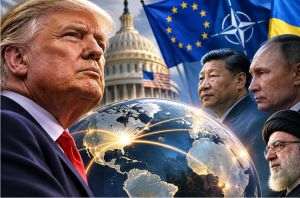
In the nearly two years since taking office at the White House, the Trump administration has presented the White House uses economic and military pressure as a means to defend American interests. From Ukraine and the Middle East to Greenland, however, the controversies stem from the same question: how much stability can a policy bring when even allies are subjected to threats and high-pressure negotiations?
Regarding Ukraine, Donald Trump's overtures toward Moscow have drawn criticism, including from within the Republican Party. The easing of certain sanctions and an agreement concerning the supply of Russian diesel have coincided with intensified pressure on Kyiv. Trump aims to bring Russia to the negotiating table, but Zelenskyy warns that these additional revenues could enable the Kremlin to continue the war. The controversy centers on the price of a potential deal and the guarantees offered to the nation under attack.
The conflict with Iran calls into question the promise of a foreign policy capable of ending such disputes. According to the Associated Press, U.S. officials have warned regional partners to prepare for potential new strikes following the November 3rd elections, though no final decision has been made. The risk of retaliation against energy infrastructure turns this confrontation into a matter of both security and the cost of living, with repercussions extending well beyond the region.
In Gaza, Trump's initial proposal-which involved taking over the territory and displacing the Palestinians-was rejected by Arab states and Western allies. A subsequent plan, supported by a Security Council resolution, stipulates that residents will not be forced to leave and proposes a transitional Palestinian administration under international supervision. The difference between the two formulas is fundamental, and the UN insists on adherence to international law and the prospect of a Palestinian state.
The transatlantic relationship has not been immune to crises, either. Pressures to bring Greenland under American control-initially accompanied by a refusal to rule out the use of force-strained relations between the U.S., Denmark, and other NATO allies. A defense agreement signed in September 2026 expands the American military presence without turning the island into U.S. territory. While this compromise offers a diplomatic way out, the episode has called into question the trust among members of the same alliance.
In Albania, controversies directly touch upon the business interests of the presidential family. Jared Kushner, Donald Trump's son-in-law, and Ivanka Trump are involved in luxury tourism projects on the island of Sazan and in the Zvernec area, near the protected Narta Lagoon. In late 2024, the government led by Edi Rama granted "strategic investor" status to a company linked to Kushner for the Sazan project, which was valued at 1.4 billion euros at the time. Authorities maintain that the investment will attract tourists and create jobs, and that the island will remain the property of the Albanian state.
The projects have sparked protests, raised concerns regarding transparency, and fueled fears about the potential impact on protected habitats. In Zvernec, land disputes have also emerged; Reuters reported on suspicions of document forgery involving one of the sellers, though it noted that the files reviewed contained no allegations against Kushner or the investors themselves. Beyond these disputes, the political stakes involve the proximity between the presidential family's business interests and an administration keen on maintaining good relations with Washington.
In the realm of trade, tariffs have expanded the confrontation to include economic partners. New levies imposed on imports from 60 partner nations-including the European Union and China-have been challenged in court on the grounds that they exceed presidential authority. For businesses, this dispute translates into higher costs and the difficulty of planning investments within a volatile environment.
These episodes point to a foreign policy that seeks results by forcing negotiations. Such pressure can indeed extract concessions. The question remains whether the agreements secured in this manner compensate for the accumulated distrust, and whether Washington's partners can still rely on their long-term durability.





















 Euro
 Dolar SUA
 Franc elveţian
 Liră sterlină
 Gram de aur



























Reader's Opinion