English


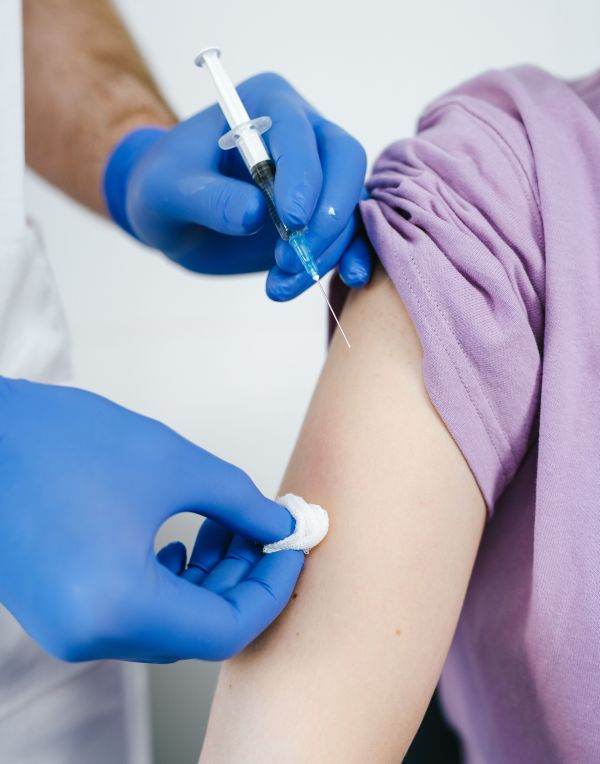
US President Donald Trump has signed an executive order by which the Washington administration seeks to change recommendations on childhood vaccinations, including by administering several vaccines at separate medical visits and separating the measles, mumps and rubella vaccine. Trump has repeatedly associated vaccinations with autism, although scientific research has not proven the existence of such a link, AFP reports. During a statement at the White House, Donald Trump claimed that, decades ago, children received a smaller number of vaccines and linked this situation to the current level of autism diagnoses.
"We do not know what causes autism," admitted the US president, who continued to suggest that vaccines could play a role in the emergence of this disorder.
His claims are not supported by the available medical evidence. The link between vaccination and autism has been analyzed in numerous studies, without establishing a causal relationship.
• Vaccines, administered at separate visits
One of the measures supported by Trump is the spacing of pediatric vaccinations. The American president stated that, at the age of one year, children should have several medical visits for vaccination, instead of receiving several vaccines on the same day. The decree provides for the establishment of working groups within the Department of Health, which are to develop recommendations on the separate administration of vaccines, in collaboration with the private sector and, as appropriate, with other countries. Trump also supported the separation of the measles, mumps and rubella vaccines, known as MMR or MMR, into three separate vaccines.
• Pediatricians warn against changing the scheme
Representatives of the American medical community reacted critically to the administration's initiative. Andrew Racine, president of the American Academy of Pediatrics, has said that developing separate vaccines that are approved for use in the United States could take more than a decade. Aaron M. Milstone, a representative of the American Academy of Pediatrics, has recommended continuing to administer vaccines to children whose safety is supported by decades of medical data. Separating the MMR vaccine cannot be implemented immediately in the United States, since individual variants for measles, mumps, and rubella are not currently available as a complete alternative to the combined vaccine.
• American states retain important powers
The federal government does not have the authority to directly impose all requirements for childhood vaccination on states, including conditions for access to school.
The decree aims, among other things, to get American states to review their own policies on mandatory childhood vaccines. Thus, the effective implementation of any changes will depend largely on state authorities. Some states have already announced that vaccination rules for the next school year will not change as a result of the presidential decree.
• The decision comes during a measles epidemic
The new initiative by the Trump administration comes before the start of the new school year and at a time when the United States is facing its worst measles epidemic in decades, according to the AFP material. Health Secretary Robert F. Kennedy Jr., known for his critical positions on vaccination, has promoted a broad reassessment of pediatric vaccine policies since taking office. The US administration has already changed the vaccination schedule for children and initiated a review of recommendations for vaccines used for decades. The measures have provoked strong reactions from medical and scientific organizations. Critics argue that changing vaccination schedules without new medical evidence could affect public confidence and children's access to immunization.
• Controversy over the role of government in medical decisions
Jeffrey Singer of the Cato Institute criticized the Trump administration's proposed changes, saying they raise the question of the role that government recommendations should play in medical decisions. The debate over childhood vaccinations thus goes beyond the issue of a simple administrative change to the immunization schedule and brings back to the forefront the conflict between public policies, state autonomy and the recommendations of the medical community. At the heart of the controversy are President Donald Trump's repeated claims about a possible link between vaccines and autism. To date, scientific research has not established that vaccinations cause autism, and claims that suggest such a relationship are not held by medical consensus.


















 Euro
Euro Dolar SUA
 Franc elveţian
 Liră sterlină
 Gram de aur