English

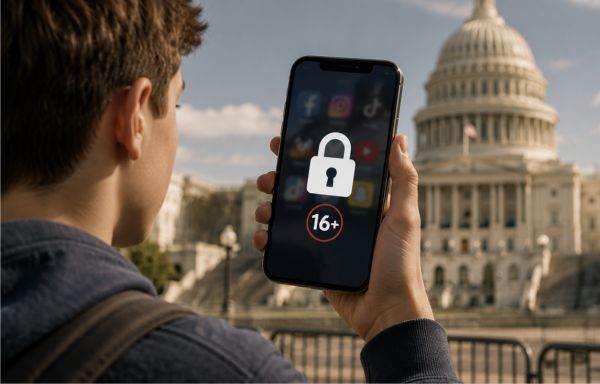
A majority of Americans believe that social media platforms should be subject to stricter government regulations, including age verification, to limit children's access to the services, according to a Reuters/Ipsos poll. According to the poll, 61% of Americans believe that social media companies need stricter government oversight. Support is high among both Democrats and Republicans: 71% of Democrats and 62% of Republicans favor stricter rules, while support is lower among independent voters. An even more widely supported measure is age verification. About 66% of respondents believe that platforms should be required by law to verify the age of their users so that children under 16 cannot access them. The proposal has the support of 74% of Republicans and 69% of Democrats, indicating a high level of political consensus around the idea of protecting minors online.
• Growing legal pressure on platforms
The survey results come at a time when major social media companies are facing increasing legal pressure in the United States due to the impact of their platforms on minors. Meta and YouTube, a platform owned by Google, are targeted by actions and regulations regarding the protection of children and adolescents. More than a dozen American states have already adopted laws regulating minors' access to social networks. Meta is set to face a trial on Wednesday in which prosecutors from several states accuse the company of designing its products in such a way as to create addiction among young people. Meta denies the allegations and claims that, in the event of an unfavorable decision, the penalties could amount to 1.4 trillion dollars. Separately, a New Mexico court last week ordered Meta to pay $567 million to a teen mental health fund and to change how its platforms work for young users. The decision came after the court found the company liable for harming children's well-being.
• 85% believe social media can be addictive
A Reuters/Ipsos poll found that 85% of Americans believe social media can be addictive for children, while a similar proportion believe that using it can affect their mental health. However, the negative perception of the platforms' effects on children does not translate into a general rejection of social media. About 70% of respondents said that time spent on these platforms was fun, while only 35% said that using social media caused them stress. In terms of duration of use, 52% of Americans believe that they spend too much time each day on social networks. Another 43%, however, do not consider the time spent online to be a problem for them.
• Protection of minors, between regulation and responsibility of platforms
The data thus indicate a nuanced position of American public opinion: users do not reject social networks or their benefits, but they support state intervention to limit the effects considered harmful, especially on children. Age verification and restricting access to minors under 16 are one of the main measures supported by the public, while litigation pending in American courts is putting additional pressure on large technology companies. In this context, the protection of minors is becoming one of the main regulatory issues for the social media industry, and public support for stricter supervision remains high.


























 Euro
Euro Dolar SUA
 Franc elveţian
 Liră sterlină
 Gram de aur