English


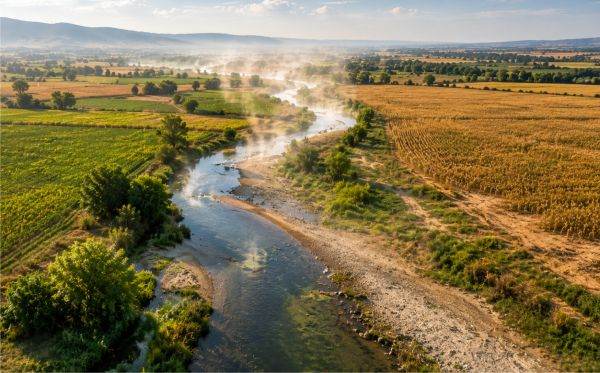
Climate change is amplifying the effects of the drought that is affecting many regions of Europe this summer, by increasing temperatures and accelerating the evaporation of water from the soil and watercourses, according to an analysis published by the international network of researchers World Weather Attribution (WWA), cited by AFP. The study shows that although climate change did not cause the rainfall deficit recorded between April and June, it directly contributed to the intensification of heat waves, which quickly reduced available water reserves.
• Drought affects more and more European countries
Several European countries are facing the effects of drought. In France, authorities fear that corn production will be the lowest in the last 50 years, while Romania has limited farmers' access to water intended for irrigation. The Netherlands also declared a water shortage last week, and seven Greek islands have declared a state of emergency due to drought to protect available resources.
• Extreme heat accelerates soil water loss
According to the WWA analysis, conditions conducive to water evaporation were 80 times more common in Western Europe and 40 times more common in Eastern Europe between January and June than in the pre-industrial era. "Extreme heat is becoming the main driver of drought on our continent,” said Sarah Kew, a climatologist at the Royal Netherlands Meteorological Institute. According to her, water reserves in soil and rivers are evaporating much faster than they would have in a world without climate change, turning drought episodes that could have been managed into severe events.
• Changing the mechanism of drought
Researchers say climate change is changing the way droughts occur in Europe. While in the past, lack of rainfall was the main factor, today higher temperatures and warmer air play an increasingly important role, preventing water from falling into the soil. The WWA analysis shows that droughts affecting agricultural soils are now five times more frequent in Western Europe and eleven times more frequent in Eastern Europe due to climate change.






















 Euro
Euro Dolar SUA
 Franc elveţian
 Liră sterlină
 Gram de aur