English


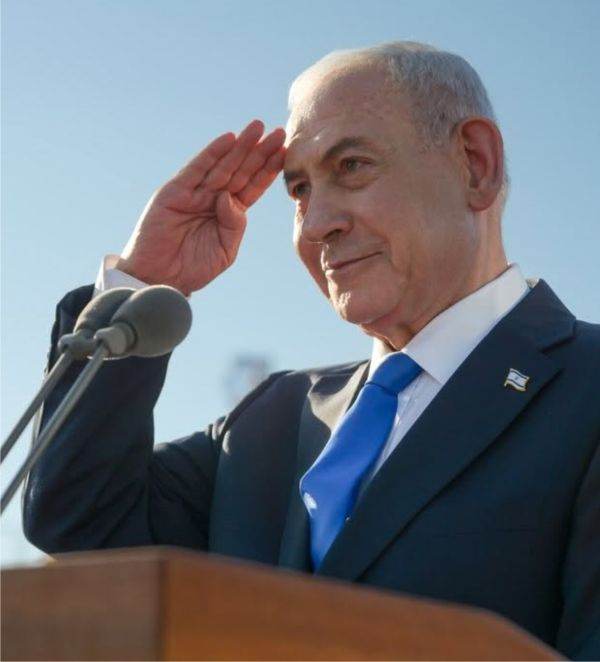
Although Benjamin Netanyahu has repeatedly stated that the Tel Aviv government authorities did not have any concrete information in advance about the Hamas attack on October 7, 2023, in reality, data on unusual activities in the Gaza Strip reached the Israeli prime minister's advisors at least three hours before the assault, according to a statement by Gadi Eisenkot, former chief of staff of the Israeli army (IDF), published yesterday by the website ynetnews.com.
This does not prove that Netanyahu knew the full plan of the attack or that he was personally briefed during the night, but it contradicts the image of a government leadership that was completely unaware of the information until the first rockets were fired and the first Hamas commandos entered Israeli territory. Moreover, the new statement by former IDF Chief of Staff Gadi Eisenkot is not an isolated accusation, but the latest in a chain of revelations, testimonies, and documents published by the Israeli press over the past two and a half years. Taken together, they describe not a complete absence of warnings, but a system that received information, misinterpreted it, fragmented it, minimized it, or failed to convey it in a timely manner to the person at the head of the government.
Eisenkot, a former chief of staff of the Israel Defense Forces and a former member of the war cabinet, told the "Decision Time: Democracy and Society” conference, organized by Ynet and Yedioth Ahronoth in conjunction with the Israel Democracy Institute, that the prime minister's office was receiving the same information on the morning of October 7 that was accumulating at the level of the army chief and the Shin Bet director.
Asked whether Netanyahu's intelligence chief knew that unusual activities were taking place in Gaza about three hours before the attack, Gadi Eisenkot replied categorically: "Absolutely. I am saying this with full knowledge of the facts.” According to him, at around 3:30 AM, the prime minister's intelligence adviser received the report and operational image then in the possession of the chief of staff and the Shin Bet director. The attack began at around 6:30 AM.
We must make a crucial distinction here: the former IDF chief is not claiming that at 3:30 AM, Israeli intelligence knew the exact scope, timing, and all the objectives of the Hamas operation. He is, however, claiming that there was information about an unusual activity, important enough to circulate among the army leadership, the Shin Bet, and the intelligence apparatus in the prime minister's office. If Netanyahu did not personally receive this information, the problem does not disappear, but changes its nature: from the alleged absence of information to the inability of his apparatus to convey a potentially vital warning to him.
"He must ask himself how he built an environment that does not inform him of important elements and can blame himself for not being informed,” Gadi Eisenkot told the cited source. The accusation strikes directly at Netanyahu's political defense after the October 7, 2023 attack: that the military and intelligence structures did not warn him, and that if he had been awakened during the night, the reaction might have been different. Eisenkot shifts the blame beyond the simple question of "who called the prime minister?” and places it in the power structure Netanyahu himself created. A prime minister is not only responsible for the orders he gives, but also for how he organizes his information flows, selects his advisers, and determines what kind of news can reach him quickly.
Eisenkot's claims are all the more significant because Netanyahu's own office had previously admitted that his intelligence chief had received a military message about suspicious Hamas activity about three hours before the attack, but had not passed it on to the prime minister. Israeli media reported in March 2025 that the prime minister's office's explanation was that the report was not intended as an urgent warning. The Times of Israel reported that Netanyahu acknowledged receipt of the memo by his intelligence chief, while claiming that his military secretary was only informed minutes before the attack.
This timeline reveals a major political contradiction. On the one hand, Netanyahu claims that Ronen Bar, the Shin Bet director at the time of the attack, understood at around 4:30 a.m. that a raid had become possible and should have woken him up. On the other hand, his own office's intelligence apparatus had already received the data accumulated during the night. If the information was too vague to justify alerting the prime minister, the accusation that the Shin Bet chief should have understood the certainty of an attack becomes harder to sustain. If it was serious enough for Ronen Bar to be accused of not waking him up, then it must be explained why Netanyahu's own advisor did not do so.
Especially since, as the Tel Aviv press reports, on the night of October 6-7, Israeli services had detected the activation of Israeli SIM cards in Gaza, movements and other indications considered unusual. Assessments were held at the Shin Bet, army and Southern Command levels. Ronen Bar went to Shin Bet headquarters, and the Chief of Staff, Herzi Halevi, participated in an assessment around 4:00. The decisive problem was that these signals were interpreted through the old conception according to which Hamas was discouraged, interested in governing Gaza, obtaining economic benefits and avoiding an all-out war. Even the internal investigations of the army and Shin Bet later acknowledged serious failures in analyzing and integrating information. Ronen Bar admitted that if the agency had acted differently both in the previous years and on the night of the attack, the massacre could have been prevented.
Over all this looms the "Jericho Wall” file - the Israeli document that described long in advance a Hamas invasion scenario remarkably similar to the attack that actually occurred. The plan called for rocket attacks, the use of drones to neutralize surveillance systems, breaching the border barrier, massive infiltration, and the occupation of Israeli bases and towns. The document did not indicate the date of the attack and did not prove that Hamas had made the final decision to carry it out, but it did demonstrate that the scenario was not unimaginable and that its elements were already in the possession of Israeli structures. Warnings from military observers on the border about Hamas exercises were also downplayed or framed in the same reassuring way: the organization was training but had no intention of starting a war.
However, Prime Minister Benjamin Netanyahu is trying to separate political responsibility from the professional failure of the army and intelligence services. Generals and heads of services have admitted their share of the blame, and several have resigned or announced their departure. The prime minister has avoided a comparable admission and has consistently rejected the idea that he received a concrete warning of a Hamas invasion. Strictly formulated, this defense may still be valid: there is no public evidence to date of a document reaching Netanyahu personally announcing that thousands of Hamas fighters would attack on the morning of October 7. But this is an extremely narrow definition of responsibility.
Unfortunately for the head of government in Tel Aviv, yesterday's statement by Gadi Eisenkot cracks the entire discourse about the "absolute surprise" of October 7. Israel was surprised by the timing, scale and efficiency of the attack, but it was not without information, scenarios or signals. The prime minister's office had received data about the unusual activity in Gaza approximately three hours before the invasion. Netanyahu can claim that the information did not reach him personally. However, he can no longer claim, credibly, that nothing was known around him. And in a system so centralized around the leader, the explanation "I was not informed" is not an absolution, but one of the most serious proofs of the failure of governance.




















 Euro
Euro Dolar SUA
 Franc elveţian
 Liră sterlină
 Gram de aur