English
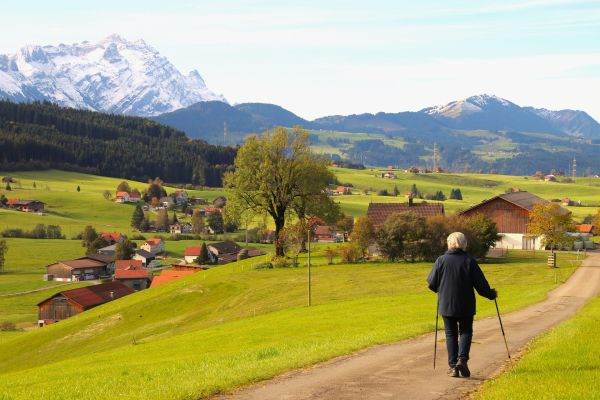
Recent weeks have been marked by protests that have brought the debate on migration back to the forefront. The aging of Europe's population has also been discussed, albeit to a lesser extent. Experts estimate that the population of the European Union could shrink by nearly 53 million people by 2100, while the proportion of elderly individuals will rise. This demographic decline threatens to exacerbate labor shortages and complicate the financing of pension and healthcare systems. Europe's demographic crisis is emerging as one of the structural issues with the most significant long-term economic consequences. Declining birth rates, rising life expectancy, and a shrinking working-age population are gradually altering the ratio between those who contribute to public budgets and those who rely on the services and benefits funded by them. According to the latest projections published by Eurostat, the European Union's population is expected to fall from 451.8 million in 2025 to approximately 398.8 million by 2100-a reduction of 11.7%. The population could reach a peak of 453.3 million in 2029, after which it is expected to follow a long-term downward trajectory. These estimates-based on assumptions regarding trends in birth rates, mortality, and migration-illustrate the scale of the changes the European Union will face. However, these projections do not represent an inevitable outcome; rather, they constitute a scenario built upon current demographic trends and assumptions.
• Nearly one-third of Europeans could be over the age of 65
Population aging is just as significant as the decline in the total number of inhabitants. According to a report on demographic transformation in the European Union, published by the European Commission's Joint Research Centre in July 2026, nearly one-third of EU citizens could be at least 65 years old by 2050, compared to approximately one-fifth today. Meanwhile, life expectancy at birth reached 81.5 years in 2024. While increased longevity represents a social and medical achievement, it also necessitates the adaptation of pension systems, healthcare services, and long-term care infrastructure. The European Commission warns that these demographic shifts exert pressure on the labor market, public finances, and care systems. The impact will not be uniform: some states and regions will feel the contraction of the active workforce more acutely, while others may benefit from migration flows or a greater capacity to attract workers.
• The labor market, caught between a shortage of employees and rising social costs
A shrinking working-age population may limit the European economy's capacity for growth, particularly in sectors that rely on a large workforce. Healthcare, elderly care, construction, and certain industrial activities are among the fields where staff shortages could become an increasingly difficult challenge. According to a European Commission report on population aging, published in April 2024, the number of working-age individuals is expected to decline in the long term, making productivity growth a crucial factor in sustaining the economy. In the report's baseline scenario, the average annual growth rate of the EU's potential GDP is projected at 1.3% for the 2022-2070 period. This outlook complicates European objectives regarding competitiveness, investment, and the technological transition. With a smaller active population, economies will need to achieve greater output with fewer human resources-through automation, digitalization, investment, and the enhancement of professional skills. Increasing labor market participation-including among women and older individuals who are both able and willing to work-could alleviate some of this pressure. Similarly, extending working lives, where health status and working conditions allow, can help maintain a larger base of contributors.
• Pensions and healthcare: the bill for an aging population
Changes in the population structure directly affect the balance of public finances. A smaller active population generally means a narrower base for the collection of income taxes and social security contributions. At the same time, the number of people requiring pensions, medical services, and long-term care is increasing. The European Commission's report on population aging estimates Total age-related public expenditure in the European Union could rise from 24.4% of GDP in 2022 to 25.6% by 2070. This trajectory varies across member states, depending on factors such as population structure, pension systems, and national policies. While budgetary pressure does not automatically translate into a pension crisis, it does narrow the scope for government action. Authorities will need to strike a balance between maintaining adequate benefits, funding healthcare services, managing public debt, and avoiding an excessive tax burden on the working-age population.
Furthermore, an aging healthcare workforce and staff shortages in the care sector may exacerbate these challenges. In the report "Health at a Glance: Europe 2024," the European Commission and the OECD highlight the need for measures to train and retain medical personnel, as well as to ensure the more efficient use of available resources.
• Low birth rates cannot be offset by a single measure
Low birth rates are a key driver of demographic decline. According to European Commission data, the fertility rate in the EU stood at 1.34 children per woman in 2024-well below the level of approximately 2.1 required to maintain a stable population in the absence of migration.
The decision to have children is influenced by a range of factors, including income levels, access to housing, job security, the availability of childcare services, and the ability to balance professional and family life. For this reason, pro-natalist policies cannot yield lasting results unless they are accompanied by measures that reduce economic insecurity and support families. Migration can help fill job vacancies and support economic growth. The European Commission considers attracting workers from outside the EU to be one of the options available to states for addressing labor shortages. However, the outcome depends on the integration of migrants, the recognition of their qualifications, and the ability of economies to retain them. Neither migration, nor raising the retirement age, nor boosting birth rates-taken individually-offers a complete solution. An effective response requires coordinated policies across the areas of education, employment, productivity, healthcare, and social protection.
• A slow-moving issue with long-term economic consequences
Unlike a financial or energy crisis, where effects can manifest rapidly, demographic change unfolds over several decades. It is precisely this slow pace that risks delaying policy decisions, even though the necessary measures require time to produce results. For Europe, the challenge goes beyond merely maintaining the size of the population. The core issue is preserving an economic base that is productive enough to fund public services and sustain living standards, even as the population grows older. Eurostat data and European Commission assessments point to a clear direction: without increased productivity, higher labor market participation, and the adaptation of social systems, an aging population will exacerbate the tension between economic needs and available resources. Demography does not trigger a crisis overnight, but it can gradually narrow the economic and budgetary options of European states.

























 Euro
 Dolar SUA
 Franc elveţian
 Liră sterlină
 Gram de aur