English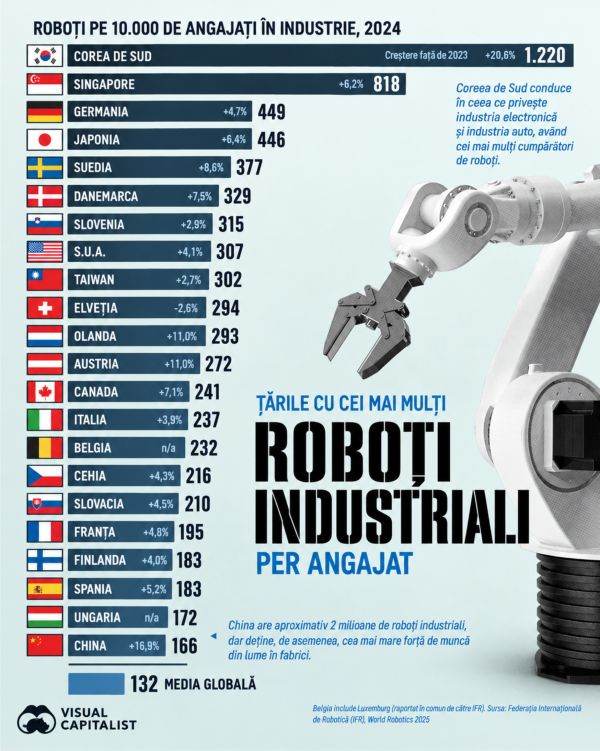
High energy prices, record public debt, and risks associated with the artificial intelligence (AI) investment boom pose threats to the global economy, according to a warning issued yesterday by International Monetary Fund (IMF) Managing Director Kristalina Georgieva.
According to Reuters, the IMF official stated that the world is being pulled in two opposite directions: a negative energy supply shock caused by conflicts in the Middle East, and a positive demand shock driven by artificial intelligence, which is also fueling inflation. Kristalina Georgieva noted: "The combined impact of these two forces is highly uneven globally; the AI investment boom is bypassing many countries."
After five and a half years of inflation exceeding central bank targets, Kristalina Georgieva highlighted persistent inflationary pressures driven by AI development, energy and food price shocks, trade tariffs, increased defense spending, and higher debt-servicing costs. The IMF official highlighted the risks associated with Artificial Intelligence, noting that investments in this sector-as a percentage of GDP-are likely to surpass those in railways, power grids, or telecommunications infrastructure. Growing economic and financial concentration places pressure on AI companies to deliver productivity and earnings growth that justify high valuations, Georgieva said, warning that market disappointment could turn into a "major shock."
It is worth noting that rising investment in AI is accelerating the development of industrial robots. Companies are using Artificial Intelligence to equip robots with the ability to analyze data, make decisions, and rapidly adapt to changes in production processes. Consequently, advancements in AI are transforming industrial automation and driving demand for robots capable of operating in increasingly complex environments.
• Countries with the highest number of industrial robots per worker
Industrial robots weld car bodies, assemble electronic components, and package goods. However, the country with the highest total number of machines does not necessarily have the highest number of robots relative to its industrial workforce, according to visualcapitalist.com. The cited source presents a ranking of 22 economies based on robot density-defined as the number of operational industrial robots per 10,000 manufacturing employees in 2024-using data published in April 2026 by the International Federation of Robotics (IFR).
South Korea and Singapore clearly stand out from the rest of the list; both nations combine a high level of automation with a small industrial workforce. South Korea's figure of 1,220 robots per 10,000 manufacturing employees is more than nine times the global average of 132, while Singapore's figure of 818 is nearly double that of Germany (449), which ranks third.
South Korea benefits from a world-renowned electronics industry and a large automotive sector. These two industries are the world's largest purchasers of industrial robots, together accounting for nearly half of all new installations in 2024.
Demographic factors are driving interest in automation: South Korea's total fertility rate stood at 0.75 births per woman in 2025-one of the lowest birth rates globally-meaning manufacturers are facing a shrinking pool of available workers. Singapore finds itself in a similar situation, being a small country with a limited number of manufacturing workers and a fertility rate that is also below the threshold of one (0.96).
The situation is the reverse for China. In 2024, the country operated approximately 2 million industrial robots-about 43% of the global stock-yet, relative to its vast manufacturing workforce, this figure equates to 166 robots per 10,000 employees.
In 2024, the United States ranked eighth, with 307 robots per 10,000 manufacturing workers, though the country's position could improve in 2025 and 2026. The United States is the world's second-largest producer of passenger cars and light commercial vehicles, trailing only China, and the automotive industry is the largest customer for industrial robots, with 13,500 units installed in 2025, according to IFR data.
The total number of installations in the US rose by 12% to reach 38,400 in 2025; consequently, the US overtook Japan (36,200 units) to become the world's second-largest market for robots, behind China (354,200 units).
The IFR projects that the number of installations will continue to rise in 2026 as the reshoring of production and labor shortages create opportunities for robotics.
• The automotive industry drives high robot density in Europe
European countries hold 15 of the top 22 spots in the ranking of nations with the highest industrial robot density, a situation largely attributable to their automotive industries. This link is most evident in Central Europe, a region with four economies in the top 22: Slovenia (315), the Czech Republic (216), Slovakia (210), and Hungary (172).
In 2024, Slovakia produced 183 vehicles per 1,000 inhabitants-the highest rate in the world and more than three times that of Germany (51), according to OICA. The Czech Republic, home to Skoda Auto, Hyundai, and Toyota plants, produced 134 units per 1,000 inhabitants.
• Nearly five million industrial robots are currently operating in factories worldwide.
Approximately five million robots are currently operating in factories around the world-primarily in China, the USA, Japan, South Korea, and Germany-according to data published last month by the International Federation of Robotics (cited by EFE and Agerpres).
The global stock of operational industrial robots grew by 9% in 2025 compared to the previous year, reaching this record figure of approximately five million units.
Factories worldwide installed over 600,000 new units last year, an 11% increase compared to 2024. China is the global leader in robot installations, recording a 20% increase in 2025 compared to the previous year; this represents around 354,000 newly installed industrial robots and accounts for approximately 59% of these recent global deployments.
Meanwhile, also in 2025, the United States installed 38,400 industrial robots in factories, followed by Japan with 36,200, South Korea with 30,200, and Germany with 24,800. Although Germany ranks only fifth globally in the robotics market, it is by far the largest market in Europe, with German factories housing 41% of all industrial robots installed in the European Union. However, the number of new robots installed in Germany in 2025 fell by 8% compared to the previous year. The automotive industry is the primary user of industrial robots in Germany, yet its market share is declining.
Italy is the second-largest European market for industrial robots; however, the number of new units there also dropped last year compared to 2024-falling by 11%-with approximately 7,800 robots installed in 2025. France ranks third in the EU, with nearly 4,500 new industrial robots installed in 2025 (an 8% decrease from 2024), while Spain ranks fourth with nearly 4,300 new units (a 15% decrease from 2024).
The International Federation of Robotics projects that industrial robot installations will rise by 9% in 2026-reaching approximately 655,000 units-and climb to around 806,000 by 2029, with the most significant growth expected in China, the USA, and India.
The expansion of production capacities in high-wage economies and countries facing labor shortages will drive demand for automation. Furthermore, demographic shifts are driving demand for industrial robots, whose capabilities are expanding alongside advancements in sensor technology and artificial intelligence-including computer vision.






















 Euro
Euro Dolar SUA
 Franc elveţian
 Liră sterlină
 Gram de aur