English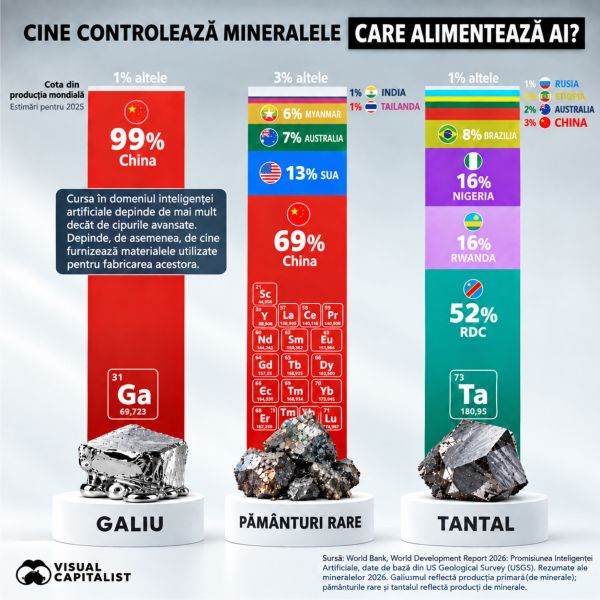
Special Project Delivery (SPD), a California-based company specializing in supply chain development, has entered into a definitive agreement to combine its operations with Winner Water Services, a US-based rare earth company, reports miningweekly.com.
SPD plans to integrate Winner Water into the National Security Matters (NSM) platform, which SPD is developing jointly with Mobix Labs, a Nasdaq-listed manufacturer of advanced electronic components.
Based in Sharon, Pennsylvania, Winner Water recovers rare earth elements, scandium, and alumina from coal ash deposits-a domestic resource derived from previously mined materials.
Over the course of ten years, Winner Water and its research partners have received funding from the Department of Energy and the Department of Defense through six consecutive grants totaling $53 million, according to the cited source.
In August, Winner Water began work on its rare earth extraction demonstration plant located at the National Carbon Capture Center in Wilsonville, Alabama.
SPD is party to a definitive merger agreement with Mobix Labs as part of Mobix Labs' NSM initiative. The agreement regarding Winner Water is expected to close concurrently with the merger between SPD and Mobix Labs, subject to necessary approvals and other customary closing conditions. Coal ash is abundant in the US, and its management is a subject of considerable interest.
For Winner Water-a company experienced in transforming previously contaminated water into a usable product-the idea of extracting valuable materials from coal ash was highly appealing. Winner Water was given the opportunity to demonstrate a process for extracting rare earth elements from coal ash; this initiative led to process optimization, the construction of a pilot plant, and the demonstration of its proprietary liquid-liquid extraction technology used for subsequent separation and refining.
• Who controls the critical minerals powering artificial intelligence?
Artificial intelligence infrastructure depends on far more than just chips and electricity. It also relies on a range of critical materials-including gallium, rare earth metals, and tantalum-that are essential for semiconductors, magnets, and power management systems.
Visualcapitalist.com presents the countries controlling these critical minerals, using World Bank data. Production is concentrated in a relatively small number of countries, and the figures shown are estimates for 2025.
According to the source, China accounts for 99% of total gallium production. However, the source notes that this does not mean the Asian nation controls 99% of the world's gallium reserves. Gallium is generally recovered as a by-product of bauxite processing for aluminum production, and China's massive aluminum industry has facilitated the development of large-scale gallium extraction. Furthermore, a previous situation of oversupply and low prices contributed to producers in other regions withdrawing from the market. Gallium is significant because compounds such as gallium nitride (GaN) can operate efficiently at high voltages and temperatures. These properties make gallium useful in high-performance semiconductors and power electronics-areas of increasing importance given that artificial intelligence data centers require ever-greater computing power and electricity consumption.
Regarding rare earths, China accounts for 69.2% of total production, followed by the United States with 13.1% and Australia with 7.4%. Despite the name, "rare earths" actually comprise a group of 17 elements. Various elements within this group play diverse roles in computer system hardware. For example, neodymium and praseodymium are used in powerful permanent magnets found in hard disk drives and other equipment, while other rare earths find applications in semiconductors, displays, optics, and data storage. In the tantalum sector, the Democratic Republic of the Congo accounts for 52% of estimated mining output, while Rwanda and Nigeria contribute 16% and 15.6%, respectively. Together, these three countries represent 83.6% of the total.
The link between tantalum and artificial intelligence largely centers on capacitors. Tantalum-polymer capacitors offer high capacitance in a compact form factor alongside stable electrical performance, making them valuable for demanding power supply systems. Industry forecasts for 2026 identify AI-focused servers as a growing source of demand for tantalum capacitors.
• Supply chain risks
Concentrated production does not automatically translate into an advantage in the field of artificial intelligence. Advanced chips, manufacturing capacity, energy infrastructure, and capital are all essential elements, the cited source notes. However, when one or a few countries dominate the production of a critical material, export restrictions or other supply disruptions can impact global technology supply chains.
This risk is already evident. In recent years, China has implemented export controls on gallium-containing products and certain categories of rare earth metals (specifically the medium and heavy segments). These measures have prompted governments and companies in other regions to seek alternative suppliers and develop new production capabilities. In Central Africa, the concentration of tantalum production presents a different set of challenges, including the risk of supply disruptions and concerns regarding responsible sourcing. As artificial intelligence infrastructure expands, securing access to the minerals needed to manufacture chips, servers, and energy systems could become just as important as securing the chips themselves.
• EU trade in rare earths increased in 2025
The European Union's (EU) trade in rare earth elements increased last year following a significant decline in 2024, according to Eurostat data cited by Agerpres.
Imports rose by 17.1% to reach 15,100 tonnes, while exports climbed by 21.1% to 6,700 tonnes.
At the same time, the value of imported rare earth elements rose by 23.2% to euro124.9 million, and the value of exports increased by 29.9% to euro124.7 million.
In 2025, the majority of rare earth elements were imported from China (46.8% of the total weight, or 7,100 tonnes). Russia ranked second, accounting for 25.9% of imports (3,900 tonnes), followed by Malaysia in third place with 23.1% (3,500 tonnes). Japan and the United States followed with 1.6% and 0.9%, respectively.






















 Euro
Euro Dolar SUA
 Franc elveţian
 Liră sterlină
 Gram de aur