 English


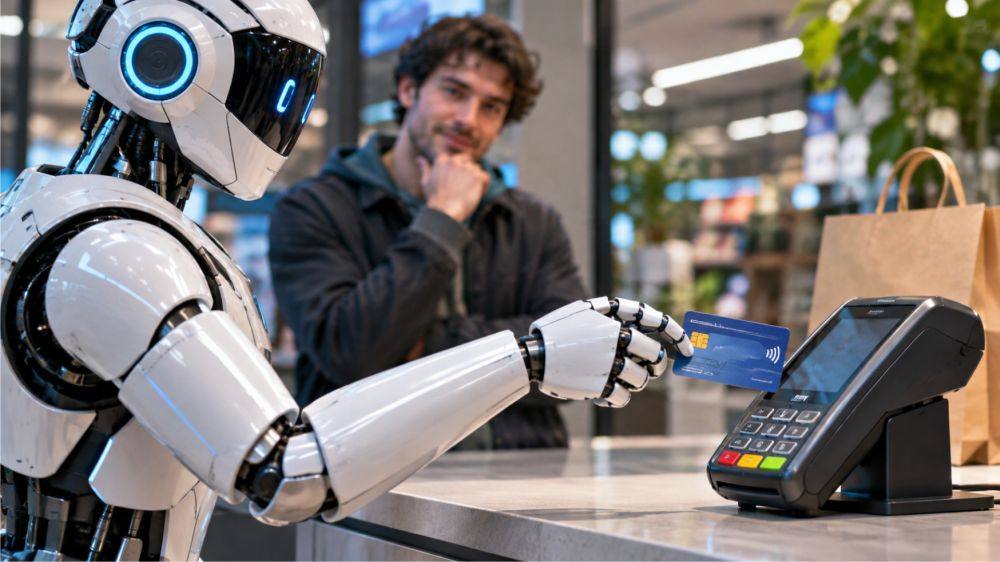
Rapid advances in artificial intelligence are opening a new front in the competition for control over consumer payments, as virtual assistants gain the ability to carry out transactions autonomously. The transformation promises to change the relationship between customers, banks, payment processors and merchants, but is generating concerns about financial security, legal liability and operational costs, according to the Wall Street Journal.
According to the cited source, in recent weeks, artificial intelligence-based personal assistants, such as Meta's Muse, Instinct and other similar systems, have been given functionalities that allow them to make purchases on behalf of cardholders. This development represents a step toward a commercial model in which consumers will no longer have to personally initiate each transaction or confirm the completion of an order.
The possibility of AI agents taking over the purchasing process has generated enthusiasm in the technology and financial industries. Within banks and payment processing companies, however, the prospect is viewed with caution because of fraud risks, an increase in the number of returns and legal uncertainties.
• Stripe bets on autonomous commerce, while JPMorgan adopts a cautious position
American payments giant Stripe has embraced the concept of purchases made through AI agents and is seeking to consolidate a central position in the new financial ecosystem, according to people familiar with the company's strategy.
Currently, AI agents can use cards issued by institutions such as Bank of America, Capital One and Citigroup when consumers authorize such operations.
By contrast, JPMorgan Chase, the largest US credit card issuer by purchase volume, is among the institutions skeptical of this technology. According to sources familiar with the situation, the bank blocks transactions carried out by AI agents when users provide them directly with their card information and has adopted a slower pace in implementing alternative solutions tested by competitors.
Although the number of transactions carried out by AI agents remains low, executives in the payments industry anticipate significant growth in this segment. For financial institutions, the main challenge is the risk of losing ground to competitors by choosing the wrong technology or delaying its adoption.
Farooq Malik, CEO of Rain, a company specializing in autonomous payments and stablecoin infrastructure, describes the current period as an intense competition to secure strategic positions in an emerging market.
The current global payments system operates on the basis of a complex set of regulations, anti-fraud mechanisms and fees established by card networks and banking institutions, an infrastructure that was not designed for transactions executed by autonomous systems.
Even a change of just one cent in a fee can produce financial effects amounting to billions of dollars, redistributing revenues among market participants.
• Banks fear AI agents could automatically move customers' savings
The expansion of artificial intelligence in the financial sector is generating concerns that extend beyond online shopping.
Major American banking institutions, including JPMorgan, Citigroup, Bank of America and Capital One, have recently introduced restrictions on AI agents' access to consumers' deposit accounts, citing the protection of personal and financial information.
Economists warn that these systems could automatically identify deposits offering more attractive returns and transfer customers' funds to competing institutions, transforming competition for attracting household savings.
At the same time, the US Treasury Department is requesting information from banks regarding the control mechanisms applicable to the use of artificial intelligence in payment systems.
JPMorgan has introduced restrictions to prevent AI agents from using customers' cards, but representatives of other financial institutions believe that identifying and blocking these systems could become extremely difficult.
Michael Spelfogel, president of Cardless, a technology company operating in the card industry, stated that the company is working with payment network partners to develop the infrastructure necessary for autonomous transactions.
According to him, consumers already want to use AI agents for shopping, and the necessary technology exists. Spelfogel believes that banks could delay the adoption of these systems by one or two years, but they will not be able to prevent users from spending their money through artificial intelligence in the long term.
• Rising fraud and returns complicate technology adoption
Some executives in the payments industry argue that transactions carried out through AI agents are already generating more returns than purchases made directly by consumers.
At the same time, higher levels of fraud have been observed, including situations in which AI agents purchase products from fake online stores that collect payment for orders without delivering the goods.
Another concern relates to the possibility that artificial intelligence could amplify the exploitation of rewards programs associated with credit cards. Automatically identifying opportunities to accumulate points and benefits could increase the costs borne by issuing banks, particularly in the case of premium cards.
Financial institutions are also examining the legal implications of autonomous transactions. Although credit cards include fraud protection mechanisms, banks distinguish between unauthorized operations and those carried out with the cardholder's consent.
According to some banking executives, certain institutions intend to treat the authorization of an AI agent to use a card in a manner similar to situations in which the cardholder gives the card to a family member or friend.
This approach could influence how transaction disputes are resolved and how financial responsibility is determined in the case of unwanted purchases.
• Stripe develops an AI agent payment system based on the Link wallet
Stripe is seeking to become one of the main infrastructure providers for autonomous commerce, leveraging its Link digital wallet, which has more than 300 million users.
The solution allows AI agents to complete transactions on behalf of consumers without directly transmitting card information to the systems being used.
A Stripe spokesperson described commerce through AI agents as an emerging field with promising prospects, stating that the company is working with its partners to develop the technology.
Link uses special tokens for autonomous transactions, designed to protect financial data by concealing the actual card number, through a mechanism similar to that used by Apple Pay and other digital wallets.
The tokens, provided by Visa and Mastercard, also include information about the products the consumer wishes to purchase, the established spending limits and the level of trust assigned to the AI agent.
However, the solution has not convinced JPMorgan Chase. According to people familiar with the situation, the bank has disagreements with Stripe regarding token technology and has delayed its implementation.
Stripe also has an alternative mechanism that can be used for cards issued by Chase. The system generates a single-use virtual card with a value equal to the purchase amount, after which Stripe charges the consumer's actual card to cover the transaction.
However, this solution has generated dissatisfaction among merchants, who have submitted complaints to Visa and Mastercard, claiming that they pay, on average, higher fees than for transactions made directly with customers' cards.
The difference stems from the classification of virtual cards as commercial payment instruments rather than consumer cards.
Merchants are also concerned about reduced access to information regarding customers' purchasing behavior, which makes data collection and the development of personalized recommendations more difficult. At the same time, temporary virtual cards have created difficulties in processing returns.
• United Airlines and Amazon restrict access for AI agents
Differences in strategy regarding autonomous commerce are becoming increasingly evident among major companies as well.
United Airlines announced on Wednesday that it would prevent artificial intelligence-based personal assistants from accessing the company's systems to book airline tickets.
In September, Amazon blocked the use of Meta's Muse assistant for making purchases on its platform.
By contrast, Walmart has adopted a more permissive approach, announcing that it will allow consumers to authorize AI agents to make purchases. The company also intends to distinguish between transactions initiated directly by customers and those carried out by autonomous systems.
These decisions reflect the lack of consensus in the e-commerce industry. While some companies are trying to limit AI agents' access in order to maintain control over their relationships with users, others believe that adopting the technology could represent a competitive advantage.
• US authorities classify autonomous payment agents in the highest risk category
The expansion of artificial intelligence in the financial system is also attracting the attention of banking supervisory authorities in the United States.
The Office of the Comptroller of the Currency (OCC), the federal institution responsible for supervising US national banks, sent its examiners a new framework this month for assessing the use of artificial intelligence by financial institutions.
The document includes AI applications used in payment processing, customer relations and fraud detection, while autonomous payment agents are placed in the highest risk category.
The classification reflects authorities' concerns about banks' ability to control transactions carried out by systems that can make decisions and execute operations without direct user intervention.
In this context, the development of autonomous commerce is becoming a major challenge for the financial industry, which must find a balance between adopting new technologies, protecting consumers and maintaining control over payment infrastructure.
The competition to establish technological rules and standards is only just beginning, but the decisions made at this stage could influence, in the long term, how transactions are carried out and how revenues are distributed in the global financial industry.


























 Euro
 Dolar SUA
 Franc elveţian
 Liră sterlină
 Gram de aur



























Reader's Opinion