 English
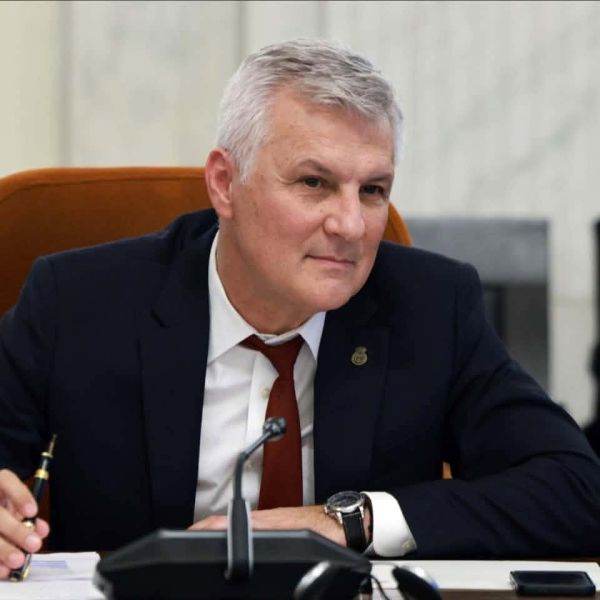
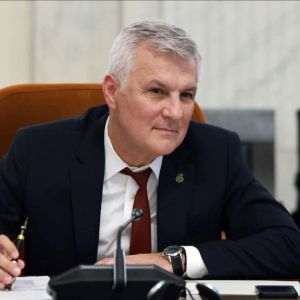
Lending to companies by the banking system is at a low level, stated Daniel Zamfir, Minister of the Economy, Digitalization, Entrepreneurship, and Tourism, during a press conference held late last week.
In response to an observation by the newspaper BURSA that in recent years, banks have preferred to lend to the state by purchasing government securities, rather than channeling funds directly into the real economy to support entrepreneurs, Daniel Zamfir remarked: "I believe this is an issue that needs to be addressed at the level of the National Bank. There needs to be a very clear discussion as to why Romania finds itself in a situation with the lowest level of financial intermediation. Ultimately, banks are not financing the economy. Why aren't they? That is a conversation that must take place. Yes, I understand the point about risk levels, but consider that we have previously been in situations where the current risks, such as the war on our border, did not exist, and yet we still had the highest interest rates in Europe.”
The Minister of Economy went on to draw a comparison between the interest rates borne by citizens and entrepreneurs and the profits of the banking sector: "Since entering politics, I have observed one thing: the interest rates paid by Romanians are three times higher than the European average. At the same time, bank profits are three times higher than the European average. Even a first- or second-grade child, when learning basic arithmetic, would realize that this profit comes from the extra money taken from people."
He clarified that he is not an adversary of the country's banking system, even though he may have been perceived as such following various legislative initiatives he proposed some of which were subsequently enacted into law.
"As you are well aware, I initiated the "dation in payment' law, because a great injustice was being inflicted upon people in that area. I also initiated a cap on interest rates for non-bank financial institutions (NBFIs), as people were being treated very unfairly there, with interest rates reaching 500%, 700%, or even 6,000%. Currently, I have initiated legislation aimed at ensuring that those deceived by banks through the manipulation of the ROBOR rate, as established by the Competition Council are compensated and receive their money back. Therefore, I have always been, and will always remain, an adversary of those who deceive people. I will, however, be a supporter of those who operate fairly in the market," added Daniel Zamfir.
• Daniel Zamfir has taken over a ministry with a budget execution rate of only 23% after 10 months
During a press conference, Daniel Zamfir claimed that his predecessor at the Ministry of Economy, Irineu Darău (USR), utilized only a small fraction of the available funds, even as entrepreneurs were in need of financing.
"The first point I want to highlight concerns the budget execution at the Ministry of Economy. The execution here is absolutely shameful; out of a 3.6 billion lei budget allocated to the Ministry, the final execution rate stands at only about 23%. This is extremely low, especially considering there are vital programs that should have provided funding to small entrepreneurs, those intended to develop various initiatives under the auspices of this ministry," stated Daniel Zamfir. He added that, prior to his taking office, only 28% of the 1.5 billion lei allocated to the Ministry of Economy under the National Recovery and Resilience Plan (NRRP) had actually been spent.
The sharpest criticism directed at the former minister focused on the disparity between payments made to entrepreneurs and the compensation received by those in corporate leadership positions. Regarding the "Start-Up Nation" program, the minister noted a budget execution rate of just 2.12% of the allocated funds, accusing the previous leadership of a lack of interest. "So, the sinecure-holders collected their pay, while Romanian firms went bankrupt. Because, as I mentioned, the USR minister only directed 2.12% of the effort toward Romanian companies. The result: 37,000 firms went bankrupt while those in cushy, unearned positions were still getting paid."
When asked about the difficulties beneficiaries faced in obtaining loans from partner banks, Zamfir stated that he had requested the acceleration of payments and the reporting of any bottlenecks. He also mentioned issues with the IT platform, noting that he had reached out to the STS (Special Telecommunications Service) regarding this, but insisted that the primary reason was a lack of interest in the program.
For future sessions of the "Start-Up Nation' program, the minister promised more accessible procedures: "My primary focus is to simplify some of these mechanisms. Based on what the technical staff has presented to me, the current procedures seem a bit cumbersome, making it difficult for young entrepreneurs to access the program. I intend to simplify it; and likely by next week or the week after once we have a new budget execution plan drafted I want to assure you that I will allocate significantly more funding to programs designed to stimulate production within Romania."
Regarding the initiative aimed at the development of small and medium-sized enterprises, Zamfir indicated an allocation of 123 million and expenses of only 1.84% during Irineu Darău's tenure. "In my view, this is an economic crime," stated Minister Daniel Zamfir.
• Radiocom, IOR, and Romaero: audits and allegations regarding the alienation of state assets
Daniel Zamfir announced that he has dispatched the Control Body to Radiocom, citing information about the potential alienation of strategic assets. "I sent the Control Body yesterday because I have information that the Board of Directors was discussing the transfer of the state's strategic assets to private firms. I want to see what the Control Body uncovers, and I assure you that I will make their findings public it is my duty to keep you informed," the Minister of Economy declared.
Regarding the company IOR, he noted that he has replaced the special administrator and rescinded an order that would have increased compensation from 5,200 to 14,800 lei. According to his statement, the decision to implement this increase was made on October 19, the very day of the parliamentary hearings for the installation of the new Government.
"This morning, I signed the cancellation of this order to raise compensation, from 5,200 to 14,800 lei, as I mentioned. And this, mind you, while everyone was hearing about how the public sector was supposed to be "tightening its belt.' That is what Mr. Bolojan told us, what Mr. Darău told us, and what all the members of that regrettable cabinet told us," Daniel Zamfir specified. At Romaero, Minister Daniel Zamfir announced that he would convene the General Meeting of Creditors to replace the special administrator, attributing the worsening of losses to the current management:
"There is a special administrator there, appointed by Deputy Prime Minister Oana Gheorghiu, a special administrator who has managed the "feat' of taking the company from 12 million lei in losses to 38 million lei in losses. Furthermore, I have information that there were plans to dispose of some of the state-owned company's assets, which, from my perspective, is unacceptable," asserted Daniel Zamfir.
• Mergers among state-owned enterprises
Regarding the restructuring of the portfolio under his ministry, Daniel Zamfir announced three mergers: Poşta Română (Romanian Post) with Romfilatelia, Mamaia SA with Telegondola Mamaia, and Plafar with Salrom. The Minister stated that the first two operations would allow for the elimination of five positions from each of the respective boards of directors.
For the defense industry, the objective stated by the Minister of Economy is to consolidate the activities of the company Romarm into a structure capable of managing SAFE contracts.
"As much funding as possible from the SAFE contract must reach the Romanian defense industry. To this end, I intend to streamline Romarm's operations," stated Daniel Zamfir.
When asked whether he would accept foreign majority investors in state-owned companies facing financial difficulties, the Minister did not provide a definitive "yes" or "no" applicable to the entire portfolio. He emphasized the unique nature of the military sector, noting: "We cannot speak of privatizing the defense industry in the same way we might discuss the privatization of other companies within the ministry's portfolio."
• Minister of Economy encourages investments by multinationals but criticizes profit shifting
Regarding foreign capital, Daniel Zamfir applied the same distinction he used in his response concerning banks: he supports companies he deems fair, while opposing those he claims cause harm to the state.
"I have never had anything against multinationals that pay their taxes to the Romanian state fairly. And yes, I have been an opponent of those that cheat the Romanian state-companies that, through financial engineering and tax optimization, circumvent their obligations and fail to pay the taxes due to the Romanian state. Such entities have been, and will continue to be, my adversaries; I will do everything in my power to ensure these practices are, if not eliminated, at least curtailed," stated Daniel Zamfir.
When asked to explain the mechanisms involved, the Minister pointed to profit shifting and the principle that taxes should be paid where profit is generated. During this exchange, he did not identify specific companies, nor did he outline detailed new measures to combat the practices in question.
• State incentives for economic development
Addressing the challenges facing the automotive industry, the Minister of Economy cited energy costs and declining demand as pressures affecting Dacia. He announced that he, along with the Minister of Energy, would hold discussions with the company's management. Furthermore, he stated that he would support boosting sales of vehicles manufactured in Romania through the "Rabla' (scrappage) program. "I want to speak with Dacia's management to understand exactly what their issues are. I repeat, this is a company that does not fall under the Ministry of Economy's portfolio. I have been minister for a week now, and my primary focus has been on what is happening with the companies within my own portfolio. However, I must reiterate that we cannot ignore the situation at Dacia. Following the discussion I will have with Dacia's CEO, I will be able to tell you how the Romanian state can get involved and how it can help ensure that production at Dacia continues,” stated Daniel Zamfir.
Regarding the tourism sector, the Minister of Economy called for a substantial increase in the value of holiday vouchers, framing this expenditure as a tool for economic stimulus: "Holiday vouchers should be viewed as an investment; they have an immediate multiplier effect on the economy, both vertically and horizontally. Yes, it is a priority for me to reintroduce holiday vouchers and more besides.”
Towards the end of the conference, the discussion on finances shifted to the state's obligations toward companies. When asked about the political controversy surrounding the scale of budgetary imbalances, Daniel Zamfir noted that the value of work already performed but not yet invoiced must be determined.
"At the Ministry of Development, companies have already paid VAT to the Romanian state for certain projects, yet they have not received payment for the work itself. This is a major issue that requires urgent resolution: the state must settle its debts to these companies for the work they have completed. Furthermore, there are other projects that remain uninvoiced, specifically to prevent a situation where non-payment leads to bankruptcy. This is what I can share based on the discussions I have taken part in. We need to establish the exact value of work performed but not yet invoiced to gain a clearer picture of the deficit. Otherwise, if we continue to sweep this figure under the rug, I don't believe we can move forward,” said the Minister of Economy. When asked whether he would draft a predictable, full-year budget for 2027, the Minister of Economy replied: "This is my first time in such a public role as a minister. I have not drafted budgets before, as I have not held this position. I assure you that the budget I prepare for the Ministry of Economy will be realistic and primarily focused on economic development."
Beyond the accusations, audits, and announced mergers, Minister Daniel Zamfir's objective remains to break the economic deadlock-a situation characterized by state payment delays, entrepreneurs struggling to secure financing, and investment funds left unspent. The credibility of these promises will be measured by the actual funds reaching beneficiaries, production capacities brought online, and companies capable of sustaining their operations without waiting for the next intervention from the state budget.
















 Euro
 Dolar SUA
 Franc elveţian
 Liră sterlină
 Gram de aur

























Reader's Opinion