English

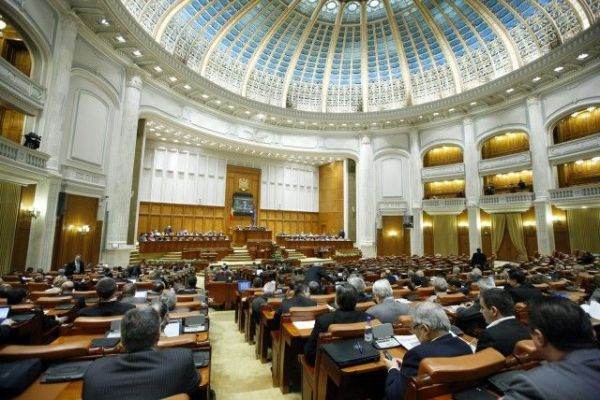
In the context in which the deadline, August 31, 2026, regarding the implementation of the National Recovery and Resilience Plan (PNRR) is rapidly approaching and, in light of the political crisis, we risk losing billions of euros from the funding allocated for this plan, interim Prime Minister Ilie Bolojan announced, after yesterday's government meeting, that the Executive is preparing nine essential legislative projects to save the respective amounts. The Head of Government believes that all these normative acts could be adopted by Parliament in an extraordinary session convened in the second half of July, after the conclusion of technical consultations with the European Commission and after informing the parliamentary groups.
According to Ilie Bolojan, the Government has inventoried all the legislative milestones that still need to be met to complete the implementation of the PNRR and to unlock the financing tranches. Of the nine projects, six are considered fundamental, and another three complete the legislative architecture necessary to close the program. The stakes are huge: each of the main projects is associated with funding ranging between approximately 770 and 972 million euros, which means that their non-adoption could jeopardize the absorption of over 4 billion euros. The most important of the projects is the new law on the remuneration of personnel paid from public funds, one of the most sensitive reforms undertaken by Romania through the PNRR. Negotiations with the European Commission are not focused so much on salary scales as on the budgetary impact of the entire system. Brussels requires that any salary increases not lead to exceeding the current share of personnel expenses in the gross domestic product, capped at a maximum of 8.1% of GDP. If the law generates salary increases up to the negotiated maximum limit, the Government will have to simultaneously identify compensatory measures, either by reducing other budgetary expenses or by increasing state revenues. The Ministry of Labor must integrate in the final form the results of the consultations held with professional organizations in the public sector, but the project is also built on the expertise provided through the consultancy contract concluded with the World Bank.
The second project concerns the strengthening of integrity in public administration, by modifying the incompatibilities regime. The legislative text was drafted by the Ministry of Justice and the National Integrity Agency and is already in consultation with parliamentary parties. After the last technical discussions with representatives of the European Commission, the project is to be transmitted to Parliament, being one of the milestones assumed by Romania to strengthen the mechanisms for preventing conflicts of interest and combating incompatibilities in public functions.
The third project introduces a bonus-malus mechanism for employees in the tax administration. The executive proposes the establishment of a system through which the staff of ANAF, the Ministry of Finance and anti-fraud structures will be rewarded according to the performance obtained in collecting budget revenues and combating tax evasion. The government considers that streamlining the tax administration is one of the key reforms required by the PNRR to consolidate public finances and reduce the budget deficit.
Another essential project amends the Administrative Code and aims to reform the civil service. The document aims to redefine the rules regarding the career of civil servants, the organization of competitions and the promotion criteria, so that professional advancement is based on competence and performance. The reform is coordinated by the Ministry of Development and the National Agency of Civil Servants and represents one of the conditions assumed by Romania for the modernization of the administration.
Among the most anticipated projects is the new Urban Planning Code, which has been in Parliament since the end of last year. The normative act aims to simplify and unify the legislation in the field of urban planning and territorial development, but also includes sensitive provisions regarding the administrative organization of Bucharest. At the center of the debates is the transfer of powers regarding urban planning documentation to the General City Hall, in accordance with the results of the local referendum organized in the Capital. The finalization of this code is considered essential both for accelerating investments and for meeting the milestones assumed in the relationship with the European Commission.
The sixth major project concerns the decarbonization of heating and cooling systems. The legislative initiative was recently discussed in the Senate, but did not meet the required number of votes, missing only three votes for adoption. The government now intends to reintroduce the project into the parliamentary circuit through the Chamber of Deputies and intensify the dialogue with the parliamentary groups to clarify all technical aspects. The financial importance is exceptional, the value of the milestone being estimated at approximately 972 million euros.
In addition to these six main reforms, the Executive is preparing three more projects considered secondary, but indispensable for the closure of the entire PNRR mechanism. The first of these concerns the approval of an emergency ordinance on decarbonization measures in the energy sector. The Prime Minister warned that an amendment was introduced in Parliament which, if adopted, would compromise the entire decarbonization milestone and could lead to the loss of very significant amounts of European funding. For this reason, the Government will request the rejection of that amendment.
The second secondary project transposes into Romanian legislation the European directive on the organization of the electricity market, a mandatory reform for the harmonization of the national framework with European Union legislation and for the continuation of the process of liberalization and modernization of the energy market.
The last project is the one that establishes the legal framework for the closure of the PNRR. Although it is not associated with direct funding, its adoption is mandatory for the completion of the program and for the establishment of all the rules necessary to complete the implementation of the National Recovery and Resilience Plan by the end of August.
Ilie Bolojan specified that all technical consultations with representatives of the European Commission must be completed during the next week, so that the projects sent to the Parliament already benefit from the agreement of Brussels. In parallel, the Government will inform the leaders of the parliamentary groups and the party leaderships so that they can analyze the legislative documents in advance. Subsequently, the Executive will officially request the leaderships of the two Chambers to convene an extraordinary session in the second half of July, in which all nine projects will be debated and adopted at an accelerated procedure.




















 Euro
Euro Dolar SUA
 Franc elveţian
 Liră sterlină
 Gram de aur