English


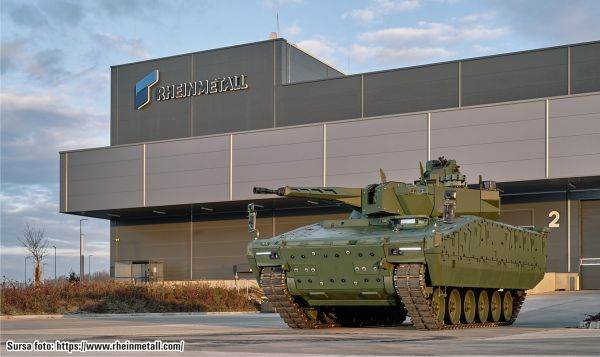
The French group Alstom is considering selling its Kassel, Germany, factory to Rheinmetall, one of Europe's largest arms manufacturers, in a deal that reflects both the financial pressures on the rail manufacturer and the unprecedented expansion of the German military industry, according to an article published by the French newspaper La Lettre. The source cited indicates that the German group's interest is fueled by the explosion of military orders from the German federal authorities and European partners, including Romania, with which Rheinmetall signed a contract worth 5.7 billion euros on June 2.
For Rheinmetall, the Alstom factory represents a strategic opportunity. The facilities in question are located right next to the German group's own production lines, which would allow for the rapid expansion of industrial capacities dedicated to the assembly of armored vehicles. The company led by Armin Papperger aims to use the spaces currently occupied by Alstom to accelerate production of the 8x8 armored vehicle, Schakal, intended for troop transport and scheduled for deliveries starting in 2028, but especially to increase the manufacturing pace of the Boxer multi-purpose armored vehicle, one of the most important products in its military portfolio.
For Alstom, the operation comes at a delicate moment. The French group is facing financial difficulties that have forced the new management to adopt restructuring and efficiency measures. The cited source claims that CEO Martin Sion, installed in April, was forced to issue a warning on financial results together with the board of directors as early as May 13. The management's declared objective is to increase the operating margin to 6.5% and simplify the company's organizational structure.
In these circumstances, Rheinmetall's interest is perceived as a welcome opportunity. Especially since it would not be the first time that Alstom has taken advantage of the German defense industry's growing appetite for available industrial assets. In March, the French company already completed the transfer of its former Görlitz plant, located in Saxony, to the KNDS Germany industrial group. That transaction was part of the cost-cutting program launched after the group's old management announced a cash flow deficit of 1.5 billion euros in 2023.
The major difference is that the Kassel factory is not a peripheral asset. The site specializes in the production of Traxx locomotives, one of the important products in Alstom's portfolio. For this reason, any sale will have to be accompanied by an industrial solution that allows production to continue at competitive costs.
Among the options being analyzed is the transfer of production lines to other German units of the group, in particular to Mannheim, in Baden-Wurttemberg, or to Hennigsdorf, near Berlin. Such a move would allow the company to maintain its operations in Germany and would reportedly be acceptable to the unions. However, implementing this solution would require significant investment, as neither of the two factories is currently ready to produce Traxx locomotives.
However, there is an alternative that, from an industrial point of view, seems even more attractive to Alstom. According to the source cited, the group has facilities specialized in the production of this type of locomotive outside Germany, including in Belfort, France, in Italy and in Astana, Kazakhstan, and transferring production to one of these locations could generate significant savings and eliminate the need for massive investments in adapting German factories.
However, such a decision could cause political and commercial tensions. The German market remains one of the most important for Alstom, and a relocation of production outside Germany risks being viewed negatively by the authorities in Berlin. The French manufacturer competes directly with Siemens, and manufacturing locomotives outside Germany could affect the company's chances of winning public contracts from Deutsche Bahn.
However, the risk is mitigated by current market developments. Deutsche Bahn is currently focusing its investments on modernizing its railway infrastructure and less on purchasing new rolling stock. At the same time, the German market is supplied by numerous private operators and leasing companies, for whom the "Made in Germany" criterion is less important than for the state-owned railway operator.
If the negotiations materialize, Alstom will obtain additional resources for its financial recovery and increased profitability, while Rheinmetall will strengthen its capacity to respond to the wave of military orders who continues to grow. At the same time, the transaction would confirm that the defense industry has become one of the main poles of attraction for capital and investment in Europe, capable of reshaping the industrial map of the continent and influencing the decisions of groups with a tradition in completely different sectors, such as rail transport.















 Euro
Euro Dolar SUA
 Franc elveţian
 Liră sterlină
 Gram de aur