English


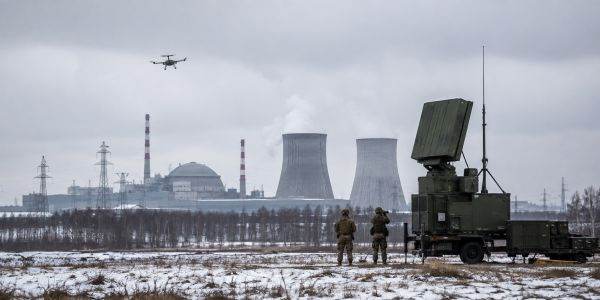
Poland, Lithuania, Latvia and Estonia are strengthening their security measures around critical infrastructure, amid fears that Russia could try to provoke an incident on the territory of a NATO state through a "false flag" operation. Dams, power plants, gas installations and other energy targets are targeted by the new protection measures, at a time when the war in Ukraine amplifies the risks of sabotage, drone attacks and destabilization operations on the eastern flank of the North Atlantic Alliance, international press agencies inform.
• Energy infrastructure, transformed into a strategic objective
The decision of Warsaw and the three Baltic states comes in a context in which European critical infrastructure has become increasingly important in the indirect confrontation between Russia and Western states. According to a Reuters investigation, authorities in Poland, Lithuania, Latvia and Estonia have stepped up protection for targets considered vulnerable, including dams, power plants and gas installations. The measures are linked to fears that Moscow could try to organize an attack using Ukrainian drones, so that responsibility would later be attributed to Ukraine and the incident would generate a reaction from NATO. The concept of "false flag” involves carrying out an operation in such a way that the real perpetrator can hide responsibility and create the appearance that the attack was committed by another party. In the case of Eastern Europe, such a scenario could have significant political and military consequences, especially if a strategic facility were hit on the territory of a NATO country.
Lithuania has already taken concrete measures to secure its energy infrastructure. According to Reuters, military forces have been mobilized to protect targets considered essential for the functioning of the energy system. For Vilnius, the issue is all the more sensitive as the country is in an exposed geographical position. Lithuania borders Russia, through the Kaliningrad region, and Belarus, Moscow's military ally. In recent years, the Baltic states have invested heavily in reducing energy dependence on Russia and integrating their energy systems with those of continental Europe. In this context, power plants, energy transmission networks, gas facilities and interconnection infrastructure have become strategic targets not only from an economic but also a military point of view.
• Latvia protects dams and gas storage facilities
Latvia has also stepped up security around important energy targets. Reuters specifically mentions the dam on the Daugava River and the Inèukalns gas storage facility, one of the region's important energy infrastructures. The Inèukalns infrastructure is of regional importance, as it allows for the storage of natural gas and contributes to the security of supply in the Baltic area.
The protection of such targets reflects the change in the way European governments assess security risks. An attack on an energy facility does not necessarily have to cause significant damage to have an economic impact. A temporary disruption of energy or gas supplies can affect industrial production, transport and public services and generate volatility in energy markets.
• Poland reassesses supply routes
In Poland, security measures also target energy infrastructure managed by companies such as Orlen and Gaz-System. According to Reuters, the two companies are reassessing their supply routes in the context of the increased threat level. For Warsaw, the issue is particularly important because Poland has become one of the main regional players in the process of reducing dependence on Russian gas. Liquefied natural gas terminals, pipelines, storage facilities and oil infrastructure are now essential elements of Poland's energy strategy. Any disruption to these infrastructures could have effects that go beyond Poland's borders.
• The threat is no longer just military
One of the main changes in European security strategy is the shift from the idea of a conventional military threat to a more complex model of hybrid warfare. Cyberattacks, sabotage, influence operations, disinformation and the use of unmanned devices can combine to produce instability without the formal outbreak of a military conflict between Russia and NATO. Poland has already reported cyberattacks on energy infrastructure. The Polish government announced in January that several targets in the energy sector, including cogeneration plants, were targeted by the end of 2025 also has systems for managing energy produced from renewable sources. These incidents show that the protection of critical infrastructure must be achieved simultaneously on the physical and digital levels. A power plant can be vulnerable not only to an attack with drones or explosives, but also to the compromise of the information systems that control the production and distribution of energy.
• Drones have become a new problem for NATO
One reason why the scenario of a "false flag” attack is taken seriously is the proliferation of long-range drones. Drone attacks carried out during the war in Ukraine have shown that these devices can travel distances of hundreds of kilometers and can accidentally or intentionally reach the airspace of neighboring states. In March, Ukrainian drones targeting targets in Russia reached the airspace of some Baltic states. In Estonia, a drone hit the chimney of a power plant in Auvere, near the Russian border, without causing any interruptions in energy production. Such incidents significantly complicate the assessment of a potential threat. A drone landing on NATO territory could be the result of a navigation error, a technical malfunction, electronic interference or a deliberate operation. Differentiating between these scenarios is essential to avoid escalation.
• Moscow already accuses Baltic states
The risk of an operation is also fueled by previous accusations made by Russia. According to a Reuters analysis, Moscow accused the Baltic states in May of allowing Ukraine to launch drone attacks against Russian territory from their territories and threatened retaliation. The Baltic states have denied the accusations. In this context, authorities in the region fear that an attack on infrastructure on their territory could later be presented by Moscow as a Ukrainian operation. Such a scenario could be used to justify a military or political reaction against a NATO state.
Therefore, the issue is not only the physical protection of a dam or a power plant, but also the ability of the authorities to quickly identify the perpetrator of an attack and to communicate credible information to the public.
• Disinformation becomes part of the attack
Reuters also reports on the emergence of forged documents related to Poland's nuclear project, which the authorities suspect may have come from the east. The case is analyzed in the broader context of disinformation campaigns and sabotage attempts.
In a hybrid war scenario, a physical attack and a disinformation campaign can be carried out simultaneously. For example, an explosion at an energy facility can be followed by the emergence of false information indicating the responsibility of another country. The goal is not necessarily only to destroy the facility, but also to provoke the wrong political reaction. For European governments, combating disinformation thus becomes a component of infrastructure security.
• Why dams and power plants are vulnerable
Energy infrastructure has a characteristic that makes it attractive for destabilization operations: the effects of an attack can be disproportionately large in relation to the resources needed to carry it out. A power plant, a high-power transformer, a gas pipeline or a dam are key points in a complex network. Damage to a single element can force operators to redistribute flows, limit production or even temporarily interrupt certain services. In the case of dams, the risks are additional. In addition to energy production, they can play roles in water supply, flow control and flood protection. Therefore, their protection is no longer seen only as a technical issue for the operator, but as a component of national security.
• The Baltic Sea, a sensitive point
In recent years, the Baltic Sea has become one of the main points of attention for the security of European infrastructure. Gas pipelines, submarine telecommunications cables and electrical interconnectors cross the area, and incidents in recent years have prompted NATO and coastal states to step up their surveillance.
Underwater infrastructure is difficult to monitor permanently and can be vulnerable to both sabotage and accidents. In this context, the Baltic states and Poland are trying to build a protection system that combines aerial and maritime surveillance with physical security and cyber protection measures.
• The economic costs of security are rising
But strengthening the protection of critical infrastructure also comes at a cost. States must allocate additional funds for radar systems, surveillance drones, air defense, military personnel, cybersecurity and physical protection of targets. Energy operators must, in turn, to invest in redundancy and in systems capable of functioning if a component is out of service. In the case of Poland and the Baltic states, this expenditure is in addition to a broader effort to increase defense budgets. In the short term, it means higher budgetary costs. In the long term, authorities believe that investments in resilience can reduce economic losses from potential attacks.
• Europe changes its definition of energy security
The war in Ukraine has also fundamentally changed the European concept of energy security. In the past, the emphasis was mainly on diversifying supply sources and having sufficient stocks. Now, security also means the ability of infrastructure to withstand physical, cyber or hybrid attacks. Pipelines, LNG terminals, gas storage facilities, power plants and energy transmission networks are increasingly treated as strategic objectives. For Central and Eastern Europe, this transformation is even more pronounced, as the region is in direct proximity to the war in Ukraine.
• Romania is not outside this equation
The developments in Poland and the Baltic states are also relevant for Romania. Our country has a strategic position on NATO's eastern flank and has important energy infrastructure for the region: the Cernavoda nuclear power plant, the Black Sea gas infrastructure, the port of Constanta, pipelines and energy transport networks. In addition, Romania is directly exposed to incidents generated by the war in Ukraine. Recently, the Romanian authorities reported the destruction of drones that penetrated near important energy targets in the Black Sea, which brought the issue of protecting offshore energy infrastructure back into focus. For Bucharest, protecting these targets becomes all the more important as Romania tries to consolidate its role as a regional energy supplier.
• From protecting a power plant to protecting the entire economy
The new security reality forces European states to view critical infrastructure as an interdependent system. A problem at a power plant can affect industrial production. A gas outage can affect power plants and industry. A problem at a port can affect imports and exports. A cyberattack on an operator can have effects on several sectors at once. In this context, protecting infrastructure is no longer just a military expense. It is also an investment in the continuity of economic activity.
• A new front in the war in Ukraine
The strengthening of security measures in Poland and the Baltic states shows that the war in Ukraine continues to have effects far beyond the front line. Power plants, dams, gas storage facilities, pipelines and IT networks have become part of the new European security equation. And the fear of a "false flag” operation shows how complicated this confrontation has become: the danger lies not only in the possibility of an attack, but also in the uncertainty about its perpetrator and purpose. For Poland and the Baltic states, the answer is to increase the protection of strategic infrastructure. For the rest of Europe, the message is one that is difficult to ignore: in the current geopolitical context, energy security, infrastructure security, and military security have become practically the same issue.
























 Euro
Euro Dolar SUA
 Franc elveţian
 Liră sterlină
 Gram de aur