 English
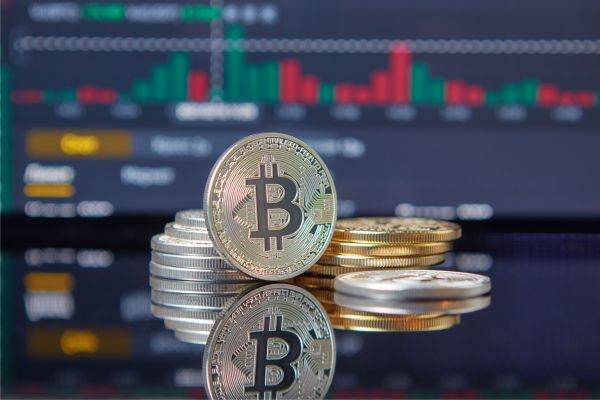
For the first time in the more than three-decade history of one of Wall Street's most significant financial forecasting exercises, Bitcoin has received something the cryptocurrency industry has awaited for years: an official long-term return estimate from J.P. Morgan Asset Management. Yet, the verdict from this American financial giant is far more complex than the enthusiasm of crypto investors might suggest. While Bitcoin could potentially outperform U.S. stocks, bonds, and gold over the next decade, it could, within that same timeframe, also result in substantial losses for those betting on its rise. The "2027 Long-Term Capital Market Assumptions" report, published on October 19, 2026, introduces Bitcoin into the universe of assets analyzed by J.P. Morgan, estimating a compound annual return of 10% in its central scenario. By comparison, shares in major U.S. companies are projected to offer a return of 7.5%, while gold is expected to yield 5.5%. In other words, the cryptocurrency, long viewed with suspicion by parts of the financial establishment, is now credited with a growth outlook that surpasses that of certain traditional asset classes.
When translated into price terms, the forecast becomes striking. Starting from a baseline of approximately $83,000 per Bitcoin, the level recorded on September 30, 2026, a compound annual return of 10% would result in a price of roughly $215,000 by 2036. Channel 14 cites a figure of $211,130, though this could not be confirmed as an explicit price target within the J.P. Morgan report itself. Regardless, this discrepancy does not alter the core of the projection: in the central scenario, the value of Bitcoin could more than double increasing by a factor of over 2.5 within a decade.
The real bombshell in the report is not the price exceeding $200,000, but rather the vast gap between the potential gains and potential losses for an investor.
J.P. Morgan also examines a pessimistic scenario, characterized by a negative annual return of 11.2%. If this trend were to play out over ten years, Bitcoin would fall toward $25,000, a depreciation of approximately 70% from the baseline level. At the other end of the spectrum, an optimistic scenario, based on an annual return of 16.6%, would push the price toward $386,000.
In short, the same cryptocurrency, the same ten-year horizon, and three radically different outcomes: approximately $25,000, $215,000, or $386,000. These are not guaranteed price targets, but rather mathematical results derived from specific return assumptions. It is precisely this dispersion that explains why the bank's analysts refuse to treat Bitcoin like a conventional financial asset.
• 55% volatility for Bitcoin
Beyond the figures mentioned above, the report includes an assessment that should temper the enthusiasm of those who view Bitcoin as an inevitably profitable investment. J.P. Morgan estimates the cryptocurrency's annualized volatility at 55%, compared to approximately 18% for the stocks of major U.S. companies. This does not mean that Bitcoin will automatically rise or fall by 55% in a single year; rather, it indicates that its fluctuations are expected to be exceptionally large in scale compared to those seen in traditional markets.
Consequently, although Bitcoin offers one of the most attractive projected returns in the bank's central scenario, the risk associated with this potential gain prevents it from securing a stable place in the diversified portfolios constructed by the bank. The authors of the chapter dedicated to Bitcoin, Sheena Shah, a portfolio management specialist, and Dennis Cristallo, head of digital asset strategy at J.P. Morgan Global Private Bank, describe the cryptocurrency as a speculative asset and a potential hedge against monetary easing. They point out, however, that Bitcoin does not yet have a well-defined strategic role in portfolios, beyond serving as a bet on the expansion of traditional currencies or the growth of transactions involving blockchain-based assets.
Furthermore, the two consider it premature to formulate a ten-year forecasts for an asset whose behavior depends so heavily on adoption, regulation, liquidity, and the evolution of the monetary system. The takeaway is that even when calculations point to spectacular returns, uncertainty remains a fundamental component of the investment.
Matt Hougan, Chief Investment Officer at Bitwise Asset Management, a major player in the digital asset investment fund sector, welcomed the inclusion of Bitcoin in J.P. Morgan's forecasts with an ironic post on the platform X on October 20, 2026. Hougan echoed the classic progression of a controversial innovation: first it is ignored, then ridiculed, subsequently opposed, and finally incorporated into the projections of the very institutions that once rejected it.
For Hougan, the inclusion of the cryptocurrency in a document used by institutional investors marks a moment of financial legitimization. Bitcoin is no longer merely a topic for blockchain technology enthusiasts; it has become an asset for which one of Wall Street's most influential institutions deems it necessary to formulate long-term return projections.
However, according to the website The Block, the Bitwise Asset Management CIO takes issue with one of the report's key premises: the estimated volatility of 55%. In his view, this assumption is too high, as Bitcoin's volatility has shown a long-term downward trend. If the actual risk proves lower than what J.P. Morgan has assumed, then the return estimate might also be overly conservative. However, this is an interpretation favorable to the cryptocurrency, coming from a fund manager with direct commercial interests in the development of the digital asset market.
A positive reaction also came from Michael Saylor, executive chairman of MicroStrategy, a company known for accumulating significant amounts of Bitcoin. Following the publication of the report, Saylor summarized the shift in attitude on Wall Street with a concise remark: "Wall Street is doing the math," according to The Block.
This statement captures one of the most intriguing transformations of recent years. Bitcoin has gradually evolved from a controversial monetary experiment into an asset monitored by fund managers, banks, and institutional investors. The fact that an institution like J.P. Morgan now assigns it an estimated ten-year return demonstrates that the financial industry can no longer ignore its existence, even if its acceptance as a strategic investment remains limited.
• Criticism regarding the return calculated by J.P. Morgan
Nevertheless, not all experts view the inclusion of Bitcoin in the report as a victory for the cryptocurrency. Brian Cubellis, director of strategy at Onramp, a firm specializing in financial services for Bitcoin, analyzed J.P. Morgan's forecast in a commentary published on the company's website on October 23, 2026. Cubellis argues that the 10% annual estimate is conservative when compared to Bitcoin's historical performance, and notes that traditional financial institutions tend to view sharp price fluctuations solely as a source of risk.
In his analysis, Cubellis contends that investors with long-term horizons may perceive volatility differently than those focused on short-term price swings. He believes that Bitcoin's historical performance demonstrates the significant impact that investment duration can have, though he acknowledges that there have been periods where buyers who entered the market at high price points faced disappointing outcomes.
However, this perspective should be approached with caution. Past performance is no guarantee of future returns, and Bitcoin is now a far more mature asset with a significantly larger market capitalization than it had in its early years. Simply assuming a repeat of the spectacular gains seen in the past is not a reliable premise.
In fact, one of the most notable aspects of the J.P. Morgan report is its attempt to move beyond the simplistic arguments often presented by both Bitcoin's proponents and its critics. Rather than merely extrapolating from historical price trends, the bank employs three distinct models to estimate future returns. The primary model-weighted at 65%, analyzes the dynamics of Bitcoin's supply in relation to the expansion of the money supply in the United States and the global economy. The second model, with a 30% weighting, examines the potential for Bitcoin to serve as a complement to gold within investor portfolios. The third, carrying a 5% weight, tracks the actual usage of the Bitcoin network.
The results are revealing. The first two models each point to a central annual return of approximately 10.7%, while the model based on network usage yields a negative estimate of 3.2%. By combining these figures, J.P. Morgan arrives at a central forecast of 10%, according to experts at Crowdfund Insider. This raises an uncomfortable question for investors who believe that Bitcoin will inevitably rise due to its technological superiority. However, how much of the cryptocurrency's future value actually depends on its utility, and how much depends on investor behavior, monetary policy, and the willingness of markets to assign it an ever-higher price?
• The supply-demand dynamic - Bitcoin's primary vulnerability
Unlike a company, Bitcoin does not generate profits, dividends, or cash flows that can be discounted to determine a fundamental value. Its price is driven by the balance between demand and a limited supply, as well as by investor expectations, liquidity, regulations, and perceptions regarding its role within the financial system. This represents one of the cryptocurrency's major vulnerabilities. A profitable company can be valued based on its projected future earnings and profits; Bitcoin offers no such financial anchor. Its value depends, to a significant extent, on the willingness of market participants to continue buying and holding it.
At the same time, it is precisely this characteristic that attracts those who view Bitcoin as an alternative to state-issued currencies. Its limited supply, the network's operational rules, and its independence from the decisions of any single central bank are arguments frequently cited by the cryptocurrency's proponents.
Yet, technological independence from a central bank does not equate to financial independence from monetary policy. Bitcoin can react violently to changes in interest rates, a tightening of liquidity, or shifts in investor risk appetite. During periods of financial stress, an asset sometimes touted as a "safe haven" may end up behaving like a high-risk, speculative investment.
This highlights the contradiction pointed out by J.P. Morgan: while Bitcoin aspires to the status of a monetary alternative and a store of value, it continues to exhibit risk characteristics that distance it from the stability traditionally associated with safe-haven assets.
Furthermore, the 10% annual forecast must be understood correctly. It does not imply that Bitcoin will grow linearly, by 10% each year. A 10% compound annual growth rate can mask periods of collapse, spectacular recoveries, and prolonged stretches of stagnation. An investor buying today has no guarantee that they will be able to sell at a profit in two, five, or even ten years.
In this context, the J.P. Morgan report serves as both a significant acknowledgment of Bitcoin and a stern warning to those who view it solely as a means to get rich. The American financial institution does not claim that Bitcoin will definitely reach $215,000. Nor does it suggest that it will inevitably fall to $25,000. Most importantly, it does not recommend purchasing the cryptocurrency simply because its estimated central return exceeds that of other assets. On the contrary, the message conveyed to investors is that any exposure to Bitcoin must be rigorously analyzed and stress-tested against extreme scenarios, including the possibility of massive losses.
At a time when the cryptocurrency market is seeking definitive recognition from major financial institutions, it remains to be seen whether investors betting on Bitcoin will be able to withstand, both financially and psychologically, the violent fluctuations that could precede such an outcome. For, beyond all the promises of a digital financial revolution, the J.P. Morgan report issues a warning that no investor should ignore: a single asset - Bitcoin, can encompass both the prospect of great wealth and the risk of a devastating loss.



























 Euro
 Dolar SUA
 Franc elveţian
 Liră sterlină
 Gram de aur






























Reader's Opinion