English

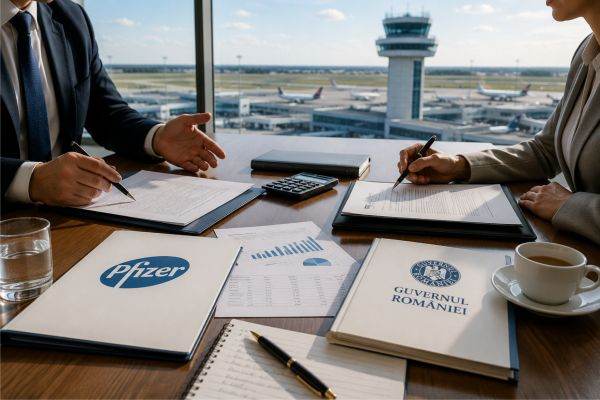
The Romatsa company (Regia Autonomă Administraţia Română a Serviciulor de Trafic Aerian), the only air traffic operator in our country, was notified yesterday by Eurocontrol that the American pharmaceutical giant, Pfizer, has started the forced execution against the Romanian state and has instituted a seizure on the amounts administered by Eurocontrol for the company in Romania. With that decision, from a dispute regarding the acquisition of vaccines that have not been delivered or paid for, the case has turned into a crisis with unprecedented legal, financial and image implications, in which a private creditor is forcibly executing a member state of the European Union by blocking financial flows related to a strategic infrastructure.
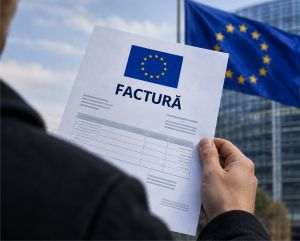
The precautionary-enforcement attachment instituted by Pfizer targets over 3.4 billion lei, representing the principal debt and interest, to which is added approximately 18.5 million euros in recovery costs. Although Romatsa is not a party to the dispute, the European route fee collection mechanism means that its revenues are administered through Eurocontrol, an organization obliged to implement the measures ordered by the Belgian enforcers. The institution stated that air navigation services are operating normally and that air traffic safety is not affected, but the Romanian authorities are trying in parallel to obtain a suspension of the forced execution.
The current situation has its origins in the decisions taken by the Cîţu government during the pandemic. In 2021, the European Commission centrally negotiated contracts for the acquisition of vaccines against COVID-19, with the Member States assuming significant quantities of doses. Romania, then led by the Cîţu government, accepted the additional orders, and later, during the government led by Prime Minister Nicolae Ciucă, the authorities tried to reduce contractual obligations, given that the demand for vaccination was decreasing rapidly and millions of doses risked expiring before use.
The legal problem arose because the contracts signed on behalf of the member states provided for firm purchase obligations. Although, in 2023, the European Commission and Pfizer renegotiated the framework contract through a fifth additional act, which allowed for the reduction of quantities in exchange for the payment of compensation, Romania did not adhere to this mechanism nor did it use other available contractual options. Consequently, Pfizer considered that the Romanian state remained obliged to take over and pay for almost 29 million doses previously ordered.
The dispute was heard at the Brussels Court of Justice, the competent court according to the contract. On April 1, 2026, Romania lost the case, being forced to pay approximately 564 million euros for the contracted vaccines, plus interest and court costs. Although the decision can be appealed, it is enforceable, which means that the creditor has the right to start recovering the amounts before the final resolution of any appeals.
The enforceable nature of the decision was explained immediately after the ruling by the then Minister of Justice, Radu Marinescu, who pointed out that the existence of an appeal does not automatically suspend the execution of the payment obligation. In the absence of a court-ordered suspension or an agreement between the parties, Pfizer has the legal possibility to pursue assets and receivables of the Romanian state located in the jurisdictions in which the decision can be enforced.
The Ministry of Finance has tried, in recent months, to avoid precisely this scenario. Minister Alexandru Nazare described the Pfizer case as one of the most difficult financial cases currently on the Romanian state's table, explaining that, in addition to the main obligation, Romania also bears the cost of interest that increases daily, which turns each day of delay into a new loss for the public budget. At the same time, the minister confirmed the existence of confidential negotiations with the company's representatives, the aim being to identify an amicable solution that would limit the financial impact on the state budget.
In parallel, the Ministry of Health tried to open another path of negotiation. Former Minister Alexandru Rogobete stated that one of the scenarios analyzed after the April decision was to transform the debt resulting from the vaccine contract into a commercial agreement through which Romania would receive other drugs produced by Pfizer, useful to the medical system, instead of anti-COVID vaccines that are no longer needed. The idea aims to reduce the budgetary impact and capitalize on an inevitable financial obligation through products that could be effectively used in hospitals. In this context, the official visit made by the Minister of Health to the United States, where the agenda included meetings with representatives of both the World Bank and major pharmaceutical companies, including Pfizer, were seen as an opportunity to relaunch negotiations. However, no concrete agreement has been announced to date.
The enforcement that has now begun brings to mind the precedent set by the Micula brothers litigation. Back then, Romania was also faced with seizures imposed on the amounts administered through Eurocontrol for Romatsa, after investors obtained international compensation against the Romanian state. Ultimately, the state was forced to pay hundreds of millions of euros to unblock the situation. The difference is that the current litigation concerns a commercial contract resulting from the acquisition of anti-Covid vaccines and involves one of the largest pharmaceutical companies in the world, which gives the file much greater international visibility.
Beyond the legal dispute, the case also raises a major political issue. The contracts were assumed during the government led by Florin Cîţu, in a context of unprecedented health uncertainty, when all European states were trying to ensure rapid access to vaccines. Subsequently, the Nicolae Ciucă government managed the stage in which the demand for vaccination had collapsed, and the contractual obligations had become increasingly difficult to justify economically. In parallel, the DNA opened an investigation into how the acquisition decisions were made, but criminal liability is distinct from the contractual obligations assumed by the Romanian state towards Pfizer.
The government is currently in a delicate situation. On the one hand, it must manage the consequences of an enforceable decision and limit the effects of forced execution on strategic institutions. On the other hand, it is trying to negotiate with Pfizer a solution that would reduce the financial burden without generating a new legal conflict. Whether it will be an installment payment, the conversion of the debt into other medical products or another formula agreed upon by the two parties, it is certain that time is no longer working in favor of the Romanian state. Interest continues to flow, the forced execution is already underway, and each new day of delay increases the bill for Romanian taxpayers and amplifies one of the most sensitive financial files that Romania has faced in recent years.

















 Euro
Euro Dolar SUA
 Franc elveţian
 Liră sterlină
 Gram de aur