English


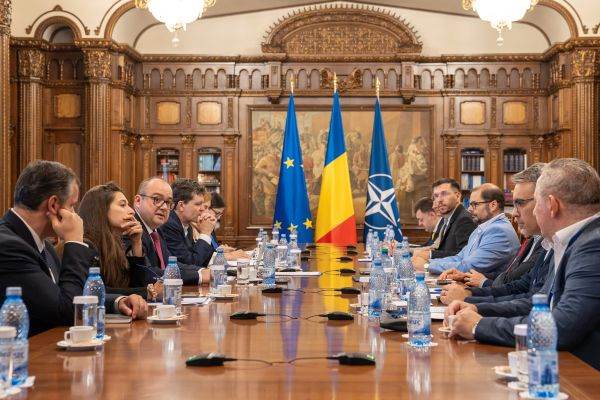
Our country has finally found its identity. After two millennia of historical turmoil, migrations, empires, wars, unions, dismemberments, dictatorships, transitions and integrations, the answer seems to have come from the Strategic Reflection Group "Romania in the EU”, which offered the Presidency Administration the report "National Identity, European Identity and the Challenge of the Public Population”. According to its conclusions, we are Latin, Christian, Western, European, hospitable, a little fatalistic, very adaptable and, more recently, deeply energetic.
The Romanian language, historical continuity, faith, the Great Union and the diaspora are no longer enough to define us. At the center of collective identity, energy has made its way, with the discretion of a bill slipped under the door, elevated from the field of economy and national security to the rank of ingredient of the national and European soul.
The 15-page summary report, published by the Presidential Administration, is only a synthesis based on the contributions of a group of intellectuals, academics, diplomats, sociologists and experts. The extensive report, with its full interventions, arguments, disagreements and possible minority opinions, does not even appear on the Presidential Administration website. The reader is given a conclusion, but not the complete path to it. He is told that the authors almost unanimously reached strong consensuses, without being able to see the contradictions and the way in which they were resolved. It is an original form of pluralism: the voices are many at the entrance and become one at the exit. For a report that recommends transparency, critical thinking and the protection of democracy, the absence of the material is integral to the small area of institutional irony.
• Energy, a constitutive element of national and European identity?
According to the 15-page document, the first three of which are the title, the group members and the summary, energy is entering the national and European identity architecture, not timidly, as an economic example, but decisively, in several chapters. It becomes a register of European identity, a test of trust, a geopolitical instrument, an antidote against extremism and, ultimately, an expression of a "patriotism of competence, not of resentment”. The formula is excellent for a presidential speech and suspiciously suitable for a political reply. It draws the line between acceptable energy patriotism - technical, European and well-managed - and undesirable energy patriotism - national, resentful and contaminated by sovereignty.
Energy makes sense in the discussion of geopolitics, industry, the cost of living and radicalisation, but much less as a constitutive element of identity. A pipeline can transport gas, but it is not clear how much constitutional patriotism it transports per cubic metre. An electrical interconnection produces energy exchanges, not necessarily European fraternity. The common market can create mutual interests, but transforming them into identity requires a demonstration that the report replaces with a memorable formula.
More importantly, Romania is not an energy power just because resources are found on its territory. The existence of gas, oil, coal and hydropower, nuclear or renewable potential does not mean control over their exploitation and valorization. The Romanian statute does not completely control the infrastructure, technology, capital, processing, transport, storage and commercial circuit necessary to transform resources into economic power. Romania has resources and, simultaneously, can depend on operators, financing, and markets for these technologies; it can produce relatively cheaply and sell expensively to its own citizens; it can extract gas without unilaterally determining its destination.
From this perspective, the formula according to which the European Union must be privileged as a "power multiplier, not as a guardian” hides the essential question: what national power does the EU multiply if the state does not control the entire energy chain? Integration can amplify not only Romania's capacity, but also the access of other actors to its resources. Power is not measured in inventoried deposits, but in the capacity to transform raw materials into security, industry, added value and affordable prices. In the absence of this capacity, the patriotism of competence can become the professional management of a dependency, bureaucratic progress, but not necessarily strategic.
• The Cotroceni Report and the positions of the sovereignists
Here appears the obvious connection, even if unnamed, with the speeches of Călin Georgescu and the leaders of AUR. Călin Georgescu built an important part of his message around the triad of "food, water, energy", of economic independence and of bringing resources back under the control of the people. AUR constantly talks about energy sovereignty, coal, hydroelectric power plants, Black Sea gas, foreign interests, the failure of liberalization and the costs of decarbonization. The report published by the Presidential Administration seems to answer them point by point, without mentioning their names: it opposes energy independence with security through interconnection, national control - with European cooperation, "people's resources” - with added value produced competently, and it attaches the discreet label of resentment to sovereignist patriotism.
There is no evidence that the group around the Cotroceni Palace received the explicit mission of manufacturing a counter-narrative to Georgescu and AUR, but the coincidence of ideas is too disciplined to go unnoticed. Energy occupies a disproportionate place in a report on identity and populism and becomes the field on which European patriotism must reconquer the ground lost to the sovereignists. The operation is intelligent: the theme is taken over and repackaged. Resources remain Romanian, infrastructure becomes European, competence replaces revolt, and the lower bill is called upon to reduce radicalization.
The problem is that the speeches of Călin Georgescu and AUR, no matter how populist or contradictory the proposed solutions may be, start from a real vulnerability. The difference between existing resources and the state's capacity to control them explains why the message "our riches are used by others" finds an audience. The report combats it morally and semantically, but does not dismantle it materially. It does not clearly answer who owns the infrastructure, who finances the exploitation, who collects the profit, who determines the destination of the resources, where the added value is achieved and what the state can do in a crisis. The same asymmetry appears in the treatment of sovereignism. The report recognizes that it starts from a legitimate concern regarding democratic control, but warns that it can slide into antagonism towards European institutions. However, Europeanism does not receive a symmetrical definition: we are not told that it can slide into centralism, uniformity, technocracy and the weakening of democratic accountability. Shared sovereignty is described as consolidated sovereignty, although decisions transferred to the European level can no longer be changed unilaterally by the vote of Romanian citizens. The gain in external capacity may come with the loss of internal control, but the report sees mainly the former phenomenon.
The fact that the majority of Romanians do not want to leave the EU is interpreted as confirmation of identity compatibility, although the document admits that support is pragmatic and conditional, a Europeanism "by calculation, not by conviction”. Romanians do not want a divorce, but they demand a renegotiation of the marriage with the EU. The report sees here a potential "plural European patriotism”; a less optimistic interpretation would be that many citizens accept the Union because they understand the huge costs of leaving, not because they have internalized a European political identity.
• Good governance, the eternal solution proposed by the authorities in Bucharest to reduce populism
The document has the merit of not reducing populism exclusively to manipulation, but rather recognizes corruption, poor public services, inequalities, territorial gaps, exodus and the crisis of representation. However, it stops short of the most uncomfortable question: who governed during the period in which these failures accumulated? If pro-European parties, successive administrations and institutional elites produced or tolerated the vulnerabilities, then populism is not only the fever of democracy, but also the bill of a system that declared itself competent without convincing through results.
Citizens attracted to populism appear abandoned, emotionally vulnerable, insufficiently media literate and exposed to manipulation. Sometimes they are all of these. Other times they deliberately vote against a political order whose results they know from their own lives. To explain the opposition only through vulnerability is to deny the voter the very democratic autonomy that the report claims to defend.
The proposed solutions are good governance, civic education, media literacy, reducing inequalities, protecting the information space and a new European narrative. They are impeccable objectives and general enough not to force anyone to anything specific. We do not find out who applies them, until when, with what money, according to what criteria and who is responsible for failure. "Good governance” remains the universal solution of official reports: if the state functioned well, the state would no longer function poorly.
Ultimately, the document does not only demonstrate that Romanian and European identities can coexist, but also establishes which Romanian identity is considered legitimate: civic, open, pluralistic, moderate and integrated European. Patriotism is welcome if it does not too severely challenge the architecture of integration, sovereignty is acceptable if it is exercised jointly, and energy is national on condition that it circulates European.
However, the report would have been more convincing if it had openly acknowledged its intention: recovering identity, patriotism and energy from the hands of the sovereignists and their reconstruction in a version compatible with the European project. Instead, we are given the appearance of a unanimously discovered academic conclusion. Romania thus learns that it can be sovereign, but together with others; patriotic, but without resentment; rich in resources, but without the complete infrastructure to control them; European by conviction, but especially by calculation. And if all this does not reduce populism, there remains the ultimate solution: a new narrative from Cotroceni, possibly printed directly on the energy bill.













 Euro
Euro Dolar SUA
 Franc elveţian
 Liră sterlină
 Gram de aur