 English


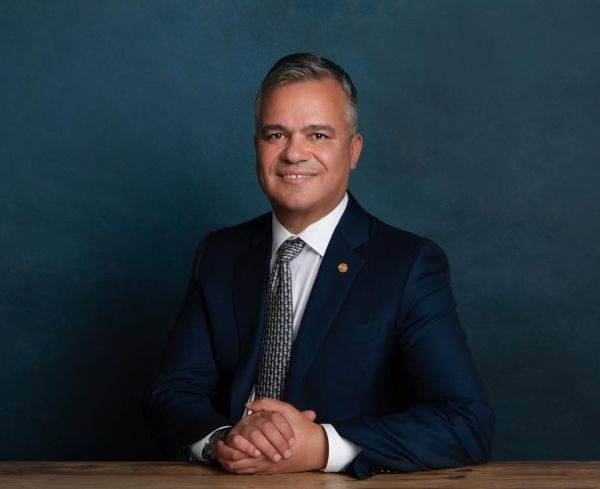
If Adrian Veştea becomes prime minister, political history will probably record the first "pro-European” government built against major pro-European parties. It is a feat that even Nicuşor Dan's fiercest opponents would not have dared to imagine. After weeks of speeches about responsibility, reform and stability, Cotroceni's designated prime minister, Adrian Veştea, managed to achieve something that seemed impossible: to be rejected by the PNL, abandoned by the USR, refused by the UDMR and to remain clinging to the hope that the PSD, POT, SOS and maybe even AUR will provide him with the votes necessary to enter the Victoria Palace.
In other words, after all the parties that claim to represent Romania's European direction have said "no”, Adrian Veştea is trying to demonstrate that a pro-European government can be built without Europeans. It is such a bold political experiment that it deserves to be patented. For years, the electorate has been told who the responsible forces are and who the irresponsible forces are, who represents the future and who represents the past, who needs to be kept at a distance and who needs to be brought to power. Conferences have been held about values, manifestos have been written about reform, and speeches have been made about the need to isolate certain parties. However, all these principles prove surprisingly flexible when Adrian Veştea needs votes.
The first to close the door was his own party. After more than five hours of meeting, the PNL leadership decided with 41 votes against, 13 in favor, and two abstentions not to support the Veştea Government. Moreover, the liberal leaders explicitly asked him to resign by 10:00 yesterday, warning that otherwise, they would be outside the party. In any normal democracy, the moment when your own party withdraws political support is the end of the road. In the political universe built around Nicuşor Dan and Adrian Veştea, this seems to have been interpreted as a simple administrative inconvenience. "My position does not change: I will not resign my mandate, regardless of the pressures that are put on me," Veştea announced yesterday, adding: "I am convinced that this Government will pass, because Romania needs stability, a functional executive and decisions that can no longer be postponed." However, parliamentary mathematics has a major flaw: it cannot be impressed by press statements. After the PNL's refusal, the USR followed. Then came the negative verdict from the UDMR yesterday. After all the consultations and discussions held with the designated prime minister, the Permanent Council of the Union decided not to enter the government. Moreover, the leader of the UDMR deputies, Csoma Botond, announced that the recommendation is that the Union's parliamentarians not vote for the Veştea Government. The message was so clear that Csoma Botond felt the need to also specify that he did not expect different votes within the party, because UDMR is "a disciplined party, which respects the decisions taken”. It was the elegant way in which UDMR conveyed that it did not want to participate in this political adventure.
And thus it came to the truly spectacular situation in which the man presented as the guarantee of stability and European continuity was left without the support of the PNL, without the support of the USR and without the support of UDMR. In other words, exactly the parties that make up the declared pro-European political core decided that they did not want to link their names to the Veştea project.
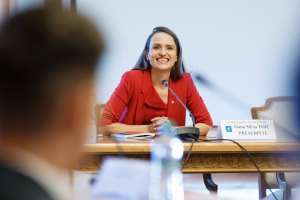
Under these conditions, the most interesting part of the story begins. While the liberal leaders were asking him to give up his mandate, Adrian Veştea was busy looking for votes where they still existed. Ana Maria Gavrilă, the leader of the POT, was surprised leaving Vila Lac after negotiations with the designated prime minister. According to information published in the public space, Adrian Veştea also held discussions with parliamentarians from the PACE group. Last night, a meeting was also scheduled with Victor Ponta, who is a member of the "United for Romania” parliamentary group, formed mainly by deputies from the POT.
Basically, while the pro-European parties were leaving the stage, the government's potential saviors were entering the hall one by one. However, the real lifeline seems to be the PSD. The social-democratic leadership granted Sorin Grindeanu a "broad negotiating mandate” with Adrian Veştea. Political sources explained that this mandate does not contain red lines regarding public policies, government measures or appointments. In other words, while the PNL was asking Veştea to resign his mandate, the PSD was offering him the prospect of political survival. The most suggestive image of the whole situation came with the appearance of Marian Neacşu alongside the designated prime minister in the negotiations with the parliamentary parties, qualified as anti-European. Asked by journalists why he was there, Neacşu simply replied: "I am the escort." Then he came back and added: "I am the the substitute”.
Rarely does Romanian politics offer such perfect symbols. The Prime Minister designated by Nicuşor Dan, left without the support of his own party and rejected by all pro-European formations, is accompanied in negotiations by a PSD "mediator” in search of the votes necessary for the inauguration.
In reality, things have become even more ironic. For years, the electorate has been explained that the PSD is the problem. That POT and SOS represent dangers for Romania's European direction. That certain formations must be kept out of any governing structure. Today, exactly these forces are invited to contribute to saving a Prime Minister presented as the guarantor of the European path.











 Euro
Euro Dolar SUA
 Franc elveţian
 Liră sterlină
 Gram de aur





























